A visit to the Schönenberg Church in Ellwangen, Germany, by Kevin D. Cordeiro

The Schönenberg Church, also the Wallfahrtskirche in Ellwangen, Germany.
Photo: Kevin D. Cordeiro.

The Schönenberg Church is a pilgrimage church that is also known as the Sanctuary of Our Lady. It’s a major church in the region of Ostwürttemberg in the southern regions of Germany. In years past, people made their pilgrimage voyages by foot in order to reach the churches and their sanctuary of prayer. These days however, pilgrims are more likely to arrive at their respective churches via buses. Just as well too since this particular church sits atop a 530 m climb.

Photo: Kevin D. Cordeiro.

The foundations to the church were laid in 1682 by Johann Christoph von Freyberg who was then the Bishop of Augsburg. The building’s architect was Michael Thumb Vorarlberger Munster whose design template for this church had great influence over other important buildings of Baroque design such as the baroque pilgrimage church of the Holy Cross built on Gottesberg hill in Bad Wurzach in 1709. Continue reading “A visit to the Schönenberg Church in Ellwangen, Germany, by Kevin D. Cordeiro”

Sjömagasinet’s team proves their metier beyond all things piscatorial. Gothenburg, Sweden 2009

Restaurant Sjömagasinet in Gothenburg, Sweden in early spring 2009, housed in a building, originally an 18th century ship’s furnishing storage.
Photo for CMC by: Jan-Erik Nilsson © 2009.

The restaurant Sjömagasinet in Gothenburg, Sweden, is well known, as is its iconic owner and Chef de Cuisine Leif Mannerström.

What might be less known is that the restaurant’s odd looking building at the immediate waterfront of the Göta River was originally an 18th century magazine, built by the Swedish East India Company (1731-1813) to house spare equipment for the huge sailing “East Indiamen” ships.

These frigates went on their yearly voyages to China and back for tea, silk, spices and porcelain during the best part of the 18th century, departing from just outside this building around February each year. They usually arrived back in the late summer after a voyage that took almost two years for each round-trip, if everything went well. If not, the arrival could be delayed. As a matter of fact, there are cargoes that still haven’t arrived as yet, but that’s a different story. Today we were just here to eat.

Luckily our careers give us the opportunity and occasion to travel quite some. Valentine’s Day last year was spent at the Peninsula Hotel in Bangkok, overlooking some fantastic fireworks reflecting to double effects in the black waters of the Chao Phraya River. This year we visited Sjömagasinet in Gothenburg, Sweden, immediately overlooking the near frozen Göta River. The differences in climate and temperatures could not have been greater.

Gothenburg is located at 57°43′ North latitude and 11°59′ East latitude meaning about three hours of flight northeast of London and much too far north for comfort for anyone preferring the tropical climate of Singapore. Luckily there are things here to compensate the endeavours.

The gourmet restaurant Sjömagasinet is one of them.

The history of the restaurant’s building is somewhat reflected in the menu but most of all, it shows to tell of Leif Mannerström’s great interest in gourmet preparation and serving of various piscatorial delights. What we chose for our Valentine’s day dinner was of course only a sample of what could be had at the restaurant.

The menu for the day is set on the day itself with not much advance notice. The availability of first class ingredients settles what the Mannerström team will work with for the day, so you can simply pop in and enjoy. If you like, you can discuss with the forthcoming staff, anything you’d like to have served from what is available in the kitchen for the day.

On the menu you can expect to find weever, plaice, pollack, halibut and herring served in classic and creative conconctions. During the Christmas season, the julbord or Christmas smorgasbord, serves up to more than sixteen types of herring.

The dishes we decided upon were what we felt right for the day. As we sat down at our table ready to enjoy ourselves, we brought with us three distinct impressions: that of the ice-cold weather of the Nordic climate, the ever present Göta River that flows just outside this restaurant and the warmth from the burning log fire that greeted us at the entrance of the restaurant, when we first came in.

Today I initially felt like the Fish Classic, a deep fried cod tail with sauce verte, lemon, asparagus and boiled potatoes. But while settling in and warming up to the mood of the place I started to feel somewhat more adventurous.

Contrary to my expectations the meat dishes seemed just as interesting as the fish and my curiosity was really aroused when I found elk among Mannerström’s Husmanskost.

I have only ever encountered a live elk once in my life, in a national park here in Sweden. These large creatures wander the vast forests of Sweden and are freely hunted for food. About 100 000 elks are shot in Sweden every year and at an average weight of about half a tonne (1000 lbs) each, it’s a lot of meat. With elk meat, the inherent problem I find is how to cook them. Apart from that they don’t exactly fit neatly into the oven, the meat is usually tough and gamey. My previous experiences of eating elk were not encouraging. But if there ever was going to be a chance I’d eat elk again then this would be the place. So elk, it was.

Fried, salted brisket of elk with potatoes and cream

Fried, salted brisket of elk served with beet roots, capers and potatoes cooked in cream.

The elk briskets were tender, warm, juicy and inviting on a bed of beetroots and potatoes cooked in cream sprinkled with parsley leaves. The flavours combined and blended splendidly with one another to give a robustly warm and accommodating meal. The dish was also testament to what could be produced with basic ingredients that were none too fancy. Continue reading “Sjömagasinet’s team proves their metier beyond all things piscatorial. Gothenburg, Sweden 2009”

Fettisdagen or Fat Tuesday, a day for semlor in Sweden

Semla dusted with icing sugar, photo by Jan-Erik Nilsson at Cheryl Marie Cordeiro

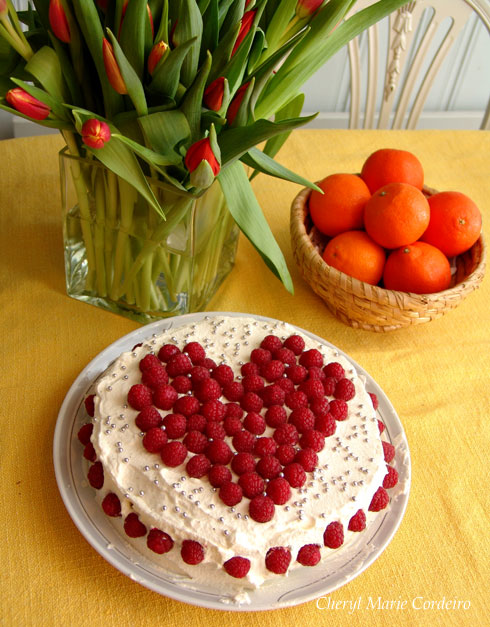
Today the original meaning of ‘Fat Tuesday’, as the day when all fat and other perishables should be consumed before Lent, is lost on most Swedes. However, the tradition of eating typical Fat Tuesday buns is kept alive and well.
Filled with almond paste and whipped cream, the ‘semla’ dates back to the 16th century. Records suggest that they first became popular in Sweden in 1541.
On February 12, 1771, the Swedish King Adolf Fredrik reportedly passed away after consuming a luxurious banquet rounded off with 14 of these buns, served in a bowl of warm milk.
Photo for CMC by: Jan-Erik Nilsson © 2009.

One of my more favourite days in the Swedish year is Fettisdagen or Fat Tuesday, which corresponds to Shrove Tuesday in the United Kingdom, Ireland and Australia and Mardi Gras in the USA and France. Though Sweden in itself is rather secular, Fettisdagen marks the last day before the period of Lent in the Christian tradition, a period of fasting and abstinence before Easter. And while some mark this day by feasting on pancakes, the Swedes have it as a day of eating semlor (singular: semla). Continue reading “Fettisdagen or Fat Tuesday, a day for semlor in Sweden”

In black and white: Haus Schönenberg, Ellwangen, Germany

In black and white, by Kevin Dominic Cordeiro, cortenography, Haus Schönenberg, Ellewengen, Germany

The compounds around Haus Schönenberg in Ellwangen, Germany.
Photo for CMC by Kevin D. Cordeiro © Singapore 2009

Haus Schönenberg is a charming hotel located in the small historic German town of Ellwangen that lies east of Baden-Württemburg. It’s a throw back in time in its architecture, standing next to the renowned pilgrimage church, Wallfahrtskirche.

By Kevin Dominic Cordeiro in black and white photography, Cortenography

While the hotel isn’t one that is too luxe, visitors will be won over by its rustic appeal. Those who love the outdoors and nature can explore the rather generous grounds of the place. Continue reading “In black and white: Haus Schönenberg, Ellwangen, Germany”

The REAL original Swedish Meatballs!

Warm from the stove, our homemade Swedish meatballs
served with brown sauce and potatoes. As traditional as it could be.

Photo for CMC by JE Nilsson © 2009

Swedes are very passionate about their meatballs.

When talking to Swedes, you will find most topics meandering their way sooner or later to food, and the most ardent topic of all – meatball recipes. Most male Swedes will be adamant that his mother is the only one who can do them right. Their recipe will be kept as a family heirloom and they will insist that their recipe is the only good one around.

As an international Swedish meatball ambassador, IKEA has achieved quite some success by promoting, selling and serving industrially mass-produced meatballs in their in-house restaurants all over the world. Most Swedes however, think that IKEA would have been much more successful if they had followed their mothers’ recipe instead, or at least Ingvar Kamprad’s mother’s recipe! Continue reading “The REAL original Swedish Meatballs!”

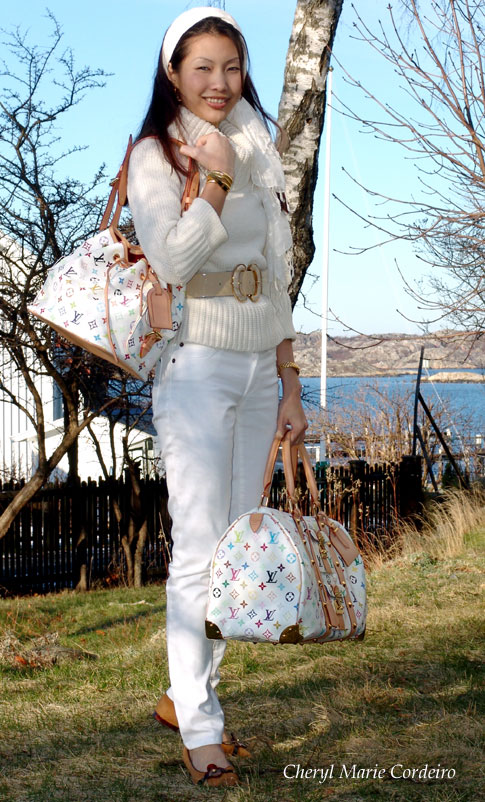
Meeting early spring in shades of white

Cheryl Marie Cordeiro, early spring 2009 in shades of white

In shades of white in early spring, against a clear blue sky.
Pictures taken for Bengt Enrique at I LVOE LV

It’s when you meet clear blue skies in the still biting cold of winter that you know spring’s along its way now. The temperatures will continue to pendulate between plus and minus degrees but the sunlight is showing itself more these days, with the days getting longer. A change in season is what I’m looking forward to and one that I welcome. Continue reading “Meeting early spring in shades of white”

Diane von Furstenberg, fashion to boost our spirits!

Diane von Furstenberg’s theme for autumn / winter 2009 was Nomad. Photo: Marcio Madeira.

I think attitude plays an important role in one’s life and a myriad of reactions from different individuals can arise from a single event or happening. In these bleak and troubled times in the fashion industry as reported by The New York Times, many collections out there will reflect the sub-conscious thoughts of the designers and people in the industry. Whether one is optimistic or pessimistic, hopeful or not for the times, it’s all depicted and seen in the AW RTW 2009 collections. Continue reading “Diane von Furstenberg, fashion to boost our spirits!”

Recession fashion, relaxed drapes in lean lines

Donna Karan, Autumn / Winter RTW 2009. Picture: Style.com/p>

In On the Street | Fashion Barometer, Bill Cunningham wondered about the impact of the financial crisis on world fashion – what kind of silhouettes and hemlines would we witness in the upcoming season/s that would reflect the times?

I think women these days, more than previous years, would be more conscious about what they’re choosing to buy. Michael Kors, commenting in the New York Times Multimedia said that, “…right now, even the most extravagant woman is putting on her smart cap…my customer is more pragmatic than she has been” He noticed black being sold in his Florida stores where normally, he wouldn’t sell black in Florida because “she thinks she can wear it more than once, she’s afraid of buying something that is a quick toss”. He also noted that women these days would prefer purchasing pieces that can be put together and re-ensembled easily with what they already have in their wardrobes because if it’s expensive, the customer these days thinks about it, tries it on and is smarter about her purchases. Continue reading “Recession fashion, relaxed drapes in lean lines”

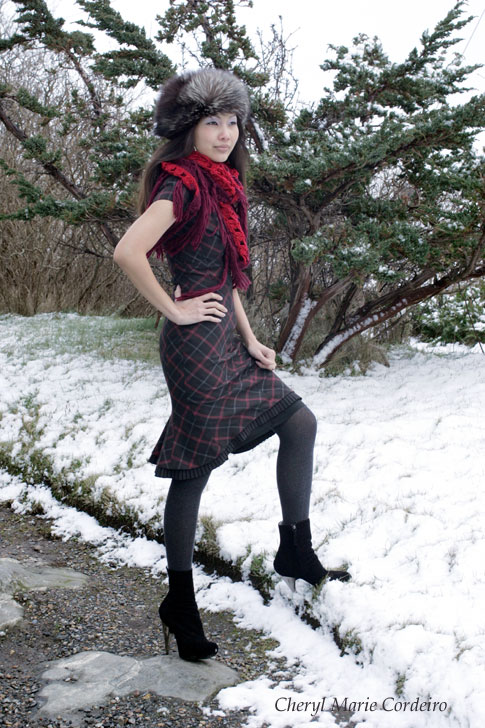
In a tartan dress by Karen Millen

Freezing cold! Things you do for fashion!

Dark tartans give me the impression of a mellow festive feeling, a feeling of comfort. I’m quite a fan of Karen Millen because the cutting of the clothes seem to fit nicely on my frame. Well perhaps not all items would sit well on my frame, but most do and that’s enough to keep me going back to the shop. Continue reading “In a tartan dress by Karen Millen”

Chloé’s horn cone heel

My current muse – these Chloé horn cone heel booties.

I wasn’t particularly attracted to these horn cone heeled designs on Chloé shoes when they first came out for the autumn / winter collection. I thought them clumsy looking from the side profile and utterly unflattering to the silhouette. But as with everything else, what items that appear in the designer houses filter out and become naturalized / normalized after awhile; new shapes and designs become more attractive. Today, I find that the shape of the horn cone heel from Chloé has grown on me.

Turn the shoe around and the heel looks elegantly sleek from behind! The design blew me over and won my heart hands down. It’s details like these, with a combination of old and new in design that attract my attention. The shape of the heels from the side are frontier pushing yet the back of the heel keeps a traditional point of view on what’s sleek, elegant and complementary to the female silhouette.
Continue reading “Chloé’s horn cone heel”