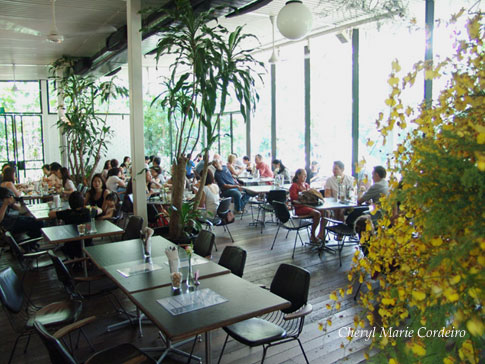
Restaurant Sjömagasinet in Gothenburg, Sweden in early spring 2009, housed in a building, originally an 18th century ship’s furnishing storage.
Photo for CMC by: Jan-Erik Nilsson © 2009.
The restaurant Sjömagasinet in Gothenburg, Sweden, is well known, as is its iconic owner and Chef de Cuisine Leif Mannerström.
What might be less known is that the restaurant’s odd looking building at the immediate waterfront of the Göta River was originally an 18th century magazine, built by the Swedish East India Company (1731-1813) to house spare equipment for the huge sailing “East Indiamen” ships.
These frigates went on their yearly voyages to China and back for tea, silk, spices and porcelain during the best part of the 18th century, departing from just outside this building around February each year. They usually arrived back in the late summer after a voyage that took almost two years for each round-trip, if everything went well. If not, the arrival could be delayed. As a matter of fact, there are cargoes that still haven’t arrived as yet, but that’s a different story. Today we were just here to eat.
Luckily our careers give us the opportunity and occasion to travel quite some. Valentine’s Day last year was spent at the Peninsula Hotel in Bangkok, overlooking some fantastic fireworks reflecting to double effects in the black waters of the Chao Phraya River. This year we visited Sjömagasinet in Gothenburg, Sweden, immediately overlooking the near frozen Göta River. The differences in climate and temperatures could not have been greater.
Gothenburg is located at 57°43′ North latitude and 11°59′ East latitude meaning about three hours of flight northeast of London and much too far north for comfort for anyone preferring the tropical climate of Singapore. Luckily there are things here to compensate the endeavours.
The gourmet restaurant Sjömagasinet is one of them.
The history of the restaurant’s building is somewhat reflected in the menu but most of all, it shows to tell of Leif Mannerström’s great interest in gourmet preparation and serving of various piscatorial delights. What we chose for our Valentine’s day dinner was of course only a sample of what could be had at the restaurant.
The menu for the day is set on the day itself with not much advance notice. The availability of first class ingredients settles what the Mannerström team will work with for the day, so you can simply pop in and enjoy. If you like, you can discuss with the forthcoming staff, anything you’d like to have served from what is available in the kitchen for the day.
On the menu you can expect to find weever, plaice, pollack, halibut and herring served in classic and creative conconctions. During the Christmas season, the julbord or Christmas smorgasbord, serves up to more than sixteen types of herring.
The dishes we decided upon were what we felt right for the day. As we sat down at our table ready to enjoy ourselves, we brought with us three distinct impressions: that of the ice-cold weather of the Nordic climate, the ever present Göta River that flows just outside this restaurant and the warmth from the burning log fire that greeted us at the entrance of the restaurant, when we first came in.
Today I initially felt like the Fish Classic, a deep fried cod tail with sauce verte, lemon, asparagus and boiled potatoes. But while settling in and warming up to the mood of the place I started to feel somewhat more adventurous.
Contrary to my expectations the meat dishes seemed just as interesting as the fish and my curiosity was really aroused when I found elk among Mannerström’s Husmanskost.
I have only ever encountered a live elk once in my life, in a national park here in Sweden. These large creatures wander the vast forests of Sweden and are freely hunted for food. About 100 000 elks are shot in Sweden every year and at an average weight of about half a tonne (1000 lbs) each, it’s a lot of meat. With elk meat, the inherent problem I find is how to cook them. Apart from that they don’t exactly fit neatly into the oven, the meat is usually tough and gamey. My previous experiences of eating elk were not encouraging. But if there ever was going to be a chance I’d eat elk again then this would be the place. So elk, it was.

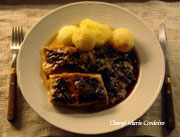
Fried, salted brisket of elk served with beet roots, capers and potatoes cooked in cream.
The elk briskets were tender, warm, juicy and inviting on a bed of beetroots and potatoes cooked in cream sprinkled with parsley leaves. The flavours combined and blended splendidly with one another to give a robustly warm and accommodating meal. The dish was also testament to what could be produced with basic ingredients that were none too fancy. Continue reading “Sjömagasinet’s team proves their metier beyond all things piscatorial. Gothenburg, Sweden 2009”


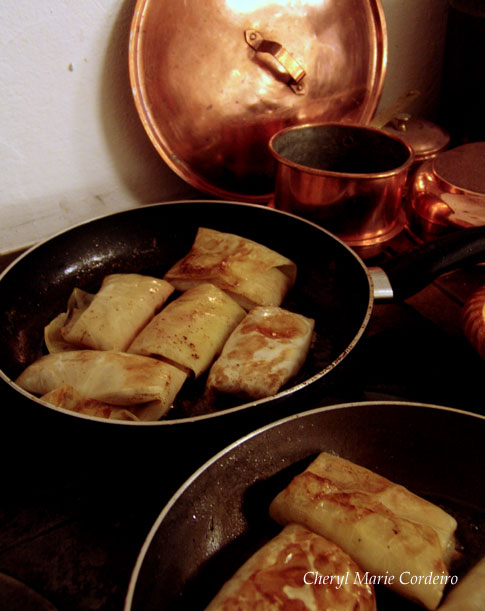
Making these cabbage wrapped meat packages takes quite some time. You can expect to set aside an entire day or the best part of the afternoon to do this. A great weekend activity if your weekend allows for it. On the upside is that they deep freez well and you can make a large batch of them in one go. It is also not very expensive. What goes into them is mostly time.