Artichoke, dining on a sexy weed

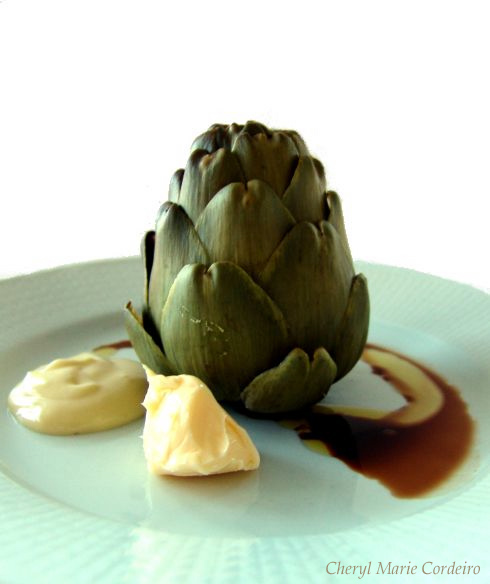
Serving artichoke with aioli, butter, oilive oil

Artichoke served with soft stirred butter, some good quality salt, homemade aïoli and some olive oil and balsamic vinegar to go with dark bread.
Photo © J E Nilsson for CMC, 2009

“These things are just plain annoying. After all the trouble you go to, you get about as much actual “food” out of eating an artichoke as you would from licking 30 or 40 postage stamps. Have the shrimp cocktail instead.”
~ Miss Piggy (The Muppet Show)

The first time I saw an artichoke I drew a complete blank on how to cook them. These beautifully crest-petalled flowers don’t have much of a history in Singapore and are certainly not your average hawker-center staple.

It took some time for me too, to recognize them as part of the Italian Quatro Stagione (four seasons) pizza where the soft heart of the artichoke is used to symbolize the spring.

The artichoke itself is the bud of a thistle flower. The plant can be almost 2 meters high. If allowed to flower, blossoms measure up to 7 inches in diameter and are of a vibrant violet-blue colour. It also seems to have most of its history around the Mediterranean basin.
Continue reading “Artichoke, dining on a sexy weed”
Ratatouille à la Ratatouille

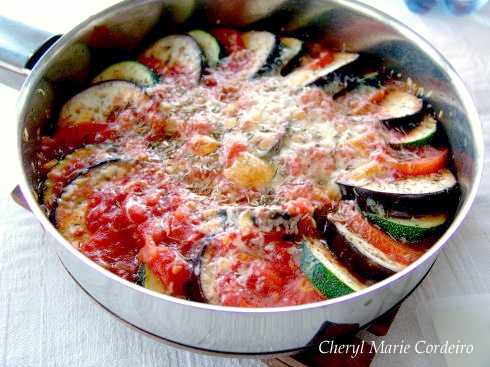
Ratatouille a la Ratatouille

Inspired by the Disney/ Pixar movie Ratatouille (2007), here is my attempt at creating just such a ratatouille dish as they did, as a main course.
Photo for CMC by: Jan-Erik Nilsson © 2009.

A few years ago the movie Ratatouille (2007) by Disney / Pixar came out in the movie theatres. I found that a most inspiring film when it came to cooking despite the fact that the best chef in the movie was a rat, however most adorable!

Ever since I saw that movie, I have been pondering how the actual dish fits with the title of the movie, and my guess has been that the Disney/ Pixar gang probably found the title Rat-atouille witty, so that they based the whole story on that, but was then also stuck with trying to compose a main course out of something that is actually a side dish, similar to salsa. This was a challenging task for the film team since ratatouille is nice, but not really a dish so grand as to be presented as a main course in a gourmet restaurant.

Today when a friend who preferred vegetarian dishes showed up, I thought why not; lets see if it is possible to create something similar to a ratatouille, but one that can work as a main course by itself.

Normally a ratatouille is cooked and stirred towards a very soft consistency, it being a dish that might well be best served with a spoon. In the movie it was served warm with a fork, upright standing in presentation and appearing pretty dry. This is a bit tricky to accomplish since the main ingredients are botanically speaking fruits, and as such they will cook very quickly and also melt or fall apart very easily as soon as they get warm.

So, if we are to make a stand alone ratatouille main course, all this would need to be addressed.

My version of Ratatouille à la Ratatouille

The Ratatouille is known to stem from Provance, so taste wise I decided to situate it somewhere in between Southern France and Northern Italy, and brought out some really good olive oil from San Gimignano, some fresh garlic, a few shallots, and then fried this together into a spicy foundation.

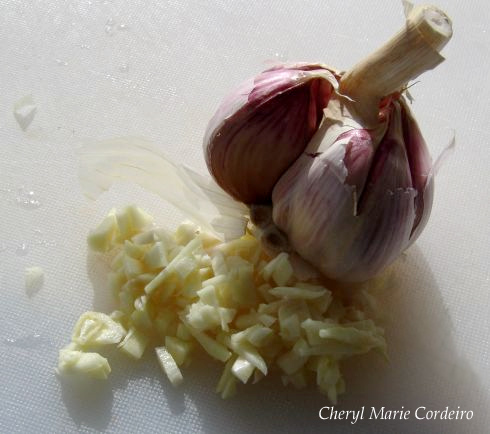
Fresh garlic in a bulb

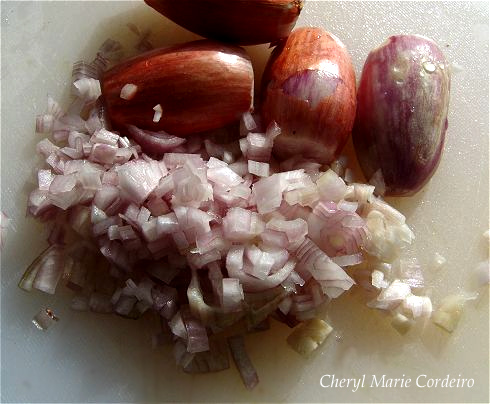
Two cloves of garlic, chopped up and braised in olive oil together with some shallots.

Chopped shallots

Shallots are actually a kind of lily buds and have a much milder flavour than onions. Braise to taste.

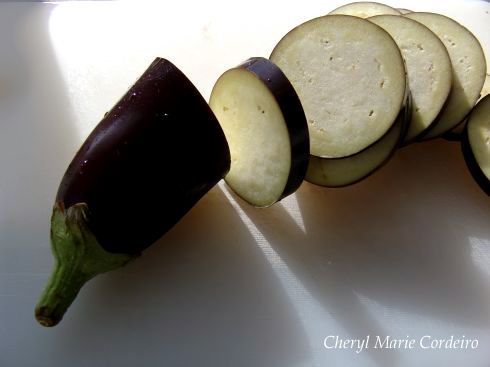
Dark purple aubergine, eggplant

A dark purple aubergine, sliced.

I then sliced up one zucchini, one eggplant and some large tomatoes. The zucchini and eggplant I drizzled with salt and left them for about ten minutes to marinate, to make them softer and more flavourful. The tomato and the zucchini does not need more than a warming to cook, but the aubergine is tougher to cook due to its spongy and air filled cells. So I tried to deal with this difference by using a really fresh aubergine and by sprinkling it with some salt beforehand to make it softer. Due to the difference in cell structures, salting the aubergine is actually more important than salting the zucchini prior to cooking.

Inspirational table settings at Passion för Mat 2009, the gourmet food fair, Gothenburg, Sweden

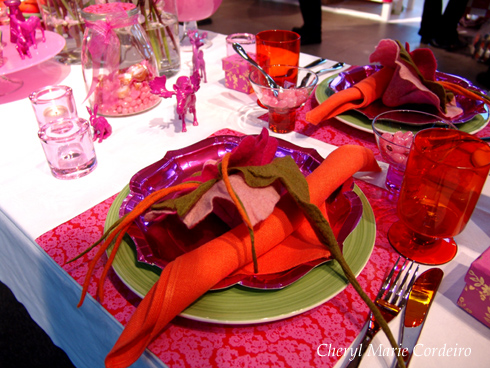
Table setting in pinks and oranges

At the recent Passion för mat food fair 2009 at Eriksbergshallen in Gothenburg, inspirational table settings were presented, such as this layout in varying tones of pinks and oranges for the upcoming spring.
Photo for CMC by: Cheryl Marie Cordeiro © 2009.

The table setting at any party thrown, is an art in itself to pull off. Just as people’s anticipation and excitement can be heightened by looking at the invite card to any event, the table setting upon entering the scene of the event can set the very tone, mood and ambience of the party.

Table settings inspire the mood of the guests from the moment they arrive. They also tell people if you’re genuinely interested in hosting the party, in having guests over and if you’re genuinely all out for having a good time!

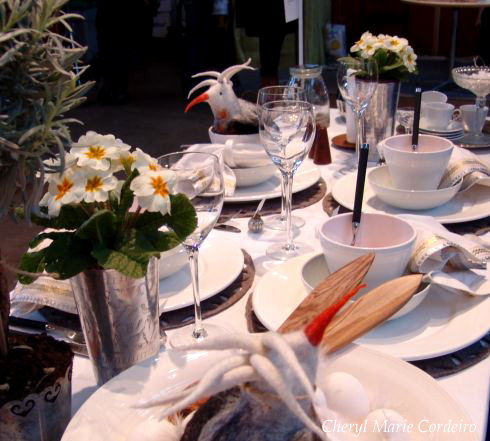
White table setting

A table setting in varying shades of white and contrast green.

The cold spell in Sweden will soon give way to warmer spring temperatures and the restaurants are already discussing and settling their outdoor seatings for the spring and summer seasons. In the next few months all through summer, more people will begin to eat outdoors and with Easter, May Day and graduation parties upcoming, there’ll be plenty of reasons for Swedes to throw parties all the way past Midsummer and Crayfish eating season! Continue reading “Inspirational table settings at Passion för Mat 2009, the gourmet food fair, Gothenburg, Sweden”

Anya potatoes, a potato lover’s nubbly delight!

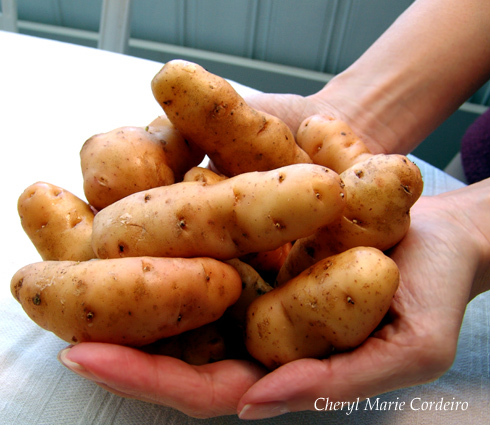
Anya potatoes; Anya potatisar

A handful of Anya potatoes.
Photo for CMC by: Jan-Erik Nilsson © 2009.

We were first introduced to these distinctly thumb-shaped potatoes at a recent food fair in Gothenburg, Passion för mat, where author and potato expert Dan Berntsson was on location to give en empassioned talk about these Anya potatoes, which he calls “GI-potatoes”. These potatoes grow finer than the normal household variety and the firmness of their flesh helps with the GI-Index in our bodies after a meal.

A project of the Scottish Research Institute and Lord Sainsbury’s gardener, Anya potatoes were originally grown in Scotland in 1995 as a cross between the Pink Fur Apple and Desiree potatoes. It gets its characteristic knobbly features from one of its parent, the Pink Fur Apple.

While one could buy 10 kg boxes of Anya potatoes readily availble at the grocers in the UK, this variety of potatoes has only recently been introduced into the Swedish market by Dan Berntsson, and is currently only sold to restaurants. We were lucky enough to get our hands on a 1 kg pack of these potatoes only because we were at the food fair in Gothenburg, that opened up a wonderful gamut of delicatesse food items for us to explore and bring home. Continue reading “Anya potatoes, a potato lover’s nubbly delight!”

Baked honey pepper Chicken pot

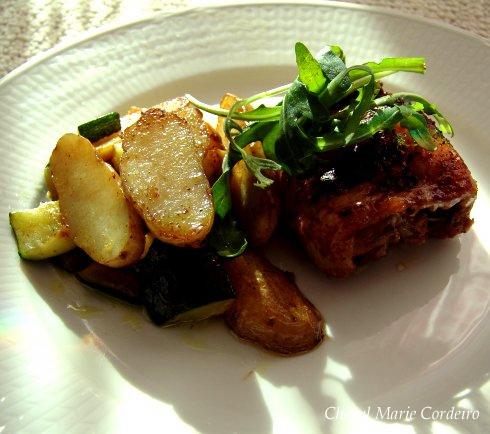
Baked honey black and rose pepper Chicken pot with fresh fried Anya potatoes topped with a rucola leaf lettuce.
Photo for CMC by: Jan-Erik Nilsson © 2009.

A while ago, we inherited several old fashioned but good quality kitchen utensils, among them many different pots and pans. These delightful things now sit around our kitchen, inspiring us to cook different dishes in them.

Among them was one orange enamelled vintage Husqvarna cast iron low pot, that we’ve had our mind on finding some use for. And today, we happened to come across some really nice looking pieces of fresh chicken at the local grocers that we thought would go perfectly with this old pot.

We don’t mind sharing our recipe since it is very straightforward. It’s also a light and lovely dish for early spring, where you can sit outdoors to enjoy!

Baked honey pepper Chicken pot

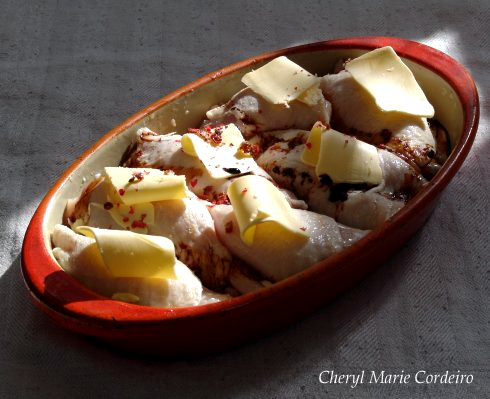
Chicken honey pepper pot, with butter slices over the unbaked chicken.

The chicken pieces were rinsed and cleaned, with some skin and fat left on them so that they don’t get too dry whilst baking. The chicken parts were then placed together in the oven safe dish. One could also use any pot or deep dish for this, not necessarily a cast iron one. To the chicken, spices were added; crushed rose pepper, crushed black pepper and some soy sauce. Some lime, lemon or orange rind were added, if lacking those, one could also use orange juice. About one tablespoon of acacia honey was dribbled over the chicken bits in the dish.

Rediscovering oatmeal or havregrynsgröt in Sweden

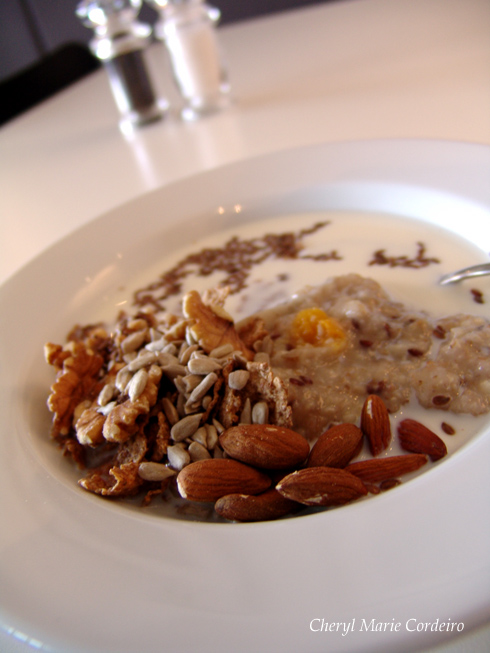
Oatmeal, havregröt or havregrynsgröt, with almonds, walnuts, flax seeds and milk.
Photo for CMC by: Cheryl Marie Cordeiro © 2009.

As a child, I was never a fan of oatmeal because I was fed oatmeal served with sweetened condensed milk only when I was ill. Tasteless and watery, the consistency of the oatmeal served meant that it could be swallowed and digested more easily. Back then, because of my lacklustre association to oatmeal, I remember staring at a friend in horror when he told that his father ate plain cooked oatmeal everyday for breakfast, without added sugar. I asked him in all earnestness, “Why does your father do that?”

After more than fifteen years of not touching oatmeal and after a shift in continents, I began rediscovering this simple grain that in no matter what form you have it, takes less than ten minutes to cook.

A popular breakfast in Sweden, oatmeal in its most basic form is often cooked with a pinch of salt and served with apple sauce, milk and a dash of cinnamon powder on top. From this, I began experimenting with fruit, slicing bananas into the mixture or adding dried raisins to the mixture, taking away the apple sauce but keeping the dash of cinnamon. I’ve also tried frozen fruit such as frozen strawberries, raspberries, blueberries and mangoes. Fruit in general seems to go splendidly with oatmeal!

Beyond fruits, I began eating oatmeal with all kinds of nuts – hazelnuts, almonds, walnuts and brazil nuts. Or seeds such as flax seeds, sesame seeds, sunflower seeds. These also seem to complement oatmeal to a large extent and I began to enjoy having oatmeal at breakfast.

Today, with a repertoire of oatmeal recipes at hand, I find oatmeal to be one of the most cost efficient, healthy and interesting meals one could whip together in no time. Everyone from atheletes to those with high blood pressure and diabetes would benefit from eating at least one serving of oatmeal a day.

As for my association of oatmeal and illlnesses, it’s pretty much gone now. In fact, I’m just as happy settling for oatmeal with sweetened condensed milk as I am with oatmeal with fruits and nuts. The latter, preferably without added sugar.

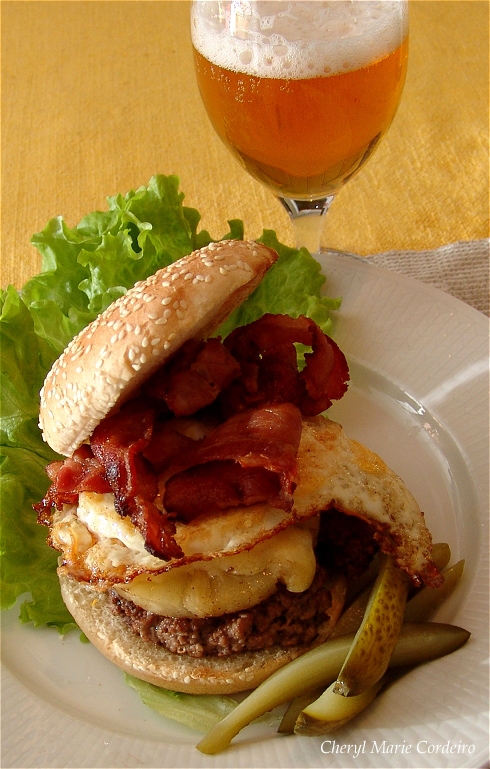
A cheese burger inspiration

A burger of our own, inspired by a visit to New York
Photo for CMC by: Jan-Erik Nilsson © 2009.

You can spend a lifetime exploring the culinary offers in metropolitan New York where there are endless food choices, but I would recommend anyone visiting New York to make a pit stop at Michael Jordan’s, the Steak House to grab at least a burger. They also serve quite simply the best steaks in Manhattan!
 
The Grand Central Terminal is exactly as its name describes, central, and is conveniently located in the middle of most everything in New York. The Steak House inside occupies the north and west balconies of the terminal and overlooks the big clock featured in the DreamWorks movie Madagascar (2005). A visit to the restaurant is effortlessly combined with a visit to the MOMA, a look at the Rockefeller Center and it could also be combined with all kinds of shopping sprees. So, from a Bite of the Big Apple point of view this is pretty much as good as it gets.
 
It took two seconds for me to decide that I would settle for a burger when I stood just inside the entrance of the Grand Terminal, two steps from the amber-glowing ambience of Michael Jordan’s, the Steak House restaurant; its entrance elegantly flashing a sign telling of their Specials of the Day – a choice between a 12 oz broiled burger or a 14 oz steak. Continue reading “A cheese burger inspiration”

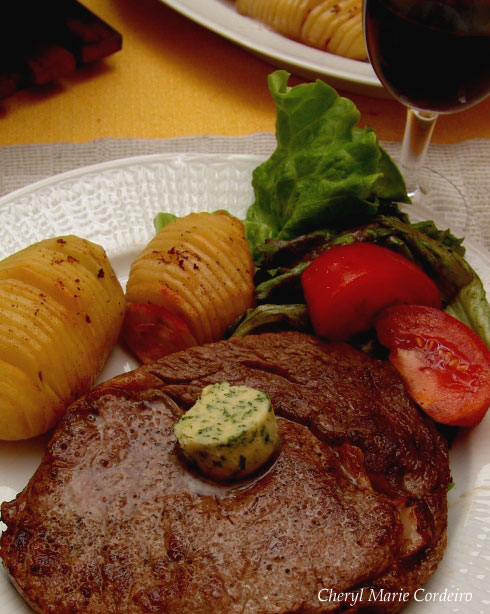
Entrecôte alla Fiorentino, a personal interpretation

Entrecôte garnished with maïtre d’hôtel (butter creamed with chopped parsley, lemon juice, salt, and pepper). Salad with a light vinaigrette dressing and hasselback potatoes.
Photo for CMC by: Jan-Erik Nilsson © 2009.

Entrecôte with a Tuscan twist

The thing is, we really enjoyed our brief stay in Northern Italy and Florence last year and we miss it. After we came back home, we have been cooking things inspired by the region, we are enjoying the wines and some food we brought back and we make plans on places to see when we will be back. Rarely have we been so certain about going back to a place we have visited than to Tuscany. So when preparing an entrecôte dinner recently, it was nigh impossible not to put a Tuscan twist on the meal and for fun, we don’t mind sharing the recipe.

So here goes, Entrecôte alla Fiorentino.

The ideology behind Florentine cooking is basically to take great care when selecting the ingredients. The artist and genious Michelangelo came from Florence. If you have seen his Pieta in the St Peters Basilica in Rome, or his statue David in Florence, then you know what what a Florentine artist can make out of a slab of marble. Then imagine what a Florentine chef can do with a piece of meat! So, if we take Michelangelo’s and the Florentine spirit to our hearts and celebrate that in our own cooking, then wouldn’t we delight in the results?
Continue reading Entrecôte alla Fiorentino, a personal interpretation”

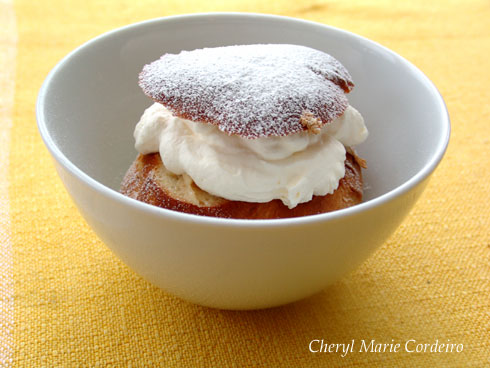
Semla in a bowl of warm milk, a northern Swedish tradition

Our homemade semla which has chopped almonds with a marzipan filling in a cardamon bun. This is topped with a generous dollop of freshly whipped cream.
Photo for CMC by: Jan-Erik Nilsson © 2009.

It doesn’t matter if Fettisdagen was just over and that we’ve been eating semlor for about a month now. With the exception of high summer, I think I pretty much could enjoy a semla any day in the year, though of course enjoying one particularly on Fat Tuesday or Mardi Gras would be double the fun and delight! Continue reading “Semla in a bowl of warm milk, a northern Swedish tradition”

Sjömagasinet’s team proves their metier beyond all things piscatorial. Gothenburg, Sweden 2009

Restaurant Sjömagasinet in Gothenburg, Sweden in early spring 2009, housed in a building, originally an 18th century ship’s furnishing storage.
Photo for CMC by: Jan-Erik Nilsson © 2009.

The restaurant Sjömagasinet in Gothenburg, Sweden, is well known, as is its iconic owner and Chef de Cuisine Leif Mannerström.

What might be less known is that the restaurant’s odd looking building at the immediate waterfront of the Göta River was originally an 18th century magazine, built by the Swedish East India Company (1731-1813) to house spare equipment for the huge sailing “East Indiamen” ships.

These frigates went on their yearly voyages to China and back for tea, silk, spices and porcelain during the best part of the 18th century, departing from just outside this building around February each year. They usually arrived back in the late summer after a voyage that took almost two years for each round-trip, if everything went well. If not, the arrival could be delayed. As a matter of fact, there are cargoes that still haven’t arrived as yet, but that’s a different story. Today we were just here to eat.

Luckily our careers give us the opportunity and occasion to travel quite some. Valentine’s Day last year was spent at the Peninsula Hotel in Bangkok, overlooking some fantastic fireworks reflecting to double effects in the black waters of the Chao Phraya River. This year we visited Sjömagasinet in Gothenburg, Sweden, immediately overlooking the near frozen Göta River. The differences in climate and temperatures could not have been greater.

Gothenburg is located at 57°43′ North latitude and 11°59′ East latitude meaning about three hours of flight northeast of London and much too far north for comfort for anyone preferring the tropical climate of Singapore. Luckily there are things here to compensate the endeavours.

The gourmet restaurant Sjömagasinet is one of them.

The history of the restaurant’s building is somewhat reflected in the menu but most of all, it shows to tell of Leif Mannerström’s great interest in gourmet preparation and serving of various piscatorial delights. What we chose for our Valentine’s day dinner was of course only a sample of what could be had at the restaurant.

The menu for the day is set on the day itself with not much advance notice. The availability of first class ingredients settles what the Mannerström team will work with for the day, so you can simply pop in and enjoy. If you like, you can discuss with the forthcoming staff, anything you’d like to have served from what is available in the kitchen for the day.

On the menu you can expect to find weever, plaice, pollack, halibut and herring served in classic and creative conconctions. During the Christmas season, the julbord or Christmas smorgasbord, serves up to more than sixteen types of herring.

The dishes we decided upon were what we felt right for the day. As we sat down at our table ready to enjoy ourselves, we brought with us three distinct impressions: that of the ice-cold weather of the Nordic climate, the ever present Göta River that flows just outside this restaurant and the warmth from the burning log fire that greeted us at the entrance of the restaurant, when we first came in.

Today I initially felt like the Fish Classic, a deep fried cod tail with sauce verte, lemon, asparagus and boiled potatoes. But while settling in and warming up to the mood of the place I started to feel somewhat more adventurous.

Contrary to my expectations the meat dishes seemed just as interesting as the fish and my curiosity was really aroused when I found elk among Mannerström’s Husmanskost.

I have only ever encountered a live elk once in my life, in a national park here in Sweden. These large creatures wander the vast forests of Sweden and are freely hunted for food. About 100 000 elks are shot in Sweden every year and at an average weight of about half a tonne (1000 lbs) each, it’s a lot of meat. With elk meat, the inherent problem I find is how to cook them. Apart from that they don’t exactly fit neatly into the oven, the meat is usually tough and gamey. My previous experiences of eating elk were not encouraging. But if there ever was going to be a chance I’d eat elk again then this would be the place. So elk, it was.

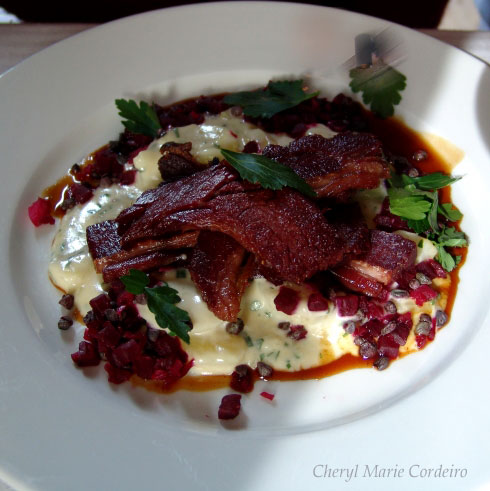
Fried, salted brisket of elk with potatoes and cream

Fried, salted brisket of elk served with beet roots, capers and potatoes cooked in cream.

The elk briskets were tender, warm, juicy and inviting on a bed of beetroots and potatoes cooked in cream sprinkled with parsley leaves. The flavours combined and blended splendidly with one another to give a robustly warm and accommodating meal. The dish was also testament to what could be produced with basic ingredients that were none too fancy. Continue reading “Sjömagasinet’s team proves their metier beyond all things piscatorial. Gothenburg, Sweden 2009”