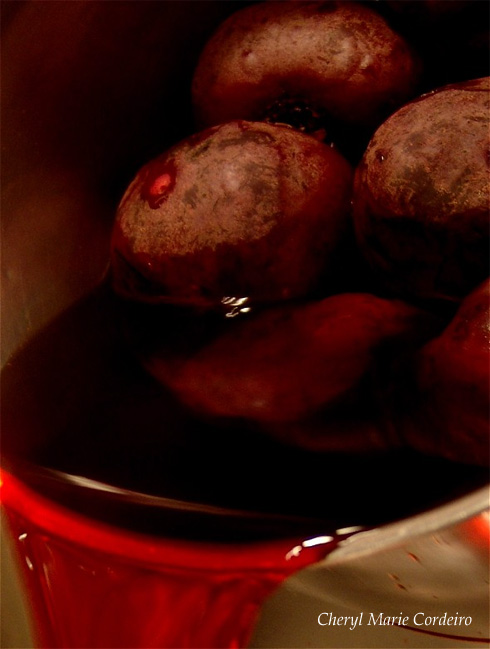
Pickled beetroots for the Christmas table

Beetroots after boiling, Swedish pickled beetroots

Beetroot’s natural rich vibrant burgundy color adds festive culinary cheer to the Christmas table.
Photo Jan-Erik Nilsson and Cheryl Marie Cordeiro for CMC © 2009

Christmas is typically one such time of the year when you risk letting your general enthusiasm go completely overboard and you start looking into age-old things that more sensible relatives gave up decades ago – like making your own pickled beetroots. It was Asta, my Swedish mother-in-law, who used to make this, so how we’re doing it here is as she used to do it. The entire project takes just about a few minutes once the beets are boiled. Continue reading “Pickled beetroots for the Christmas table”
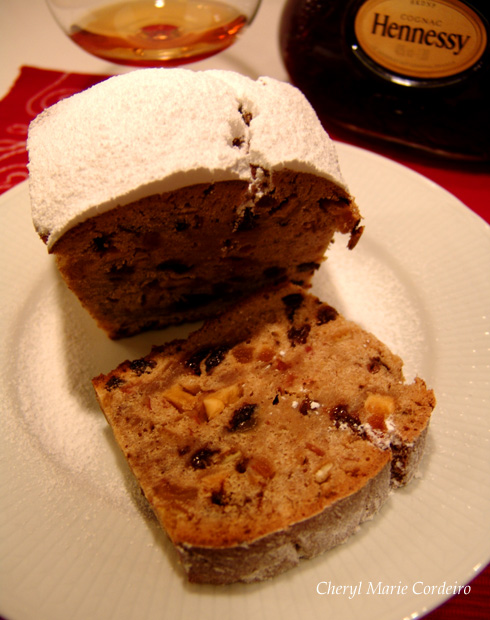

Christmas stollen

Christmas stollen, Cheryl Marie Cordeiro

Homebaked Christmas stollen.
Photo for CMC © JE Nilsson, CM Cordeiro Nilsson 2009

I think most would spend the better half of the year waiting for the festivities of year end Christmas, but when the holiday season arrives, it seems all too soon over because of the rush of it all.

Baking seems an integral part of the year end Christmas and New Year’s activities, of which one of my favourites are the rich fruit cakes and fruit breads. My mother has the tradition of baking rich and dark fruit cakes at Christmas, the type where the fruits soak in cognac for weeks prior to baking. My father has the tradition of baking sugee cakes at Christmas.

In Sweden today, we managed a fruitbread or a Christmas stollen, dusted over decadently with icing sugar. I’ve always loved fruit filled cakes and breads since I was a little girl and it was only ever at year end that I got to eat the cognac or brandy filled ones, tasting the variations of the cakes and breads whilst visiting relatives.

We made our fruit bread this year with a generous dash of orange liqueur and found that this bread goes well with a good orange marmalade.

Swedish Christmas tradition in its julbord: Sjömagasinet 2009

Cheryl Marie Cordeiro Nilsson, Sjömagasinet 2009, julbord, Christmas table

Dining at Sjömagasinet’s Christmas table or julbord.
Outfit is a Karen Millen tartan dress.

Photo for CMC © JE Nilsson, CM Cordeiro Nilsson 2009

It’s funny how impressions of festivities change with time the longer you’ve been in the place. When I first arrived in Sweden, slightly more than 7 years ago, I thought it strange that Swedes did not celebrate Christmas with quite the same pomp as Singapore. I rationalized that Singapore, as a multi-racial society, took pride in celebrating all festivities of its races with splendour, lighting up various parts of the city country, Geylang during Hari Raya and Orchard Road during Christmas for example, depending on the festivities, while Sweden being rather secular, played down Christmas as such.

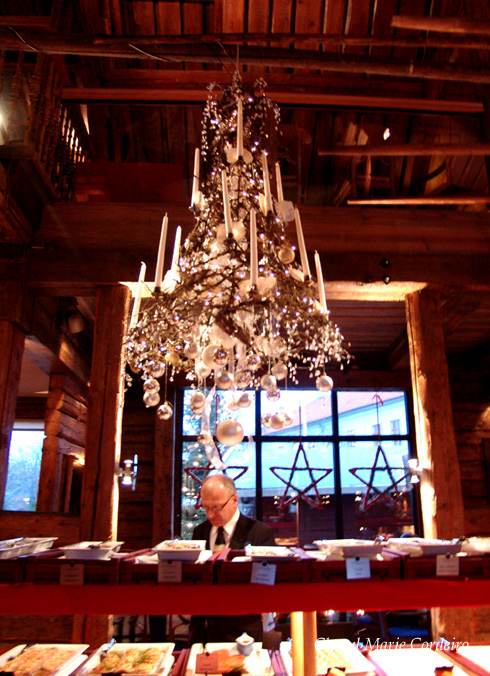
Sjömagasinet, Christmas decoration, hanging tree, Gothenburg Sweden 2009

A silver and white Christmas tree suspended from the ceiling of the restaurant, Sjömagasinet.

I’ve found over the years though that contrary to what I believed at first, Sweden did indeed celebrate Christmas as much as Singapore, but in a manner that needed much observation and understanding of its people and culture – an aspect that one, with a quick visit to the country over a few days might wont to miss.

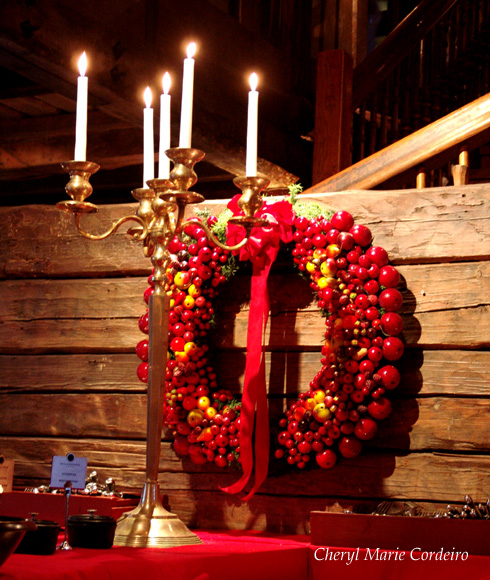
Sjömagasinet Christmas decoration, Gothenburg, Sweden, julbord

Christmas wreath and candles alongside the julbord.

Sweden celebrates Christmas with profound rootedness in the Swedish tradition with hand crafted frocks, decorations and not the least in the cooking of Swedish festive food.
Continue reading “Swedish Christmas tradition in its julbord: Sjömagasinet 2009”

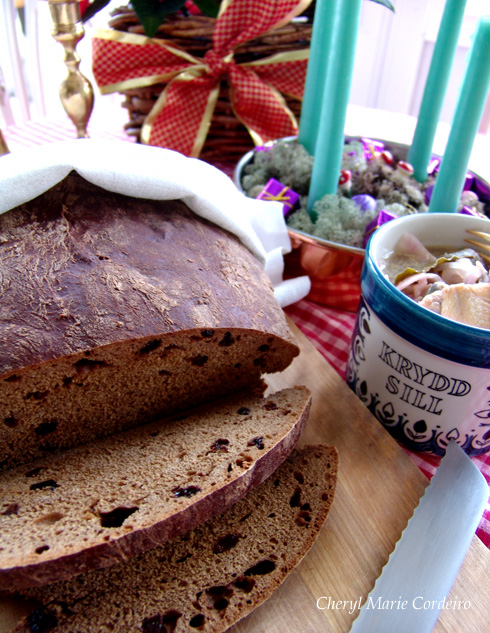
Vörtbröd, Swedish dark Christmas bread

Vörtbröd recept, with homemade pickled herring, sill, Swedish Christmas dark bread recipe

Swedish dark Christmas bread or vörtböd and pickled herring, both homemade, are two culinary regulars at our Christmas table.
Photo for CMC © JE Nilsson, CM Cordeiro-Nilsson 2009

Bread baking in general usually fills the kitchen with such warmth and coziness, it’s recommended strategy that those holding a house viewing for the purpose of selling their house (or apartment), bake bread and make coffee just before the viewing guests arrive.

Now the smell of dark Christmas bread filled with raisins baking in the oven is unbeatable and it’s something I look forward to every year end, when spending the holiday season here in Sweden. What’s exciting about the making of this bread is that we get to choose which dark Christmas beer of the year goes into it!
Continue reading “Vörtbröd, Swedish dark Christmas bread”

Kueh lapis

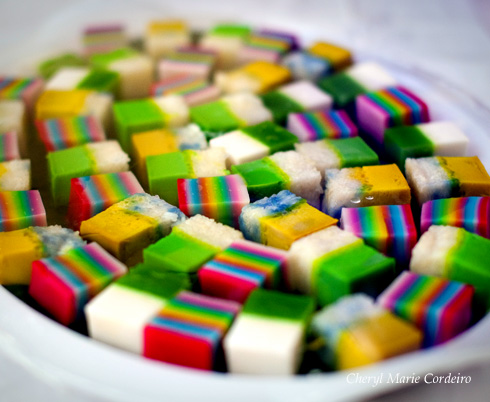
Nonya kueh kueh

Various Nonya kueh kueh.
Photo for CMC © Kevin D. Cordeiro 2009

As a child, I’ve always looked forward to going to the wet market on Sundays in Singapore. The walk to the market was pleasant, where we would often meet neighbours who were themselves either on the way to the market or back. A curious gift I often received from a very old lady back then whenever she saw me, was a piece of ginger.

A hawker center is often connected to the wet market, providing a convenient place to both eat and market. And before buying the week’s groceries, it was breakfast, where I found that the colourful bit of kueh lapis usually sold at Nonya stalls, never failed to attract my attention. Most of all, I enjoyed peeling off its tapioca layers one by one, eating it according to colour.
Continue reading “Kueh lapis”

Homemade pizza

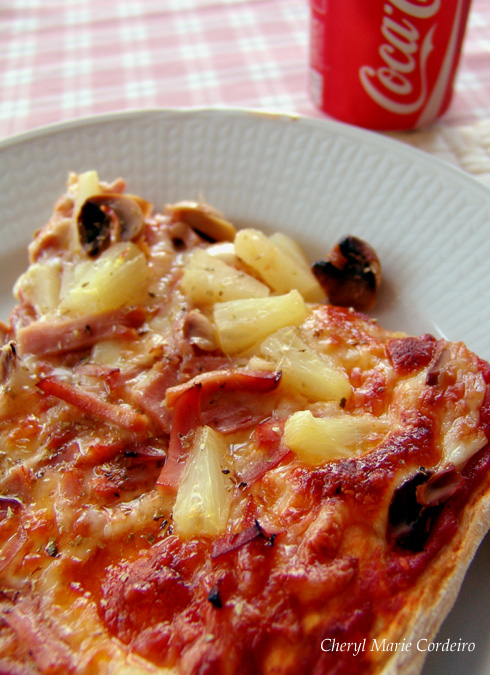
Pizza_102

The Hawaiian corner.
Photo for CMC © JE Nilsson, Cheryl M. Cordeiro-Nilsson 2009

Pizzerias are plenty around the city of Gothenburg, where you could literally hop from one outlet to another, finding your favourite version of a quatro stagione or the local favourite, kebab pizza which is a little surprising combination, but very popular. You could also spend weeks trying out different types of pizzas with different toppings without ever having to eat the same pizza twice.

But on some days, nothing beats a homemade, oven-baked pizza with toppings just the way you like it!
Continue reading “Homemade pizza”

Quizás Grand Cru: single variety cocoa beans from the Venezuelan amazon

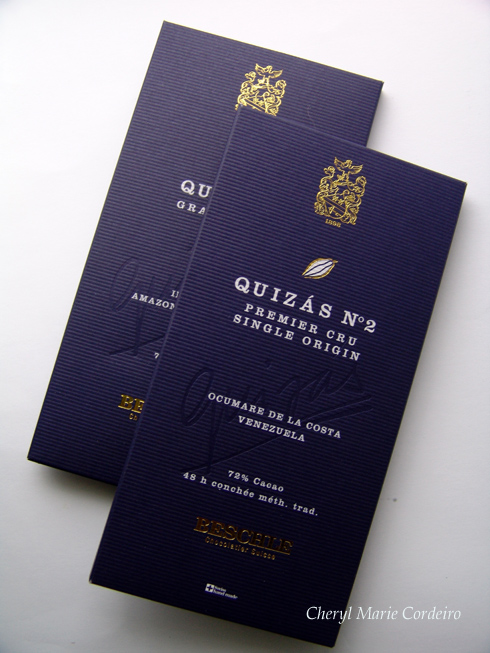
Quizás Grand Cru Indigena Amazonia Venezuela, 72% caco Beschle chocolatier, Swiss handmade

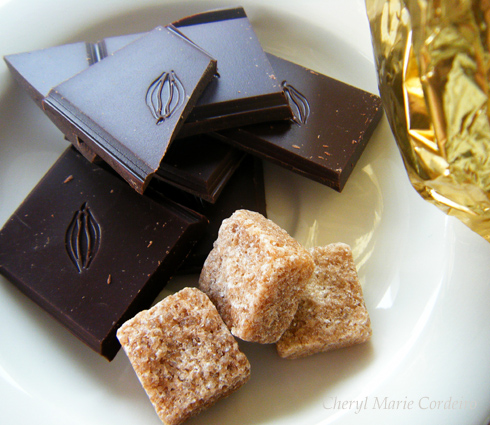
Quizás Grand Cru, Swiss Beschle chocolate made from cocoa beans grown in the indigenous regions of the Venezuelan amazon. It contains only 3 ingredients – cocoa mass (72%), cocoa butter and cane sugar.
Photo for CMC © Jan-Erik Nilsson, Cheryl Marie Cordeiro-Nilsson 2009

The Gothenburg Chocolate and Delikatess Festival 2009 held recently gave us the opportunity to sample literally hundreds of varieties of chocolates and truffles. We came home with some of our favourites, like this bar of Quizás Grand Cru. This chocolate bar is the result of a Swiss German joint venture of the famous chocolatiers Basel Beschle, and the project developers / Latin America specialists Pascal Wirth and Niklaus Blumer.

Quizás Grand Cru, Cheryl Marie Cordeiro, Swiss Chocolate with single region cocoa beans

Quizás No 2 (72%) Premier Cru Single Origin / Ocumare de la costa Venezuela.

Quizás produce more such chocolate bars made of rare, single bean varieties and single area cocoas, including their Quizás No. 1 (74%) Premier Cru Criollo Porcellana, Criollo Zulia Venezuela and their Quizás No. 2 (72%) Premier Cru Single Origin, Ocumare de la costa Venezuela.

With the world of chocolatiers dreaming up ever more fantasmic chocolate confections in all varieties of flavours mixed into the cocoa (think fruits, nuts, nougat to liquor), it was an about turn to realize that these chocolate bars, when striped down to their bare essentials – single beans from a single region, with only the 3 ingredients of cocoa mass, cocoa butter and cane sugar – could jolt your tastebuds into realizing what gourmet chocolate really is.

Entrecôte á l’automne Suédoise

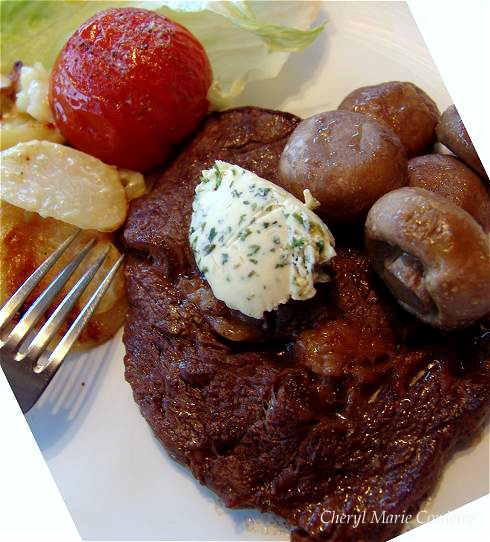
entrecote_dish, Cheryl Marie Cordeiro

Entrecôte with baked tomatoes, fried mushrooms, potato gratin and parsley butter.
Photo for CMC © Jan-Erik Nilsson and Cheryl Marie Cordeiro 2009

It’s during autumn in Sweden that you realize that the epitome ‘Land of the Midnight Sun’ is only valid during the short summers. During the winter, everything turns pretty much into the ‘land of the midday sun glimpse’, if at all, because autumn and winter days are often punctuated with stretches of dark grey, gloom and rain. So there isn’t much else to delight in during these days, except a hearty meal of your favourite cut of steak!

With logs burning in the woodstove and with a flip of a switch to turn on the lights, the kitchen is as warm and as bright as we could wish for. And we went about preparing the meat.

There are numerous recipes to be had over the internet with regards to preparing meat, most with detailed instructions, so here is an outline of our version.

In order of preparation.

1. Cut and put out the meat in room temperature. It cooks better if it hasn’t been previously refrigerated so that it is colder on the inside than the outside. Personally I think meat turns more flavourful if it is salted about 50 minutes before it goes into the pot, more or less.

2. Prepare parsley butter.

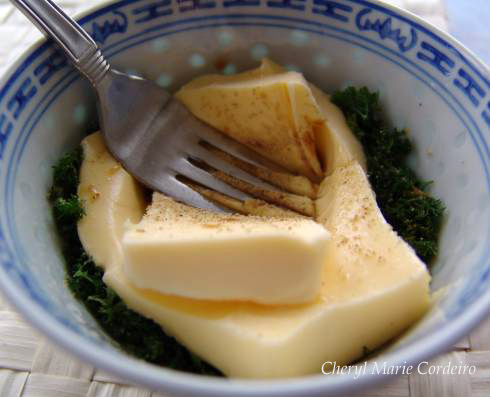
parsley butter, Cheryl Marie Cordeiro

Mix butter with chopped parsley.

We store our own parsley form the summer ready to use, in the freezer. Add some lemon juice, some Worchester sauce, salt and white pepper. Mix and refrigerate until serving.

Swedish autumn classic dish – Kalops

kalops Swedish staple in autumn

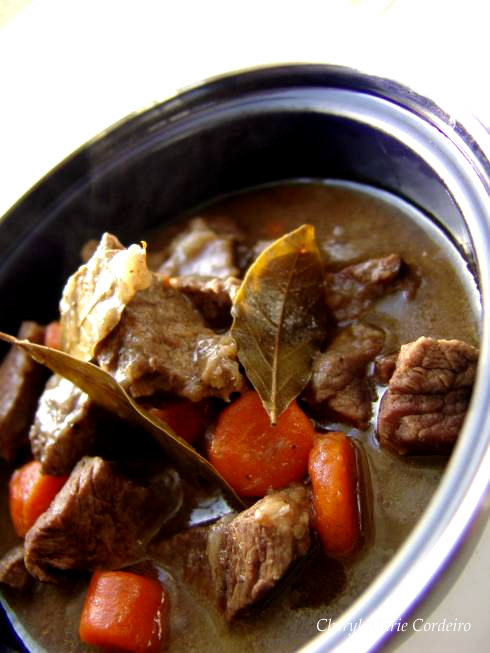
Kalops, a classic Swedish autumn dish
A solid meat stew that fills you with energy to ward off the autumn chill.
Serve with potatoes, pickled root beets and a tall glass of beer.

Photo: Cheryl Marie Cordeiro for CMC © 2009

Living in Sweden, in Northern Europe makes you change your habits with the seasons and when the days get shorter and the leaves turn yellow, orange and brown and start dressing up the grass lawn in all kinds of colours, you start thinking about more hearty foods that warms the core of your body. Autumn is also harvest time for all kinds of vegetable roots and the livestock that had been grassing outdoors all summer are also now starting to fill up the meat counters in the supermarkets.

A traditional autumn dish in Sweden that is rather simple to make is kalops. Its a full flavoured, meaty beef stew that would feel completely at home in an Indian restaurant if it wasn’t for the spices that are different in Sweden.

Here are the ingredients if you feel like trying. Serves four persons as a single dish.

Heat up a large and deep pot with a dollop of butter and let two diced and sliced onions simmer.
Cut up about 1 kg (2 lbs) beef (marrowbone) in comfortable bite sized cubes.
Add about 10 allspice seeds and 2-3 bay leafs.
Add 1 meat cube if you like and if so, no extra salt in needed.
Add 1/2 liter of water mixed with 3 tbs wheat flower to thicken the sauce. Halfway through the cooking time, add two carrots cut up in thick slices.
Simmer under lid on slow heat. When the onions are mostly dissolved the stew is ready (about 1-1,5 hour).

This old fashioned dish just gets richer and better with longer cooking time. In many Swedish cookbooks, they also recommend that you let this dish sit for a few hours before serving. Overnight sitting is best.

Enjoy!

A Swedish take on Singapore Chilli Crabs

Singapore style chilli crabs, made with Cancer pagurus 3

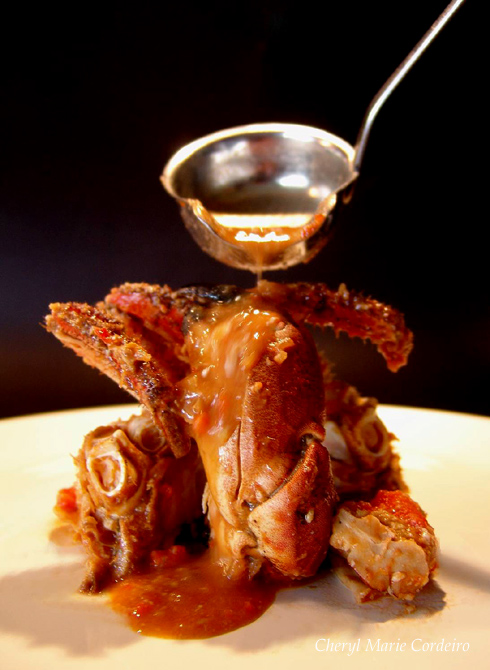
North Sea “krabbtaskor”, Cancer Pagurus served as Singapore Chilli crabs
Photos © Jan-Erik Nilsson, Cheryl M. Cordeiro-Nilsson for CMC, 2009

If you happen to live in any of the Nordic countries and so close to the sea that you can buy fresh crabs from the local fishermen, the Swedish “North Sea” crabs (Cancer Pagurus) are at their most delicious during the last three months of the year. The most popular way to cook and serve them in Sweden is, as simple as possible. Cook for 15 minutes with a dash of salt and a handful of dill seeds. Tidy up, crack open and serve with white bread, some extra rock salt and butter.

While I do love the simplicity of the Swedish version of crabs, I had begun to crave something spicier after the August crayfish celebrations, and the first thing I thought of when I got my hands on these Volvo of crabs was – Chilli Crabs!

A close second was to make Bakwan Kepiting, a Peranakan crab and porkball soup, but the former won hands down on my palate craving for the moment.

There are certainly many ways to cook Singapore Chilli Crabs, whether you find them at Changi Village, Punggol or along the East Coast in Singapore. Here’s what I used for my Swedish version of Singapore Chilli Crabs:

Ingredients

    About 3 large Swedish Cancer Pagurus crabs (estimate 1 crab per person. See picture for size)
    Vegetable oil for stir-frying
    3 cloves garlic
    3 fresh red chilli, roughly chopped
    1 inch ginger
    1 cup of water,
    2-3 cups of crab stock from the crab bath
    1 cup tomato ketchup,
    Chilli sauce or chilli paste, according to taste
    3 tbsp sugar, or according to taste,
    1 1/2 tsp cornflour,
    1 tbsp pounded brown preserved soya beans,
    1/4 tsp salt

This sauce is really tasty and you can stretch the dish to serve more by just increasing the amount of sauce and serve with white bread…

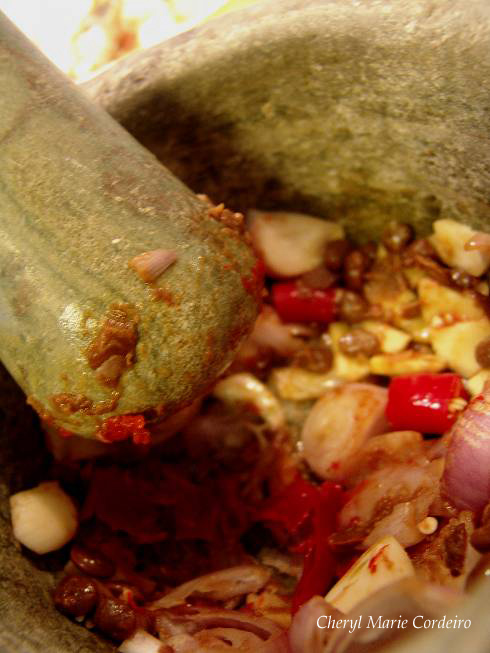
Ingredients, pounded for Chilli Crabs Singapore style

The ingredients to the gravy, pounded. Somehow blending is just not the same.