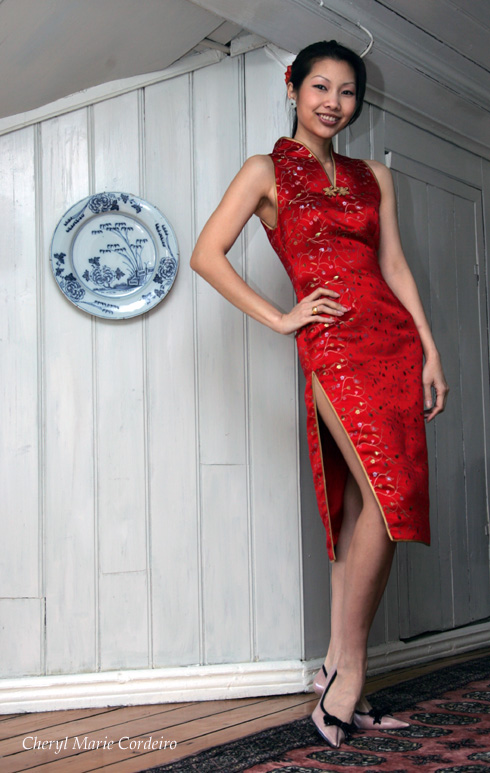
Ushering in the Year of the Tiger 2010 on Valentine’s Day!

Silk embroidered cheongsam qipao, Chinese New Year 2010, Cheryl Marie Cordeiro Nilsson

In a red silk embroidered cheongsam for the Chinese New Year and upcoming St. Valentine’s Day, 2010.
Photo Jan-Erik Nilsson, Cheryl Cordeiro-Nilsson for Cheryl Marie Cordeiro © 2009

I’m definitely feeling the Lunar New Year vibes all the way from Singapore, where stores are already keeping open for longer hours during the days leading up to Chinese New Year’s Eve that is this Saturday!

The Chinese New Year or Spring Festival is the most important of the traditional Chinese holidays lasting for 15 days that ends with the Lantern Festival and with a large Chinese population in Singapore, one could expect the festivities of this weekend in the city to be vivacious with more than just the Chinese enjoying the celebrations.
Continue reading “Ushering in the Year of the Tiger 2010 on Valentine’s Day!”

Packet noodles with a twist

Egg noodles with shrimp and poached egg.

Egg noodles with shrimp and poached egg.
Photo Jan-Erik Nilsson, Cheryl Cordeiro-Nilsson for Cheryl Marie Cordeiro © 2009

A small seasoned piece of instant noodles was given to me from its package and I was munching on these newfound chips for the first time, without even knowing what it was. This style of eating dried hardened noodles was introduced to me by a schoolmate, after running around the school playground together and I thought the dried noodles, rather a large biscuit to be broken into smaller bits and eaten like biscuit crumbs from the bag. The packet had a blue monster on the front much like Cookie Monster, but with a red nose, the brand, Mamee, and I was six years old. It was to be four years later when I realized that instant noodles were normally eaten in a bowl. Continue reading “Packet noodles with a twist”

Feminine power behind the veil: who’s voices are we hearing?

Niqab

Photo from Photobucket.

Growing up in a multi-racial, multi-religious and as such, multi-ethnic dress codes nation as Singapore, I never thought twice about each ethnic group’s choice of dress, they being normalized as part of the larger socio-cultural fabric of Singapore from when I was very young. The hijab worn by Muslim women in Singapore is most common, where I understood from fellow female classmates who were Muslim, that it was a matter of personal choice what to wear and when to begin wearing their hijabs.

The niqab and the burqa however would draw slightly more attention in Singapore even today, because of its fuller head to toe covering. But being pragmatists, Singaporeans are most likely to ponder its practicality in choice of clothes worn under the sometimes punishing tropical heat and humidity, wondering how the wearer would fare under those layers of dress when those in t-shirts, shorts and sandals have problems keeping talcum fresh?

The debate around the niqab and the burqa in Europe, most notably because of France’s consideration on banning the burqa, comes from an array of perspectives other than practicality of dress, from how the dress does not conform to the European cultural identity (a point of view that is highly debatable considering the mobility of people these days), to religious freedom without steering towards radicalism and perhaps the most common theme, the head to toe covering as a means of the oppression of women:

“It will not be welcome on French soil,” he said.” We cannot accept, in our country, women imprisoned behind a mesh, cut off from society, deprived of all identity. That is not the French republic’s idea of women’s dignity.” ~ French President Nicholas Sarkozy, in an article by Emma Jane Kirby BBC News, 22 January 2010.

From the Swedish Prime Minister, Fredrik Reinfeldt and leader of the Swedish Social Democratic Party, Mona Sahlin:

“Det är ett uttryck för kvinnoförtryck, [it is a sign of opression of women] sade Reinfeldt i en debatt med Socialdemokraternas ledare Mona Sahlin i Sveriges Radio.”

“Mona Sahlin vill inte ha något förbud av den typen i Sverige, men anser också hon att heltäckande slöja är uttryck för kvinnoförtryck.” [Mona Sahlin does not want a ban of this type in Sweden, but it is her opinion too that a fully covering veil is sign of female opression] ~ Dagens Nyheter published on 27 January 2010.

The same opinion is put forth by Norska Arbeiderpartiets spokesperson on immigration, Lise Christoffersen, i Aftenposten.

As a linguist I can’t help noticing that three of the most important political leaders in Scandinavia are not arguing against female oppression, but against the symbol for it.

From Daily Telegraph writer James Delingpole is also of the point of view of Sarkozy, noting,

‘The freedom’ [Obama] is granting US Muslim women to wear the veil is in fact the most surefire way of guaranteeing their continued subservience. ~ also in Finding Dulcinea

And while the humanitarian intentions are positive on the surface so long as no deeper political motives are uncovered, the perspective of the veil as oppression is not difficult to understand from those who do not wear it in their culture. And as social constructionism (Berger and Luckmann, 1966) would have it, it would be down right difficult for us who do not have the burqa in our culture to view it any other way than as oppressive, our point of view being coloured by our ‘reality’. Even I would feel more comfortable in a qipao and kebaya than a full covering of the burqa, simply because the former ethnic dresses are part of my cultural heritage whilst the latter isn’t. Any fuller coverings than what I think is already a modest long sleeved, ankle brushing kebaya would make me feel restricted in movement and worse, contribute to a feeling of complete loss of my social identity where I become faceless and voiceless.

But for those whose socio-cultural and religious heritage means bearing the niqab and the burqa, how powerless and subservient are the women behind the veil really?
Continue reading “Feminine power behind the veil: who’s voices are we hearing?”

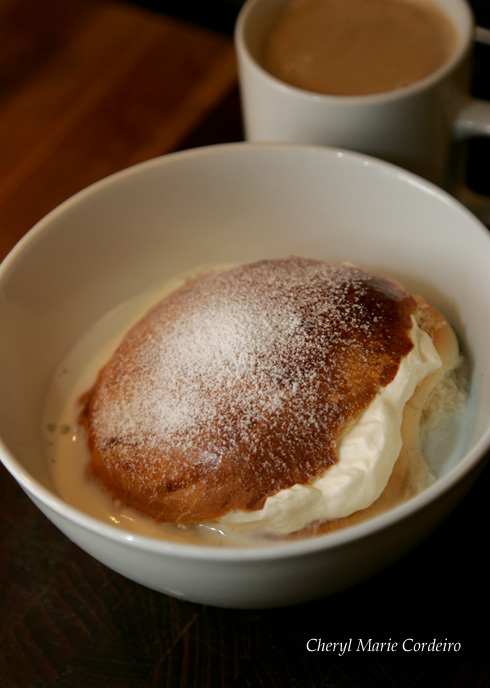
A homebaked semla in hetvägg fashion

Semla i hettvä

A semla, eaten in hetvägg (in hot milk) fashion.
Photo Jan-Erik Nilsson, Cheryl Cordeiro-Nilsson for Cheryl Marie Cordeiro © 2009

Eaten previously only on Shrove Tuesday, one of the last festive meals before the period of Lent leading up to Easter, it was not five days after the twelfth day of Christmas that in this time of mass consumerism that the shops in Sweden began selling some gorgeous looking semlor fully stuffed with whipped cream. As eyebrow raising as it was, I wasn’t one to complain finding ready made semlor in the shops because, I love these!

So decadent is the semla that it seemed to have contributed to the death of King Adolf Frederick of Sweden (1771) after topping off his already heavy meal with 14 of these buns!
Continue reading “A homebaked semla in hetvägg fashion”

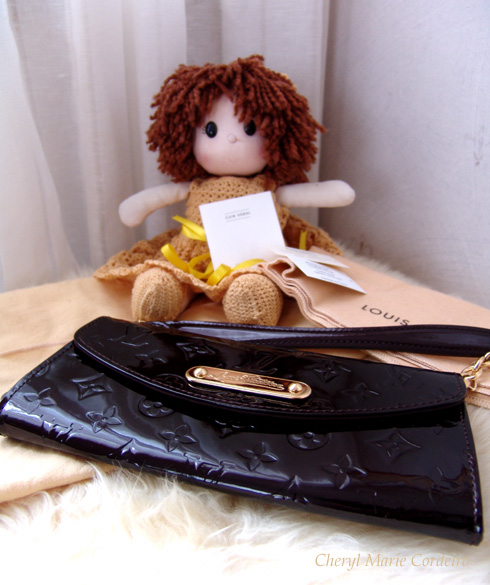
Louis Vuitton Monogram Vernis Sunset BLD Amarante

Louis Vuitton monogram vernis Sunset Boulevard BLD in Amarante

Louis Vuitton, Sunset Boulevard in Amarante.
Text & Photo © JE Nilsson, CM Cordeiro-Nilsson 2009

Despite its possible colour transfers, Louis Vuitton’s Monogram Vernis range continues to be one of my favourite for materials used in wallets and bags because of the rotating range of colours and soft embossed logos on patent leather. Patent leathers are also generally versatile, being able to take you from casual to formal with a switch in clothes.
Continue reading “Louis Vuitton Monogram Vernis Sunset BLD Amarante”

Weekend indulgence: roast turkey dinner with Sandeman Port gravy

Roast turkey with red currant jam and port gravy

Roast turkey served with red currant jam and dark gravy laced with port.
Photo Jan-Erik Nilsson, Cheryl Cordeiro-Nilsson for Cheryl Marie Cordeiro © 2009

Growing up in the Eurasian tradition in Singapore, it was my family’s tradition to have a variety of meats especially during the festive seasons. Roast turkey was one for serving on New Year’s Eve. The smell of a roast turkey wafting from the kitchen is indescribably decadent and something I’ve always looked forward to come New Year’s.

Since being in Sweden, I have had little opportunities to bring over a lot of my food traditions, partly because I spend so much time exploring the new and traditional of Swedish cuisine. Come this weekend however, we decided to put turkey on the table!
Continue reading “Weekend indulgence: roast turkey dinner with Sandeman Port gravy”

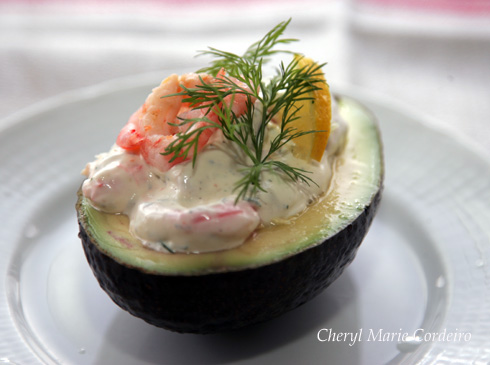
A little avocado luxury

Avocado with shrimp entrée, Cheryl Marie Cordeiro

Avocado with shrimps, an au naturel entrée
Photo Jan-Erik Nilsson for Cheryl Marie Cordeiro © 2009

Crisp and refreshing, this avocado entrée with shrimps provides a filled with natural goodness, creamy but not too heavy entrée to any dinner party. Most alluring about this dish is that all ingredients can be homemade without preservatives with little time and effort.

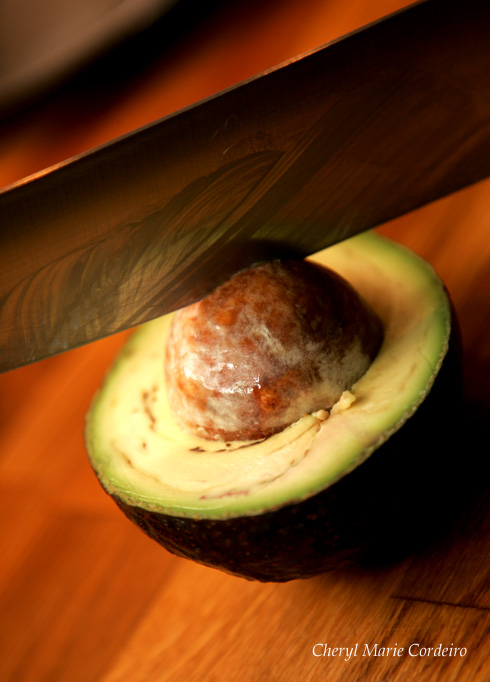
The avocado seed is removed with a twist of the knife.

Remove the avocado seed with a slight twist of the knife.

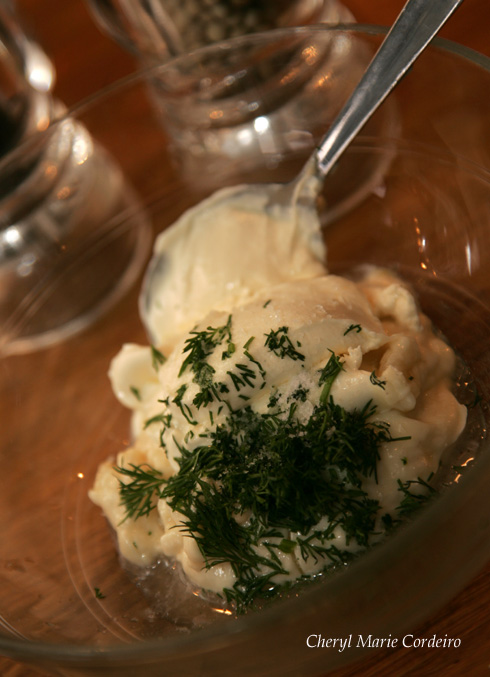
What you’ll need for this are equal parts of crème fraiche and mayonnaise, a dash of black and white pepper, pinch of salt, some fresh dill that is chopped finely, and a squeeze of lemon juice. If you don’t wish for the slight sour tint of flavour that comes from the crème fraiche, you can substitute that with whipped cream instead. Mix all the ingredients till the flavours are well incorporated, then add the shrimp, stirring again. This can be prepared the night before, which I find a real time saver for dinner parties.

Mayonnaise, crème fraiche and dill before the shrimp go in

Mixing the ingredients.

I’ve really only come across eating avocados with shrimp when in Sweden a few years ago. Because of its simple luxury – quick and easy to prepare, something that looks decadent without the extravagant prices, plus it’s as eco-friendly as cooking can get with all natural ingredients – it’s been one my favourite things to eat when living in Sweden since.

Enjoy!

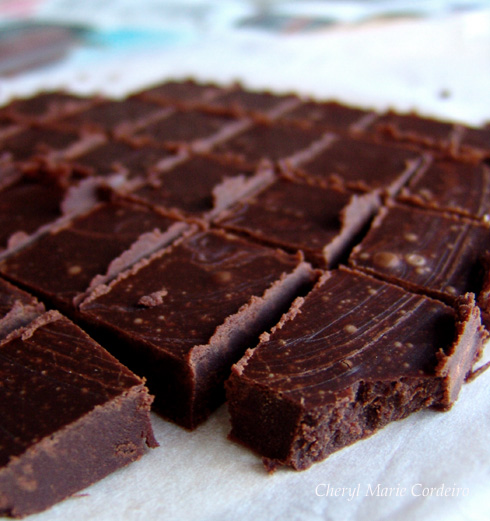
Chocolate Fudge

Old fashioned chocolate fudge 1, Cheryl Marie Cordeiro

Smooth and melts in your mouth!
Photo Cheryl M Cordeiro-Nilsson © 2009

It was late in the evening and it had been a long day of reviewing papers for an upcoming conference. I didn’t feel a need for a full meal but needed a sugar rush fix of sweet chocolate. I thought I could reach into the cabinet for that packet of chocolate coated Daim bits but alas! Someone else had gotten to them before I. So I settled to make chocolate fudge.

Chocolate fudge or fudge in general is not for the faint of heart calorie counters because it is by definition, a sugar bomb. It’s fairly easy to make because it doesn’t need that much looking after (like kaya or bernaise sauce) and it takes about 30 minutes cooking time.

Continue reading “Chocolate Fudge”

Perfect Polar Bear swimming weather!

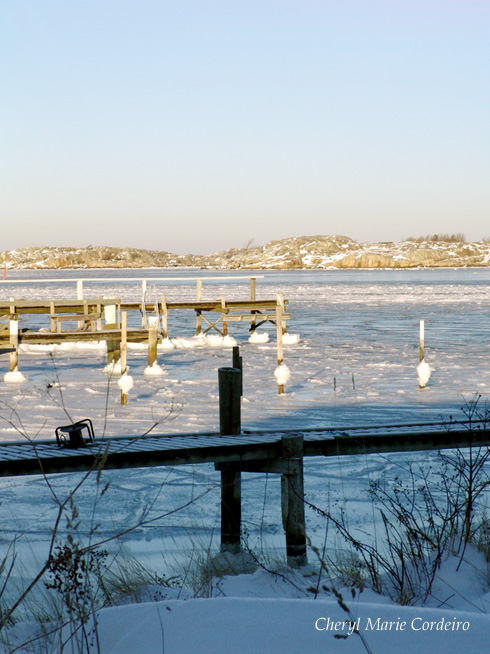
Swedish westcoast, iced seas, January 2010

After several weeks of snowfall and -15 C along the Swedish westcoast.
Photo C M Cordeiro-Nilsson © 2009

It has been several weeks of snowfall and a constant -15 C in Sweden, though this week has warmed to a -8 C. Nonetheless, the temperatures have resulted in a blanket of white on land and an ice capped sea that is currently perfect for the Scandinavian sauna tradition that comes with winter swimming.
Continue reading “Perfect Polar Bear swimming weather!”

Amaro Montenegro Tiramisù

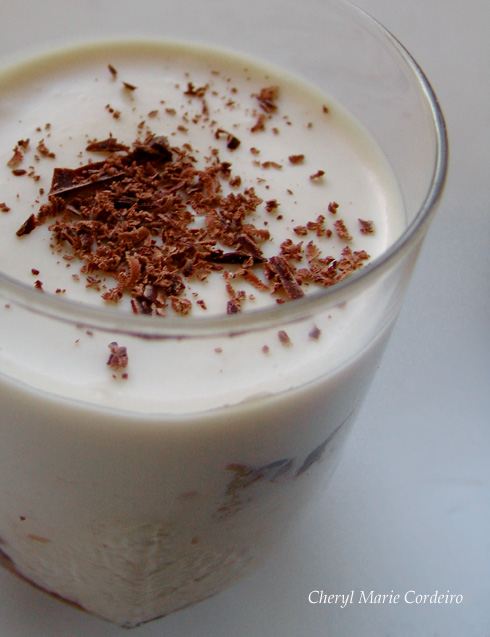
Amaro Montenegro tiramisu with shaved chocolate topping

Tiramisù with Amaro Montenegro.
Photo JE Nilsson and C M Cordeiro-Nilsson © 2009

It was in Venice slightly more than a year ago, that I really fell in love with Tiramisù. It came as a wobbly cake served in a backlane restaurant of the labyrinth of Venice that would have been difficult to locate, if not for the recommendation.

Although many would today experience Tiramisù in the form of a cake slice, this Italian dessert had its beginnings during the 17th century in Siena, a northwestern Italian province of Tuscany, when the Grand Duke Cosimo de’ Medici III (1642-1723) had a somewhat similar dessert during his visit there in a custard consistency.
Continue reading “Amaro Montenegro Tiramisù”