Text and Photo © 2026 JE Nilsson, CM Cordeiro
There is a particular kind of pleasure in arriving somewhere and realising you have timed it perfectly. Alicante in January is not the city at its loudest, and that is precisely the point.
The days run to around 16 degrees Celsius with nearly nine and a half hours of sunshine, and rain is almost theoretical, perhaps one day in ten. The crowds of summer are gone, the light is clear and low, and the city belongs, more or less, to itself. You get to slip in alongside it.
The city, experienced in layers
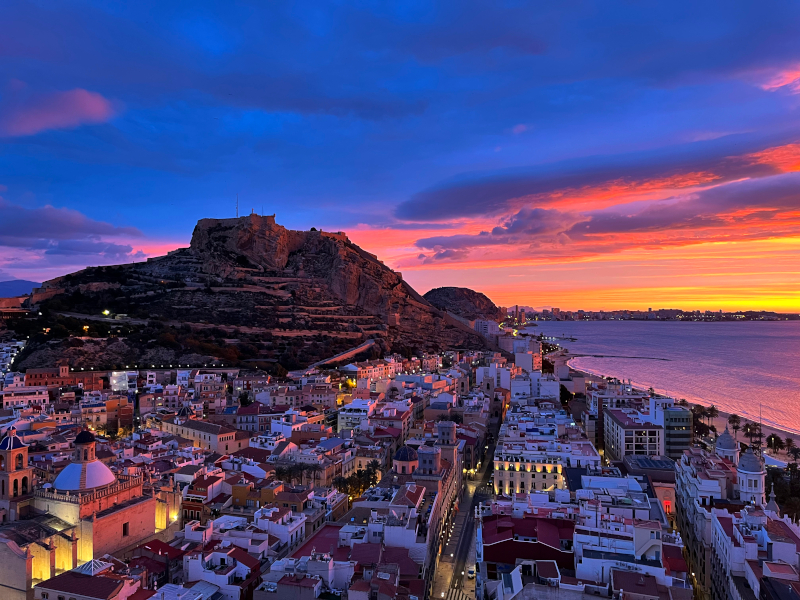
Alicante did not arrive at its present shape quickly. The city sits on foundations that span Iberian, Roman, Moorish, and Spanish colonial periods, each leaving something legible in the streetplan and stonework. The old town, known as El Barrio, climbs the rock beneath the castle in a pattern that follows Moorish-era paths. The Explanada de España, the grand promenade along the waterfront, was laid out in the nineteenth century and is paved with some six and a half million marble tiles in a wave pattern that local craftsmen still maintain. Walking it slowly in January, with nobody particularly in a hurry, you begin to understand that this is a city accustomed to its own beauty and not especially concerned with performing it.
Castillo de Santa Bárbara occupies the summit of Mount Benacantil, a rocky outcrop that rises 166 metres above sea level directly above the city. The site has been fortified since at least the ninth century, when it served Moorish rulers of the region. What stands today dates largely from the sixteenth century, built and expanded under Spanish Habsburg rule following the Reconquista. From the upper ramparts in January, with the air clear and the haze of summer completely absent, the view extends across the coastline in both directions, the mountains of the interior close and detailed, the marina directly below. It is the kind of view that asks for quiet rather than commentary.
The marina
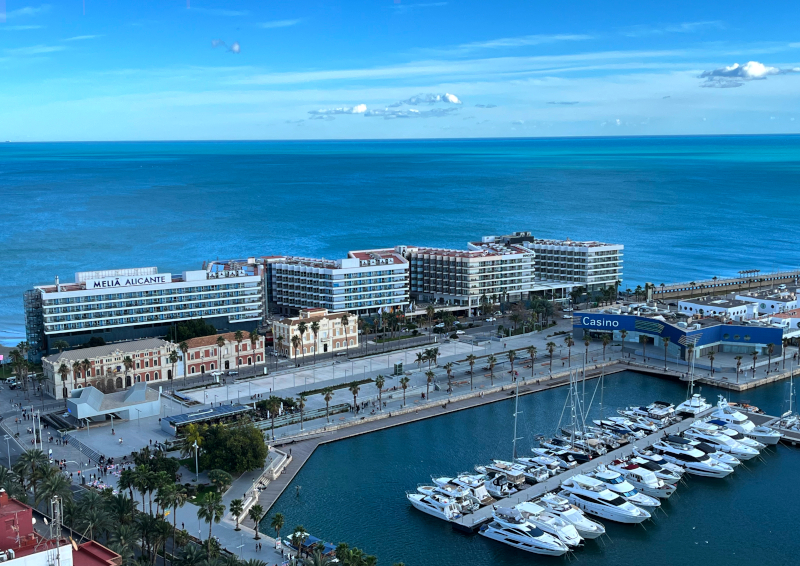
From our vantage point above, the marina is the natural next destination. Yachts moored in the winter calm, the water a deep and steady blue, the Paseo del Puerto running along its edge wide and unhurried. In summer this waterfront fills quickly, boats come and go in numbers, and the pace is a different thing entirely. In January you can walk the full length of it, stop wherever you like, and take in the surrounding landscape at a genuinely languid pace. The castle above, the mountains inland, the Mediterranean ahead. It is a generous composition and January gives you the time to notice it.
Text and Photo © 2026 JE Nilsson, CM Cordeiro
Wine tasting and what came with it
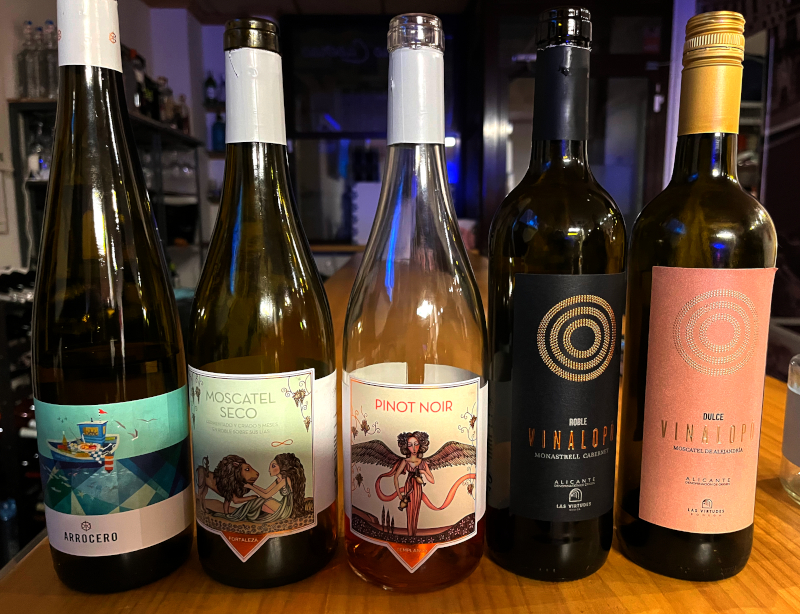
The Alicante Denominación de Origen, established in 1957, covers two distinct subzones: the coastal Marina Alta in the north, where the dominant variety is Moscatel, and the inland Vinalopó, which produces the region’s more structured reds built primarily on Monastrell grapes. The range between them is wider than most visitors expect, and the most instructive way to understand it is through a tasting session, which in practice means a row of five bottles on a bar and someone who knows them well.
The session opened with Arrocero, a fresh and straightforward white, the maritime illustration on its label a fair summary of its character. Then Fortaleza Moscatel Seco, fermented dry and aged nine months on its lees, nothing like the sweet Moscatel you might anticipate, a genuine surprise in the best sense. A Pinot Noir rosé followed, pale and delicate, the gentle outlier in the lineup. Then the Vinalopó wines from Las Virtudes: a Roble Monastrell-Cabernet blend, oak-aged and with real weight, the kind of wine that makes you reassess the region; and to close, a Dulce made from Moscatel de Alejandría, amber and sweet, a considered ending.
Worth noting separately is Fondillón, a wine unique to Alicante and unlike almost anything else produced in Spain. It is made from overripe Monastrell grapes harvested late, then barrel-aged for a minimum of ten years under regulations that have been in place since the eighteenth century. The result is dense, oxidative, and complex in a way that takes a moment to orient yourself. Seek it out if you can.
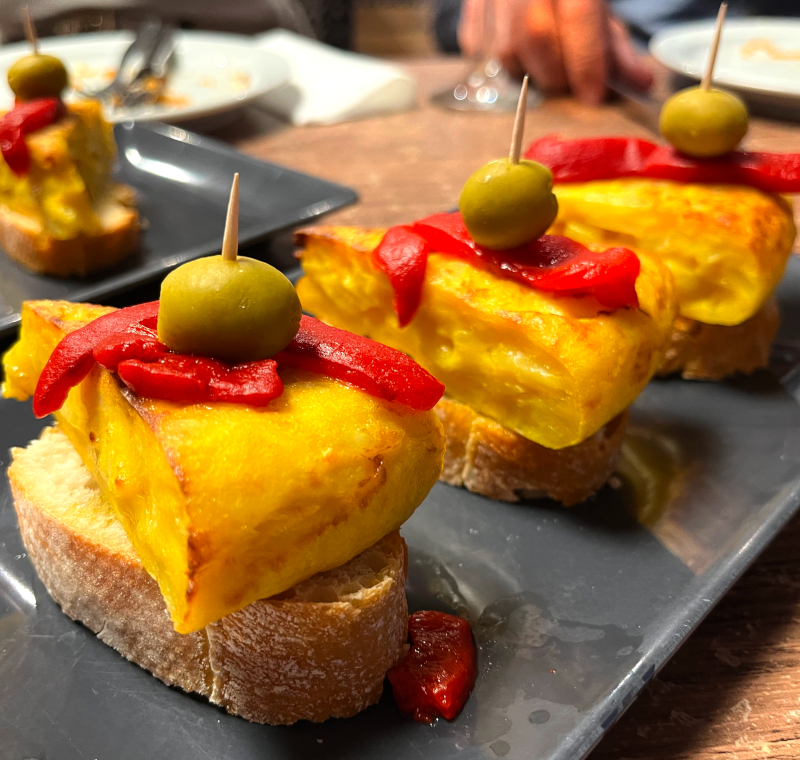
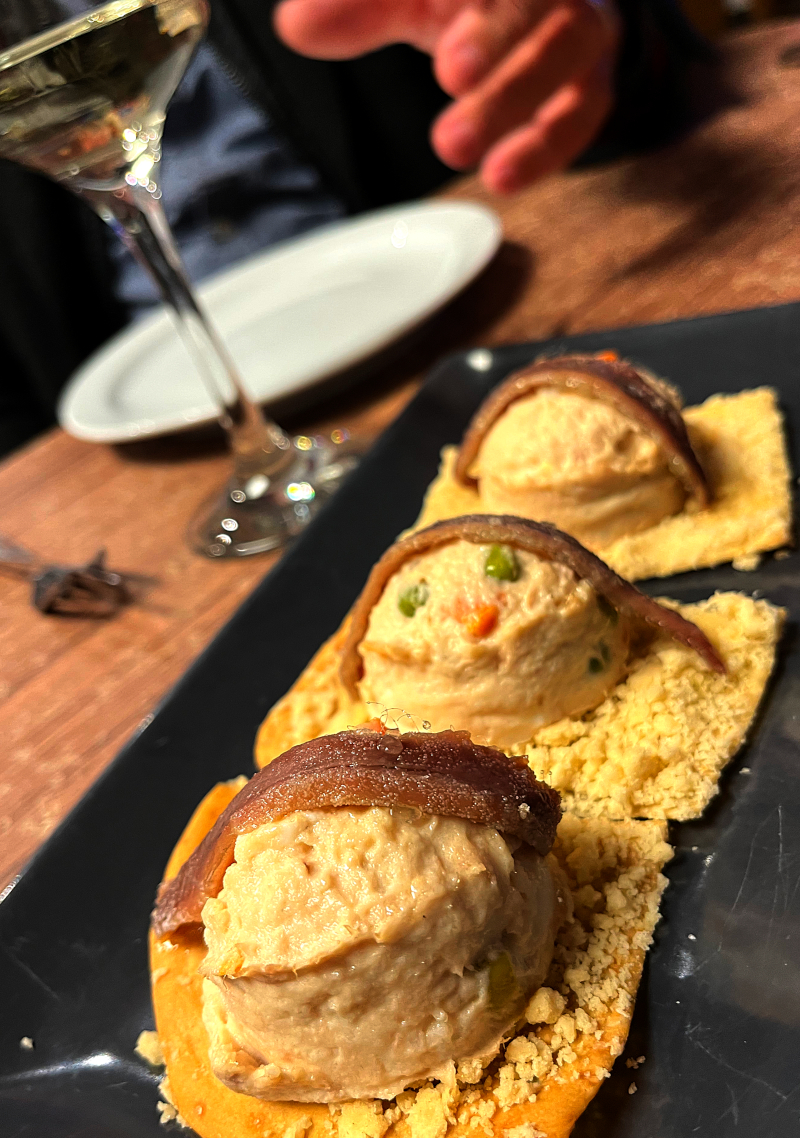
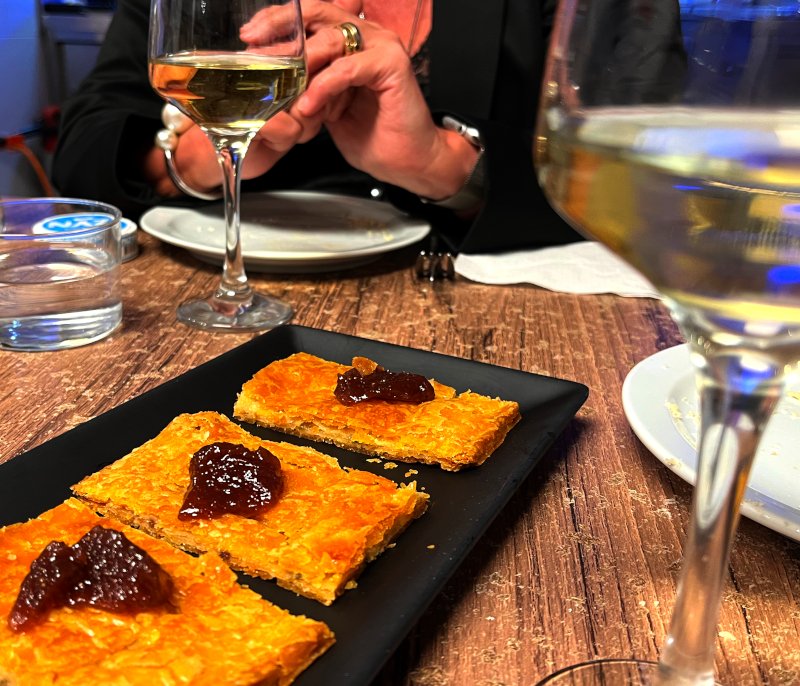
The food arrived alongside the wine in the way tapas should, without announcement or ceremony. First, pintxos of golden Spanish tortilla on toasted bread, each piece topped with a strip of roasted red pepper and a green olive on a cocktail stick. Careful and well-made; impossible to eat just one. Then a plate of coca, the regional flatbread common across the Valencia region, sliced into rectangles and served with membrillo, quince paste, a combination that catches you pleasantly off guard with its balance of savoury and sweet. After that, something more refined: a thin cracker base with a quenelle of salt cod mousse and a single cured anchovy laid across it. And the bocadillo, crusty rolls packed with slow-cooked shredded meat and tomato, the kind of thing that requires both hands and no apologies.
Text and Photo © 2026 JE Nilsson, CM Cordeiro
The food, more broadly
January is when Alicante’s seasonal cooking makes most sense to eat. Cocido, a slow-cooked meat and vegetable stew common across Spain but given a regional character here, and arroz al horno, rice baked in a clay dish with pork ribs, chickpeas, tomato and blood sausage, are both dishes that belong to cooler weather. Fresh citrus from the surrounding groves, local prawns, mojama (salt-cured tuna dried in the coastal winds), and rice cooked with cuttlefish ink are all at their best in winter. The Mercado Central, a covered market in the city centre built in the early twentieth century, is the most direct way into this food culture: stalls of local produce, a few places to eat standing up, and the unhurried weekday pace that January makes possible.
The January advantage
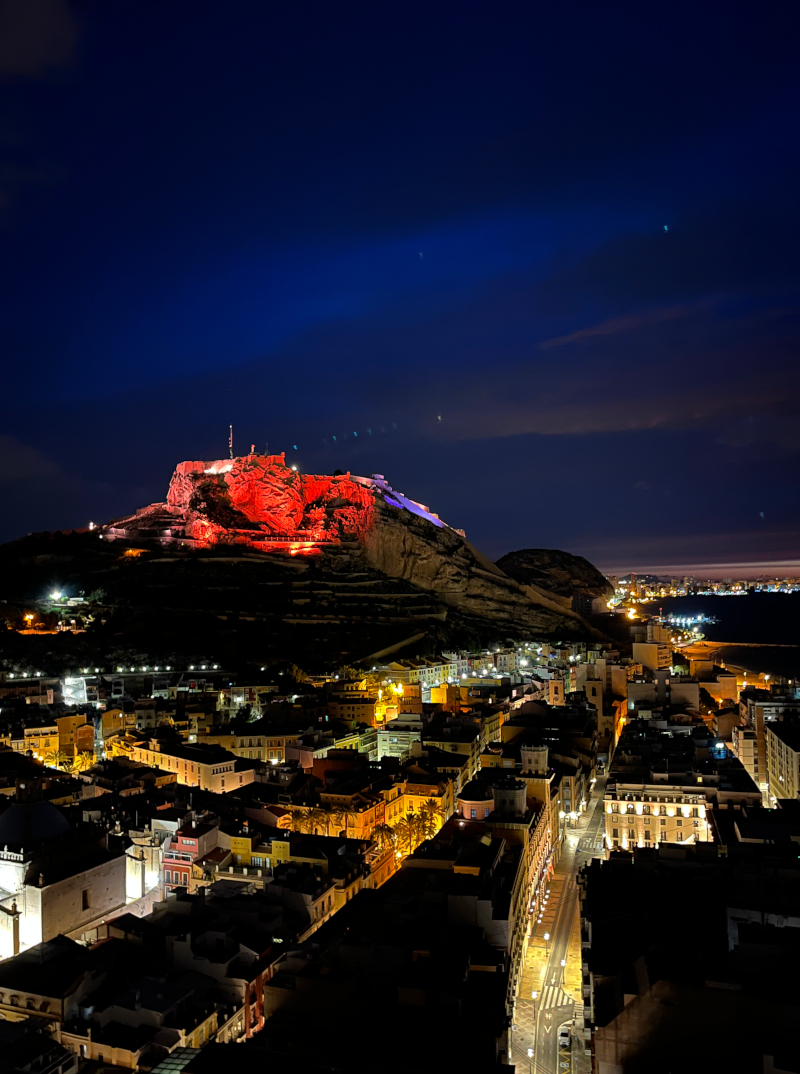
Alicante has a genuinely warm summer. Average July temperatures exceed 30 degrees Celsius, the beaches fill, and the city runs at a different tempo entirely. January sits at the other end of that scale, with daytime highs around 17 degrees and clear, low winter light that gives the landscape, the white buildings, the castle stone, the water, a quality you simply do not get in high season. Layers in the morning, a light jacket removed by midday. The paradox of winter Mediterranean travel is that you are not compromising. In many respects you are arriving at the better version of the place.
The fifth of January brings the Three Kings Parade through the city centre, floats and music and the distribution of sweets to children lining the route, a celebration that has been observed across Spain on the eve of Epiphany for centuries and that retains, in Alicante, a strongly local character rather than a tourist-facing one. Later in the month, the Fiesta de San Antón fills the streets around the old bullring with market stalls and music, and includes the traditional blessing of animals, a custom with roots in medieval practice. These are not events staged for visitors. They are simply the city in January, going about its year.
Come in January. Come for the light, the quiet marina, the castle view. Stay for the Fondillón.