Soon summer along the Swedish west coast

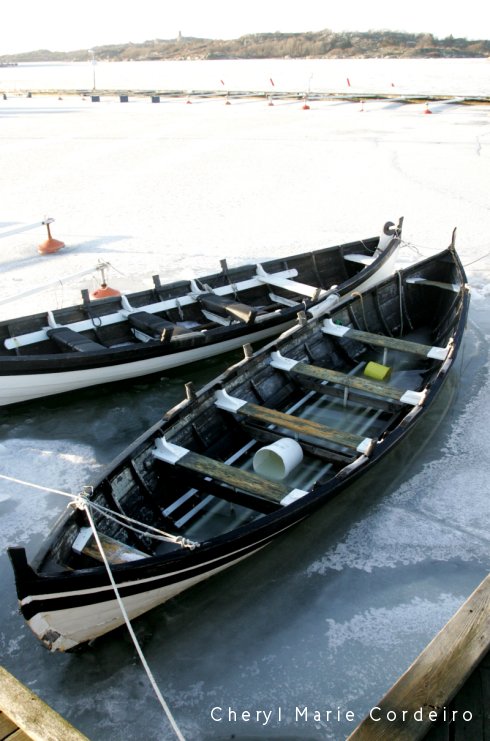
A little Southeast-Asia in Sweden – Swedish sampans in winter adjourn.
Text and Photo © JE Nilsson and CM Cordeiro 2012

In as many times as I have mentioned that I would love to be in a warmer climate…have I told too, that Sweden can be beautiful?

In this winter’s coda with the high pressure and cold, Scandinavia brings with it, azure skies clear as far as the eye brings you into the horizon. The deep blue-green gem coloured Nordic waters, undulating as music through time are now frosted with ice, broken into beautiful patterns by the hourly ploughing of the hull of the ferries that run to the minute on schedule in rhythm with the waters underneath.
Continue reading “Soon summer along the Swedish west coast”
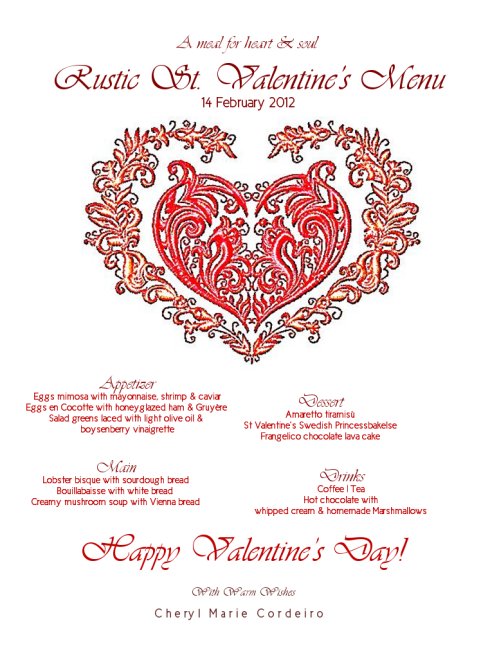

Be still, my beating heart!

Literature from the period of Restoration England and their unsentimental comedies of the heart ironically hold one of my favourite quotations of all time. The expression of ‘beating hearts’ has had for centuries, since the late 1600s with the works of John Dryden in his The works of Virgil, been associated with the excitement and rush of adrenaline that comes with the seeing of and the taking of contact with the object of one’s amorous affections. William Mountfort’s Zelmane in 1705 contained the earliest citation for “be still my beating heart”.

About two centuries later, the expression was delivered in a comic manner in the fantastic fourth collaborative work of Gilbert and Sullivan’s opera HMS Pinafore, 1878, when a lowly sailor Ralph, falls in love with the Captain’s daughter, Josephine.

Ralph:
Aye, even though Jove’s armoury were launched at the head of the audacious mortal whose lips, unhallowed by relationship, dared to breathe that precious word, yet would I breathe it once, and then perchance be silent vermore. Josephine, in one brief breath I will concentrate the hopes, the doubts, the anxious fears of six weary months. Josephine, I am a British sailor, and I love you!

Jospehine:
Sir, this audacity!
(Aside.) Oh, my heart, my beating heart!
(Aloud.) This unwarrantable presumption on the part of a common sailor!

The story turns dramatic when the Captain’s daughter in her due social rank is promised by her Captain father to a Cabinet Minister, Sir Joseph.

But as with most Gilbert and Sullivan stories, where “nothing is as it seems” and “love levels all ranks”, a twist by the end of the story lends a happy ending to all.

Closely intertwined with the romancing of hearts and souls this Valentine’s Day is the idea of a warm candlelit dinner in the heart of some place cozy…

Here, in celebration of friendship and love…a St. Valentine’s menu suggestion.

Happy Valentine’s Day to All!

A lifetime of romance in its old cut facets

An old cut diamond weighing ca. 1.90 ct, Top Cape, VS set in white gold with 18 modern brilliant cut diamonds set halfway down each side of the shank.
Text and Photo © JE Nilsson and CM Cordeiro 2012

I love old cut diamonds. There’s a depth of warmth about them that comes through even in dimly lit rooms compared to their flashier modern counterparts. It’s the way the cutting interacts with the light. A softer, calmer sparkle and glow rather than the hard busy flashes of the modern cuts.

Distinctive of old cut diamonds are the larger culet as you can see in the picture, where modern brilliants will have a very small or no culet at all. Most of them are also cut cushion shaped and not perfectly round, as they were not computer assisted cuts but rather, fashioned from the cutter’s understanding of the nature and shape of the stone. Original cutters of diamonds and jewels needed to a large extent have the eye of an artist who envisioned the polished stone in its finished state in all its dazzling glory. A skill that perhaps not many cutters of today possess since computers and mathematical formulae now distinguish the ideal cuts for a rough, rending stones that while may be full of sparkle, lacks in my view, a certain individual spirit and personality.

If you own an old cut stone, chances are, you will recognize it in any light as your own just by looking at it – the colour, the cutting, even by its inclusions. Luxury comes these days not in terms of how much you spend but also in terms of exclusivity that includes peculiarities and imperfections that in old cut diamonds, make them striking to behold. And diamonds with natural inclusions that mark them, giving them their own ID instead of a laser printed number are certainly unique by nature. So if you have an old cut diamond for example, a family heirloom of sorts, and have it resent into a new design, chances are even without loop in hand you won’t be fooled by any replacements, you’ll know it’s yours by eye.

Old cut diamonds also tend not to be as white as the modern brilliants, most of them having I, J, K, L colours or Top Cape, Cape colours. A feature that I have today, come to love.

This old cut diamond, acquired from Sotheby’s in Paris, has decades of narratives to tell, embodying romances across several lifetimes, reflected in its open cut and open flanked face.

All you need to do is pick it up,and read it.

A LOVE AFFAIR

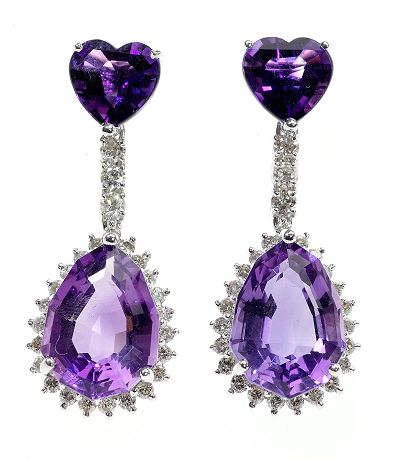
A pair of platinum diamond and purple amethyst ear drops.
Text and Photo © JE Nilsson and CM Cordeiro 2012

Jewellery has always had special significance in meaning as gifts in the Asian and Southeast-Asian cultures. From the early 1900s leading up to the First World War and subsequently the Depression years and then the period after the Second World War were difficult times in which food was strictly rationed and for those who could afford, jewellery was used to trade for other basic necessities. Even after the 1960s, the average family even in Singapore, where you could consider one of the more affluent countries in Southeast-Asia post World War II was certainly not cash rich. And it is during these years that I’ve heard the most number of family told stories of how gold jewellery and precious jade were pawned to keep food on the table for the family.

Continue reading “A LOVE AFFAIR”

Winter’s Sunday brunch along the Swedish west coast

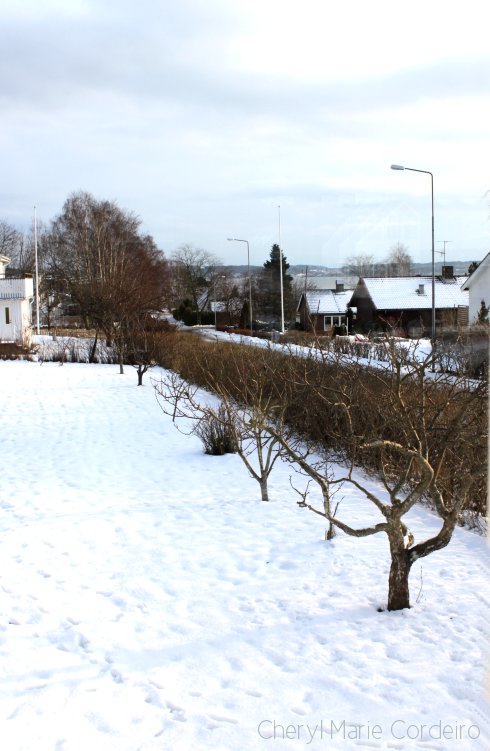
Swedish west coast winter in February 2012

February scene, Swedish west coast.
Text and Photo © JE Nilsson and CM Cordeiro 2012

February is usually the month in which visitors to Scandinavia get to witness the Nordic winter in its full regalia of climate beguile, the whipping winds and cold pelting rain that now turn to delicate snow crystals upon falling down, blankett the entire landscape in crisp white, turning the dull grey of the surrounding in just a few hours, to a scene that is breathtakingly beautiful, even if at the same time being unforgivingly, impractically and cruelly cold.
Continue reading “Winter’s Sunday brunch along the Swedish west coast”
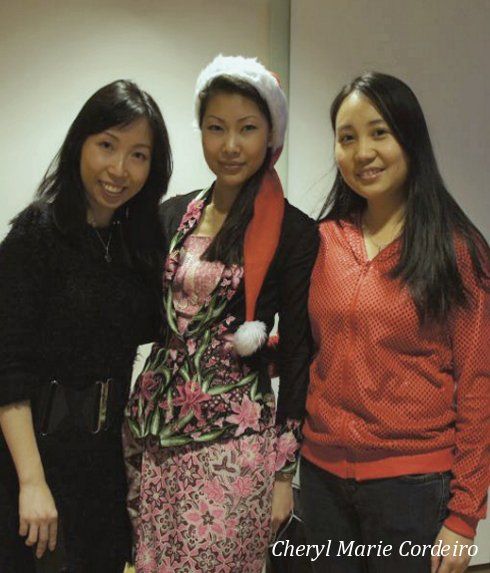
Wine Bar at Soup ‘n Bagles

Cheryl Marie Cordeiro, Svante Boberg who is owner of Sou''n Bagel and Sandra Lam Carlsson.

An evening of open wine testing at Soup’n Bagel. In the middle, owner Svante Boberg and to the right friend and colleague Sandra Lam Carlsson.
Text and Photo © JE Nilsson and CM Cordeiro 2012

In from the biting cold of winter that is still in the air in Sweden, I thought the cozy, dimlit interior of Soup’n Bagel by night in the city of Gothenburg set the perfect calm and mellow atmosphere for an evening of wine tasting and long conversation amongst good friends.
Continue reading “Wine Bar at Soup ‘n Bagles”

Dulce de Leche thoughts in the stillness of the first week of 2012

490 Dulce de Leche 048

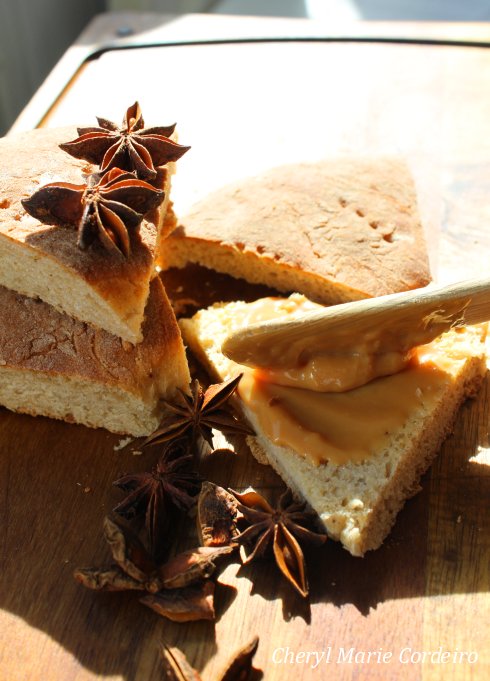
A dulche de leche breakfast with homemade rye bread.
Text and Photo © JE Nilsson and CM Cordeiro 2012

The first day of the New Year is usually known as ’Pizza Day’ in Sweden, only because people here have partied too much, too fast, too hard the previous night that ordering pizza to the home, or simply settling down in a restaurant for one seems to put into command everything else that is not, for the moment. It’s worry free. Continue reading “Dulce de Leche thoughts in the stillness of the first week of 2012”

A magical evening with Ulf Wagner at Sjömagasinet, in Gothenburg 2011

Cheryl Marie Cordeiro with house elves at jultide, Sjömagasinet 2011

Restaurant decoration at Sjömagasinet. In Swedish folklore well managed farm houses was looked after by their own house elf or elves. They were quiet and mostly invisible but kept themselves informed from the animals if everything was done right and proper. The house cat was their eyes and ears during daytime. If the people were good, the elves would help take care of the house and the family that lived there. Eventually these elves merged in Swedish lore with the later idea of a Juletide Tomte that brings the Christmas gifts.
Text and Photo © CM Cordeiro, JE Nilsson and T Eliasson, 2011

In the past years, we’ve dined enough at Sjömagasinet in Gothenburg (2009a, 2009b, 2008, 2007) to feel quite at home at what was once the old outfitting warehouse for the Swedish East India Company (1731-1813). In the 18th century their ships made round trips from Gothenburg to China and back where each trade voyage took about two years, bringing back immense fortunes for the participants.

During their many voyages these ships would dock at various ports around the world including Cadiz in Spain, to pick up silver and Batavia in Indonesia for spices, before reaching Canton in China. Besides tea, silk and spices they contributed significantly to the cultural exchange of knowledge between Sweden and Asia and brought back many important influences, not the least within the medical and culinary field that is so intriguingly interconnected. In this wharf equipment were stored such as sails, masts, spars and all things you might imagine being needed on a wooden ship about 50 meters long. The spirit of these adventures is still felt in the very walls of this building.
Continue reading “A magical evening with Ulf Wagner at Sjömagasinet, in Gothenburg 2011”

Christmas Eve morning at Saluhallen in Gothenburg at 09:01 hrs

Going to the market, is just … going to the market, isn’t it? So mundane a task that it’s hardly a concept to be discussed by most. But come Christmas in Sweden, and come the darkest days of the year, the Swedish Christmas markets that glow a warm orange and red whether they be outdoors or indoors become central gathering nodes for the people of the city.

Christmas Eve morning at Saluhallen 2011, chairs.

And all was apparently still on Christmas Eve morning as the doors to the marketing heart of Gothenburg that is Saluhallen was opened.
Text and Photo © CM Cordeiro and JE Nilsson 2011

Cheryl Marie Cordeiro, in the morning at Saluhallen in Gothenburg, Christmas market 2011

The early morning calm didn’t quite stop me gushing in haste when my eye caught a table decoration I so wanted at home at our Christmas table!

Everyone has a Christmas foodlist for their own Julbord to tend to, making Christmas Eve marketing all the more festive. And amidst waiting in queue for your number to be served, you can hear the hearty exchange of Christmas recipes amongst those waiting in line for baked ham, pickled herring and roasted spare ribs that gives a heartwarming preview of what others are about to have this evening at home.

In my number of years in Sweden, I’ve visited these Christmas markets year after year, with Saluhallen and Haga in 2010; 2009a, 2009b; Kronhuset in 2009; a compilation of Saluhallen and Haga in 2008; Haga in 2007, to which I’ve always found something new in my explorations and visits.

This year’s visit is a slight variation, an authentic visit to a market on Christmas Eve for some Christmas marketing, instead of visiting a ‘Christmas Market’.

Continue reading “Christmas Eve morning at Saluhallen in Gothenburg at 09:01 hrs”

Jultide traditions in Sweden

GUSEE Julbord 2011 - Sandra Lam-Carlsson, Cheryl Marie Cordeiro and Jenny Yu.

An office Julbord 2011, Sweden.
L-R: Sandra Lam-Carlsson, Cheryl Marie Cordeiro and Jenny Yu.

Text and Photo © PO Larsson, CM Cordeiro, JE Nilsson 2011

In line with the underlying ideals and innovative thoughts in the culinary field from this year’s Prins Bertil Seminar 2011 at the School of Business, Economics and Law at the University of Gothenburg, that raised the level of consciousness about food in general, from farm to restaurant table and how the best dishes can be had from simply using the freshest ingredients and not necessarily the most fancy and exclusive of raw produce, we thought we’d put a little bit of rustic into the jultide table traditions at work, in Sweden.
Continue reading “Jultide traditions in Sweden”