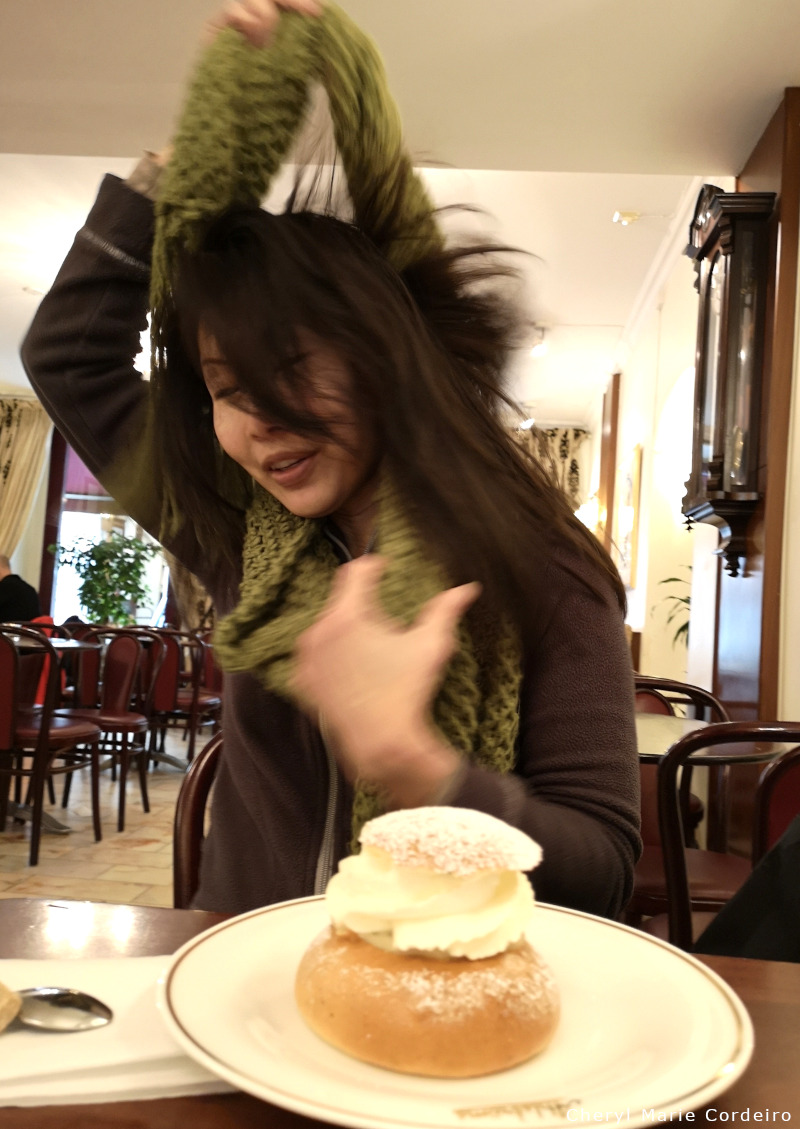
Settling in at Ahlströms Konditori in Gothenburg, Sweden, for that semla fika.
Text & Photo © JE Nilsson & CM Cordeiro 2020
It’s been a number of years since I stepped into Ahlströms Konditori, one of Gothenburg city’s oldest confectionaries. Here, you’ll find that the late morning crowd consists mostly retired elderly individuals. They sit, absorbed in their own worlds, and read the news in a scene that could come from any early 1900 Paris café postcard. It´s a beautiful scene to observe. The atmosphere at Ahlströms is languid but very much cheerful. The city’s local newspapers have done their annual semlor best-in-test for 2020, and Ahlströms won top-3 for serving up the city’s best semlor.
Continue reading “Semla of the Year 2020 at Ahlströms Konditori, Gothenburg, Sweden”