Back for lunch at Valentino’s, Singapore

With Valentino Valtulina in his wine cellar that in quick glance, shows his passion for remarkable passito wines such as Amarone and rare Italian specialties.
Text and Photo © JE Nilsson and CM Cordeiro 2012

I have often written about Italian hospitality and how their spontaneous generosity has the ability to grab and wrap you as a warm blanket. Just a few days ago I found myself back at what I have to admit is one of my all time favourite Italian restaurants in Singapore, and was hardly out of the taxi when I met the first of the Valtulinas outside of their restaurant at Jalan Bingka.

In an instant I was properly greeted Italian style, and promptly whisked into Perla Valtulina’s next door pastry boutique for a peek at her latest creations for their upcoming new restaurant and pastry boutique, to be located at 200 Turf Club Rd (#01-19) in Singapore.

Having not been back in Singapore for a while it felt I had missed quite some happenings on their side, not in the least that there is now a sit-in dining possibility at the pastry boutique – an option I thought brilliant for a chocolate addict such as myself – with the equally delightful possibility of takeaway gelato.
Continue reading “Back for lunch at Valentino’s, Singapore”
A Singapore shortlist

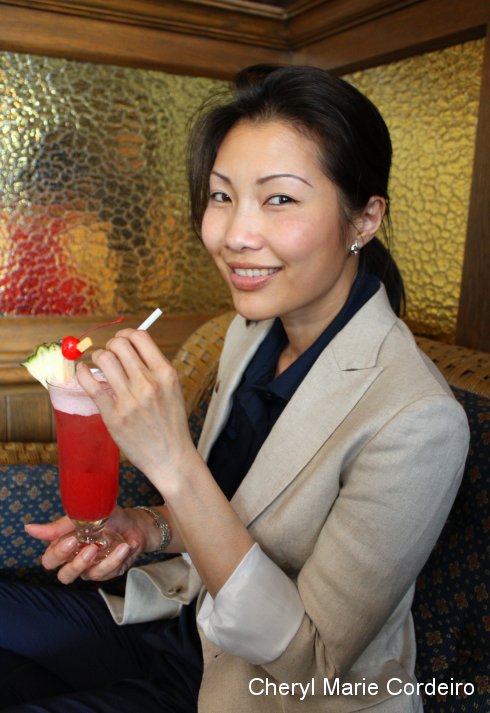
Naturally everyone has their own shortlist of things to do when swinging by their hometown and when the opportunity arises. One of those pit stops on my list is to hit the pretty touristy Long Bar at the Singapore classic Raffles Hotel.

Settling for the classic Singapore Sling at the Long Bar, Raffles Hotel, Singapore.
Text and Photo © JE Nilsson, CM Cordeiro 2012

Continue reading “A Singapore shortlist”

Home brewed ice-lemon tea, in Singapore

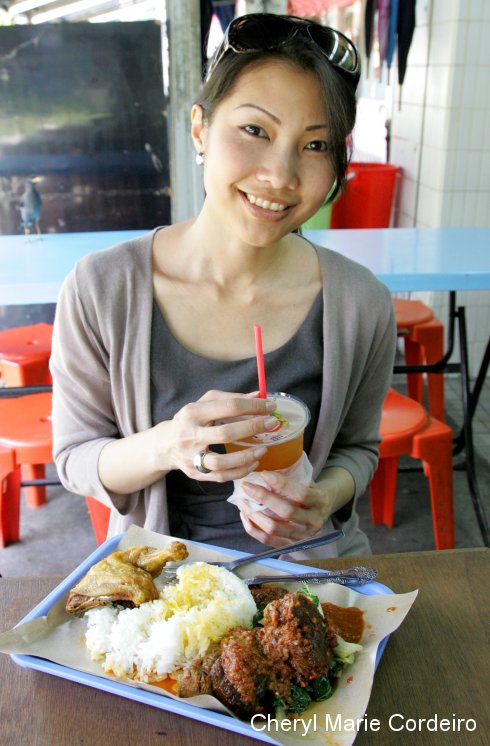
Nasi padang and ice-lemon tea in Singapore.
Text and Photo © JE Nilsson and CM Cordeiro 2012

The perpetual question when coming home to Singapore from a long stay abroad is – what developments will I discover this time?

The rapid speed of life in general and the perpetual state of flux and development in Singapore make for that the only constant one can expect in Singapore, is change itself. In the background would be the distant rumble of hundreds of gigantic diesel engines of the more than 400 container ships and tankers anchored along the skirts of the Singapore shoreline. The humidity, the temperatures and along the East Coast, the curious intermingle of the salty sea air and the familiar aromas of various types of food – Malay, Indian, Chinese, Nonya etc.

One of the distinctly comfortable things to find is that there still exists home made ice-lemon tea, and with it why not a portion of the Indonesian influenced Nasi Padang in a heartland coffee-shop of the East?

A comfortable lunch in a non-air conditioned place – a priceless comfort in a rapidly developing world.

Kuta pasar, after hours, Badung, Bali

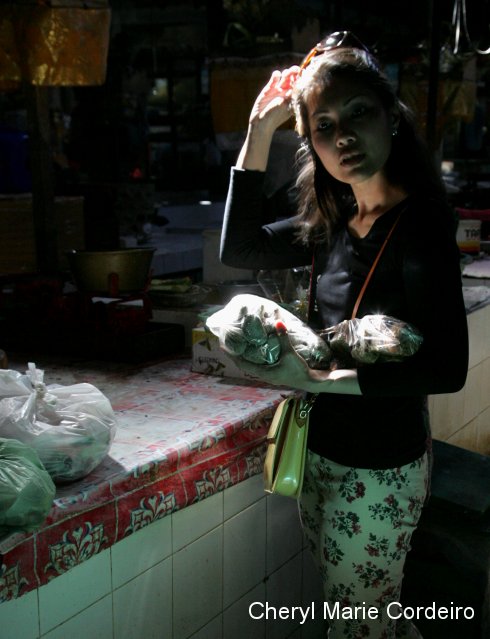
Late morning marketing at Kuta market, Bali.
Text and Photo © JE Nilsson and CM Cordeiro 2012

If you live in Southeast-Asia, a piece of information you neeed is the opening or business hours of the morning wet markets. Some beginning as early as 05:30 hrs in the morning, where by late morning at about 10:00 hrs, business is concluded, the stalls washed and goods neatly stashed for the next day’s trading.

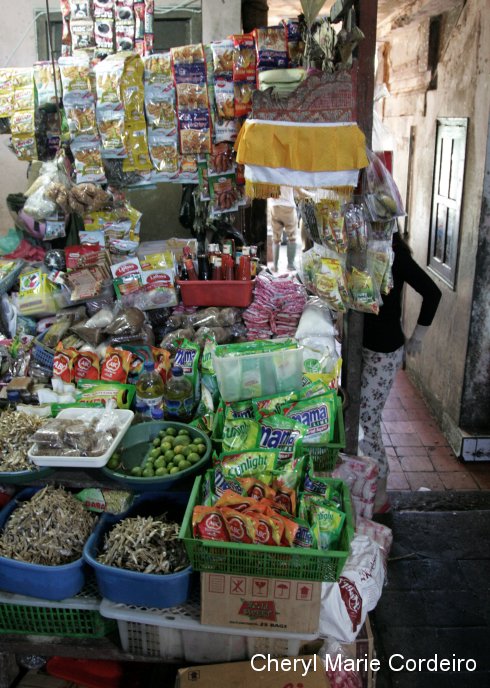
In search of pulot hitam at Kuta market, near one of the almost invisible entrances.

Having had some requests for specific goods only to be found in Indonesia and likewise, Bali, I conveyed my brief shopping list to a local taxi driver, who was happy to be our guide to the island. He quickly settled where to go and so we were off towards one of his favourite markets – Kuta pasar – though I had gathered from what he told, I would need to improvise with my spattering of the Malay language since Balinesian and Indonesian languages differ, in order to do my shopping as no one in this market would speak English.

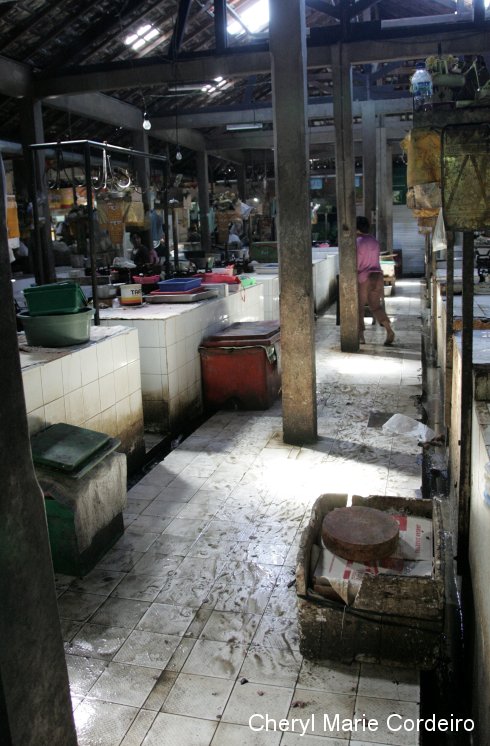
Cleaning up for the day at Kuta pasar.

True to marketing times, when we arrived in the late morning at Kuta pasar, the floors were being washed, and the white tiled counters cleaned. It took a brief moment to orientate ourselves, across language barriers, I managed to locate the stall that sold most items I had wanted to purchase, including pulot hitam, that is black glutinous rice that they call nasi hitam, and gula Bali, a variant of palm sugar produced right on the island.

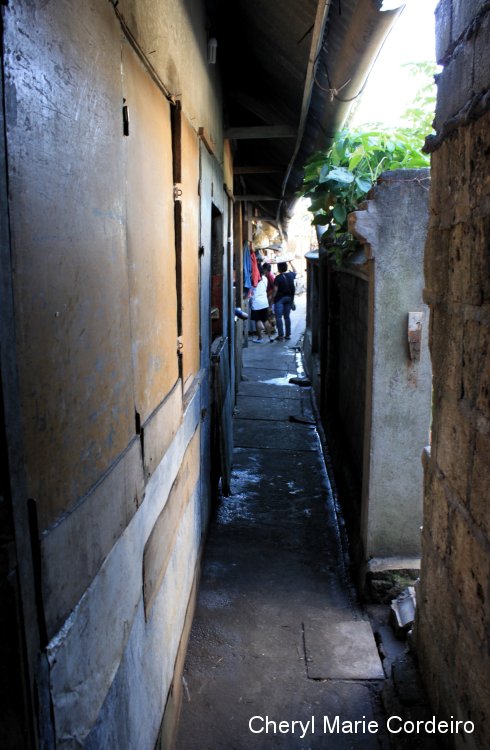
This narrow corridor leads to houses behind the market. On the left and out of sight, food stalls that cater to the local area.

The ground floor to this market is compact, with stalls selling wet goods situated in the center of the square and shops selling dried goods and vegetables, lining the outer rim of the square.

Through one of the back lanes, a narrow path leads to the village houses where two or three stalls selling food can be found. We were invited to try their variety of food from nasi campur (rice with mixed food) that included ikan goreng (fried fish) to mee ayam (chicken noodles).

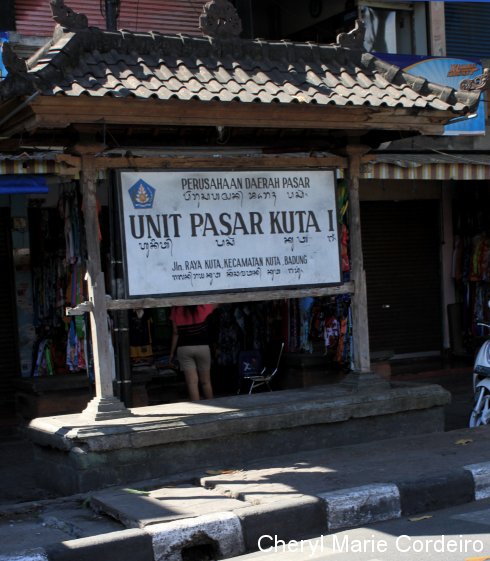
Kuta pasar, Badung. The sign to look for.

Compared to the enormous wet market at Denpasar well equipped with supply chain outlets running as arteries towards the main centre of activities, I think I’m most grateful to the taxi driver for introducing us to this little market square, as another peek into the lives of the locals of this island.

Pura Puseh Desa Batuan, Bali

Residing in Batuan village and founded in c. 1020 AD, the Batuan Temple is a conflux of Indian Hinduism with Indus architecture.
Text and Photo © JE Nilsson and CM Cordeiro 2012

The surprising aspect of this temple visit is the realisation of how accessible local religion and philosophy is made to you as visitor in order to partake of their song, dance, rituals and daily activities that mean a lot to them. One could of course reason that it is all part of the tourism industry here in Bali, but at the same time, there’s the feeling of there being something more to it. There is nothing imposing in the Balinesian behaviour towards visitors, rather it is their subtle invitation and hospitality that make you feel all at once at home on this island even if for a few days.

Religion and religious philosophy are inextricably interwoven into the daily lives of the Balinese people, where in one of the island’s oldest temples in Batuan village, the event of the full moon continues to be celebrated with ritual and festivities in the Pura Puseh Desa Batuan (Batuan Temple).

The Garuda.

The village of Batuan that was perviously under the control of the Royal Family, is located on the road between Denpasar and Ubud, two of Bali’s larger towns today. The village is known for its heritage of artistry and craftsmanship that one can still find today in the numerous works of paintings along the street towards the temple.

The Barong.

Garden.

In Hinduism, the philosophy of Brahman is the point of view or belief in the one supreme, universal Spirit that is the origin and support of the phenomenal universe, sometimes referred to as the Absolute.

Depending on the school of philosophy, Brahman can be conceived as both personal and impersonal, encapsulating the dialectic logic of and/or rather than “and” or “or”, where an enlightened human being is said to have realized his / her true infinite self through an understanding of this apparent contradiction of the “and/or”, “neither/nor” philosophy. The aspect of infinity in itself.

Fern.

Kendi.

The temple is rich in Hindu architecture and culture, reflected even in a small kendi placing at one altar.

The kendi is a familiar vessel form in the region of SE-Asia, where it plays a significant role in the rituals and daily life since ancient times. Originally made in precious metal to hold holy water in the rituals of purification, they are now made in terracotta, earthenware and clay, appearing in sculpture and painting as objects in the hands of the Hindu gods Brahma and Shiva.

Preparations.

Offerings.

The indigenous spirit of the people of Bali are reflected in their various works of art where even in close range, the Ubud Style of art differs from the Batuan Style of art, the latter using bolder colours and depicting more daily activities and scenes of living than the former. Visual texts are also more prominent in Batuan than in Ubud. The variations of these art forms that no doubt resonate towards the political arena of the island, are also reflected in this Batuan Temple.

A walk through Pasar Badung, Denpasar, Bali

Along the side streets towards Pasar Badung in Denpasar, off Jl. Gajah Mada, you’ll find a small curry shop passionately preparing the foundational ingredients to many local dishes.
Text and Photo © JE Nilsson and CM Cordeiro 2012

The daily trading activities in Southeast-Asia (SE-Asia) are still focused around the centrally located wet markets. Located as they often are at traditional crossroads of land and waterways, they are the natural center of the community with space for religious ceremonies as well as today, offering convenient parking lots for cars and mopeds. Around these markets are also the arteries of the supply chain of all kinds of supplies that will go into the products offered at the market.

Pasar Badung in Denpasar, Bali’s capital, is one of the largest wet markets on the island with four storeys of goods that range from ready cooked food sold just outside the building, to fresh fruits, vegetables, fish, meat, preserved foods, spices, cakes, buns, biscuits, up to and including almost all items for the kitchen and household should you need them.

Clothing for men, women and children can be found on the upper floors of the market. Perhaps in close comparison in terms of array of and combination of goods sold would be that found in the heart of Chinatown or Little India in modern Singapore, though true wet markets now tend to have a space of their own these days.
Continue reading “A walk through Pasar Badung, Denpasar, Bali”

At the west end of the Lesser Sunda Islands

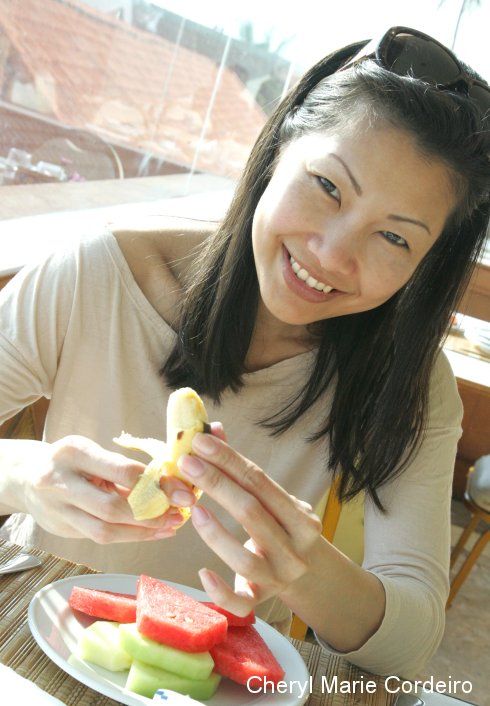
The trade winds blow cool in the mornings in the tropics of Sanur, Bali, where the full flavoured smaller apple banana variety is abundant and pleasantly enough included in abundance in the breakfast buffet.
Text and Photo © JE Nilsson and CM Cordeiro 2012

It took five security checks through the various airports from Scandinavia to Indonesia and though it has been about ten years since the Kuta bombing in Bali, security on the tourist island remains tight, the islanders looking apologetic for yet another security check even at the roadside. Considering the peaceful island’s serene philosophy and religion that is 80% Hindu with visible Buddhist influence, and that the small island’s main livelihood is tourism, one feels a tinge of sombre even as tropical sun rays streak across azure skies in this beautiful and untainted Southeast-Asian island paradise.
Continue reading “At the west end of the Lesser Sunda Islands”

Weekday chill at Mälar Paviljongen, Stockholm

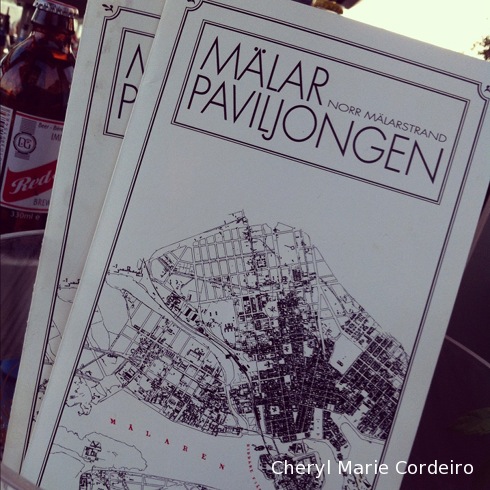
Mälar Paviljongen, the café and bar, has also its own cozy flower garden filled with various pots of herbs that lightly scent the air.
Text and Photo © CM Cordeiro 2012

Just about 20 minutes walk from Stockholm’s T-Centralen or central station, along Norr Mälarstrand is this cozy, part floating on water café, restaurant and bar that lets you enjoy the sunset in Stockholm to the sounds of cool lounge.
Continue reading “Weekday chill at Mälar Paviljongen, Stockholm”

The evolving Tao of language

Photo and Text © Alen Cordic, C Cordeiro-Nilsson 2012

In the midst of preparing an academic paper for an upcoming Yin Yang themed conference at the Stockholm University School of Business, I as usual got sidetracked into other interesting reads. This time one by L.H. Wee[1], on how Singapore Colloquial English (SCE) helps build Singapore’s national identity.

Growing up in a Eurasian family in Singapore[2], there were many on my father’s side who worked as civil servants, mostly within the British administration system, English being their mother tongue and language at work. I always marveled at how very proper their spoken English sounded but never thought much of it.

Eventually when I started school at the Convent of the Holy Infant Jesus[3], I noticed that not all classmates of mine had English as first language, and the fact that my paternal grandparents spoke English with Received Pronunciation, became more of a dismay to me than anything else, since the English my friends spoke outside of the speech and drama classes from the Nuns, was different.

It was so different that it included words that didn’t even belong to English at all. I was a bit confused but tried to keep this ‘other’ language secret from my grandparents and other aunts and uncles who when I had slipped and spoken with a more Hokkien influenced English intonation, had rapped my knuckles followed by disapproving clicks of their tongue, tsk tsk…

Still, there was no stopping learning this ‘bad English’ at school, because socializing across cultures meant that a common language was needed in order to be part of the group, whether it was playing games or buying food at the canteen.

This ‘bad English’ was of course my first encounter with SCE or Singlish.
Continue reading “The evolving Tao of language”

The Blue Frog, Shanghai World Financial Center SWFC

The Blue Frog restaurant, Shanghai World Financial Center.

The Blue Frog at the Shanghai World Financial Center.
Text and Photo © JE Nilsson and CM Cordeiro 2012

Even before my first visit to Shanghai, friends were recommending I visit two places, the Shanghai World Financial Center and the Blue Frog restaurant that as a friend put it, served “very good fusion food”. And I couldn’t have done serendipitously better than by dining at the Blue Frog at the Shanghai World Financial Center!
Continue reading “The Blue Frog, Shanghai World Financial Center SWFC”