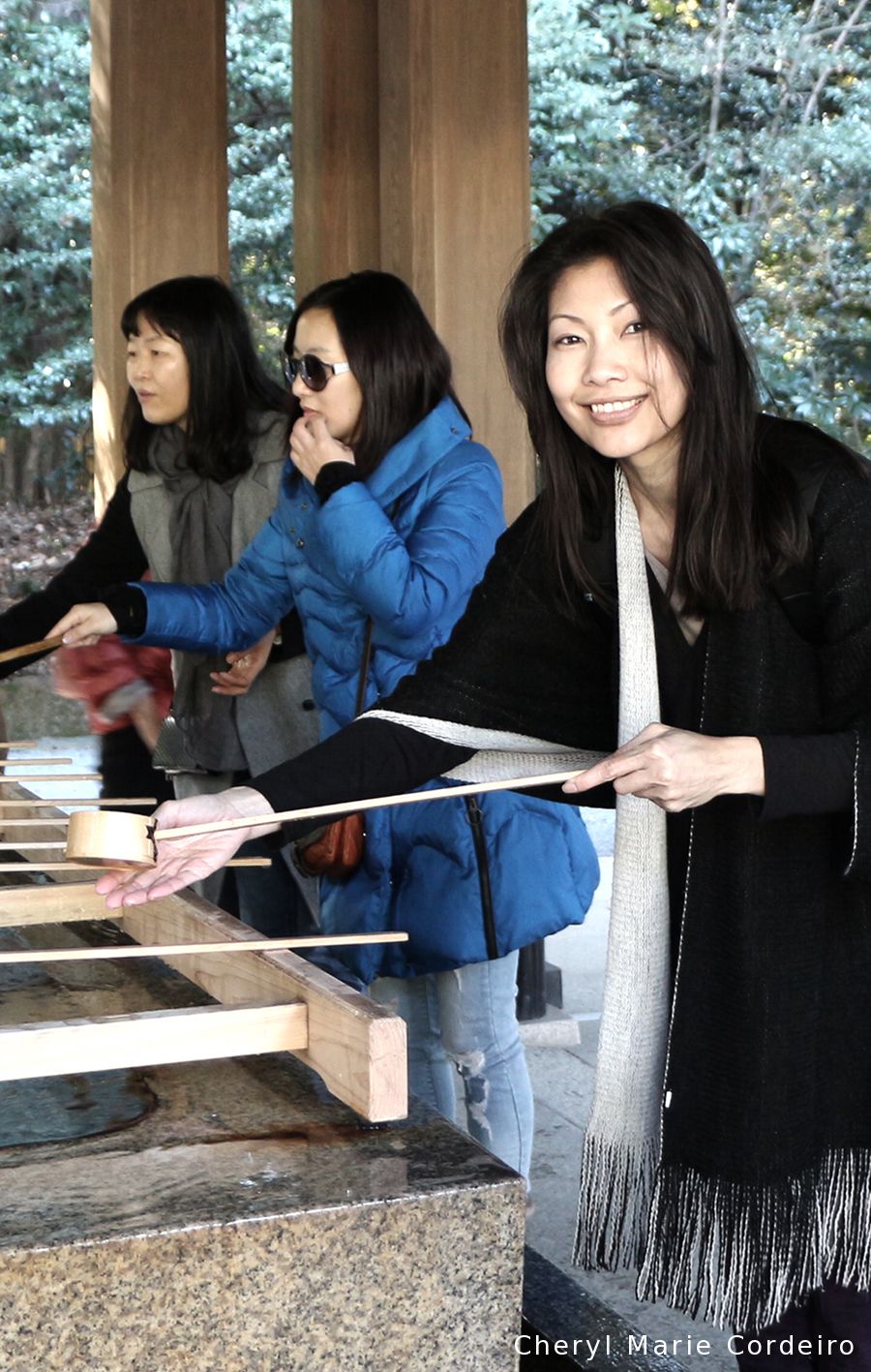
Meiji jingū in Shibuya, Tokyo

Cheryl Marie Cordeiro, Meiji Jingu Shrine

Customary cleansing with water before entering the Meiji jingū in Shibuya, Tokyo.
Text & Photo © S Posén, JE Nilsson, CM Cordeiro, Sweden 2015

It was not too long ago that I sat in a group that discussed preferences as to whether or not to research a city / country before visiting. At that time, I had just begun learning about cross-cultural communication, embarking on several university courses on culture studies. I was thus adamant that it was better to read as much as you could about a country of visit prior to landing, else face a myriad of cultural filters and challenges when there. Some in the group were adamant in the opposite camp, believing that part of travelling was indeed to get ‘lost in translation’, the very definition of a travel adventure itself. From that roundtable discussion till today, my preference could be said to have shifted some from all things orchestrated and planned, my favourite saying to the utter frustration of some co-travellers when not having found my way around Continue reading “Meiji jingū in Shibuya, Tokyo”
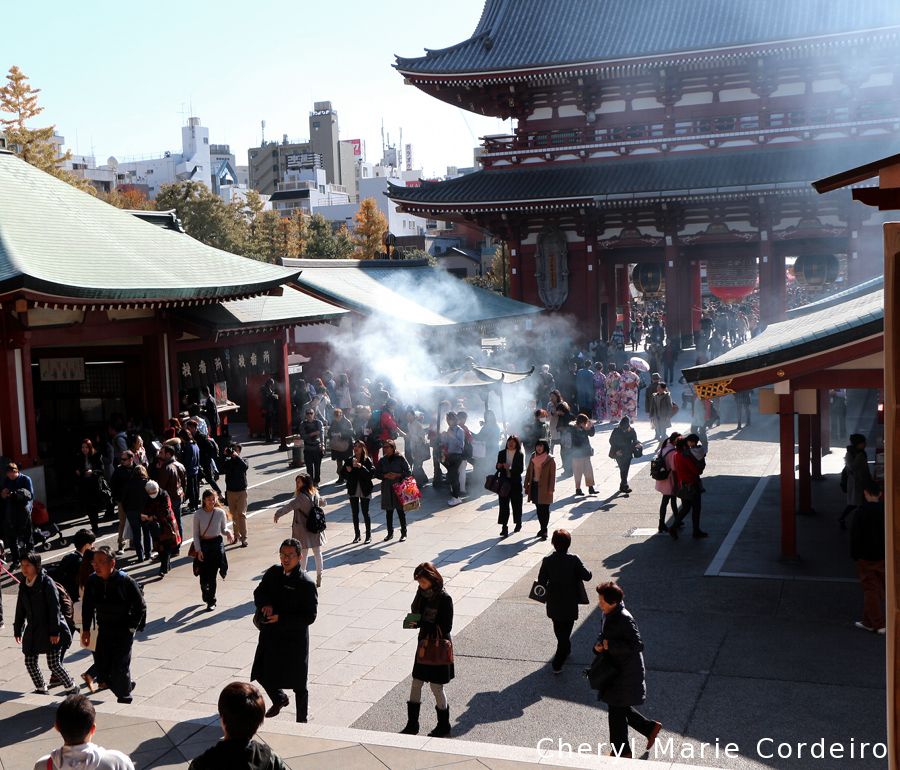
Sensoji Temple at Asakusa, Tokyo

Sensoji Temple

Sensoji Temple grounds.
Text & Photo © JE Nilsson, CM Cordeiro, Sweden 2015

§TRANSCRIPTION START
$G: We have a very interesting story about the Sensoji Temple, origin of Sensoji Temple. One day, two grown-ups picked up a statue of Buddha from nearby Sumida River when they are fishing. And at that time they didn’t know what is that. Because the Buddhism was imported to Japan during the sixth century, so at that time, they were commoners so they didn’t know what is that. And they tried to put it back many times. But the statue always found a way to come back to them. So finally the two fisherman together with chief of village, the three people built a place to worship the statue of Bodhisattva. Bodhisattva is a kind of Buddha. And Bodhisattva is known as God of Mercy. And Bodhisattva can save all people from suffering. And the creating of the Bodhisattva became very popular, and a lot of people began to came to the temple to make a prayer. That is the history of Sensoji Temple.

So in the main hall of Sensoji Temple, they worship the statue of Buddha. But today, we cannot see that. Because always we cannot see that. Because the statue is in the box. Stored in the box. And the box is not opened by persons for one hundred fifty years. Continue reading “Sensoji Temple at Asakusa, Tokyo”

Tsukiji Fish Market, Tokyo

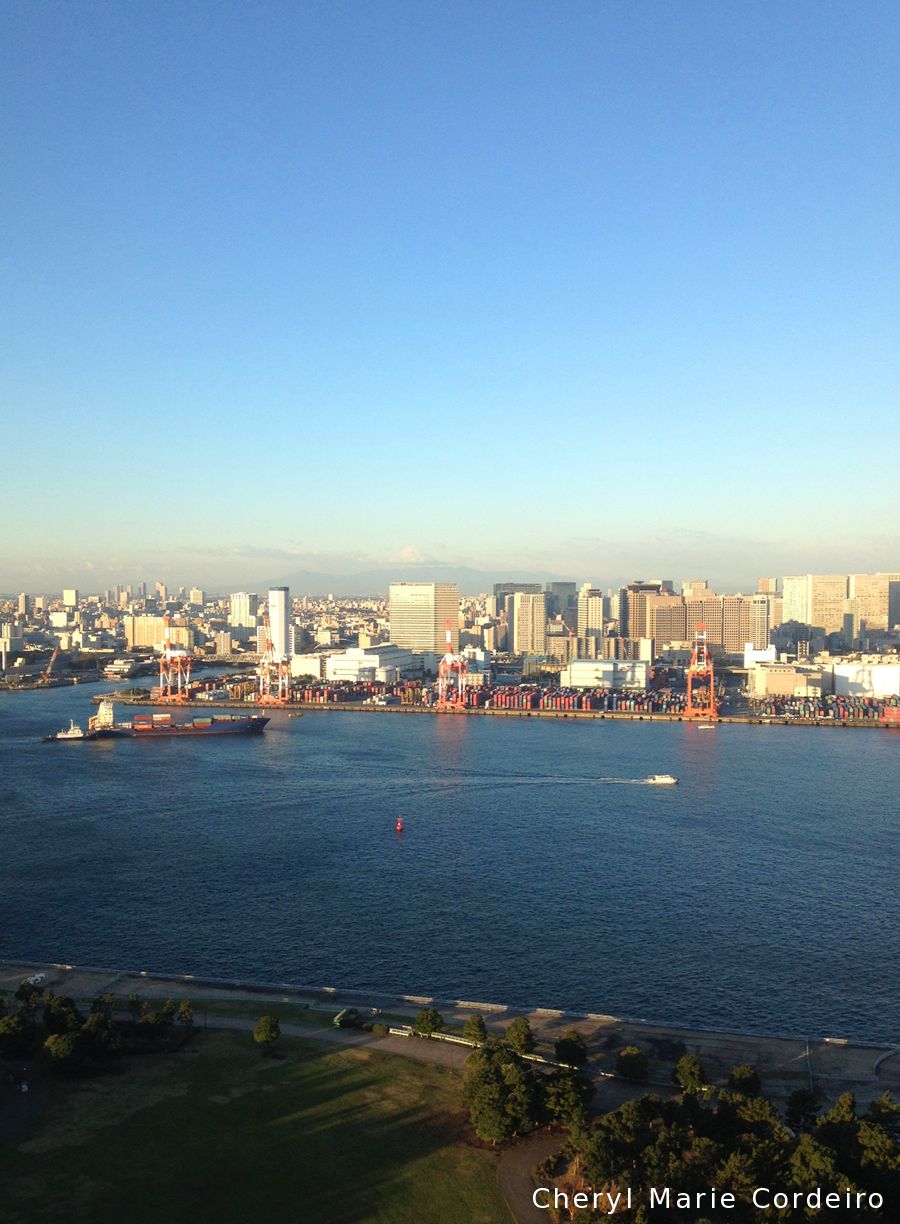
Tokyo Bay, view from Le Grand Pacific Daiba, 30F.

A morning view of Tokyo Bay, from Odaiba. Tokyo’s container harbour framed lightly by its mountainous region in the background.
Text & Photo © JE Nilsson, CM Cordeiro, Sweden 2015

Faced with a declining birthrate and an ageing society, Japan’s Revitalization Strategy was revised in 2014 to include a section on “robot revolution”. It focused on the potential of the use of robots for the solving its social challenges and labour shortages. These ideas ran as core theme to this year’s International Robot Exhibition (iREX 2015, 2-5 Dec.) held at the Tokyo Big Sight, in Tokyo, Japan.

It was in such a forward looking context of robotisation that I decided to head towards one of the world’s largest fish markets right in the centre of the city, the Tsukiji Market, if only to feel the heartbeat and observe the pulse of an ancient trade in this metropolis. Continue reading “Tsukiji Fish Market, Tokyo”

Marketplaces: converging inspirations

Saluhallen Västerås

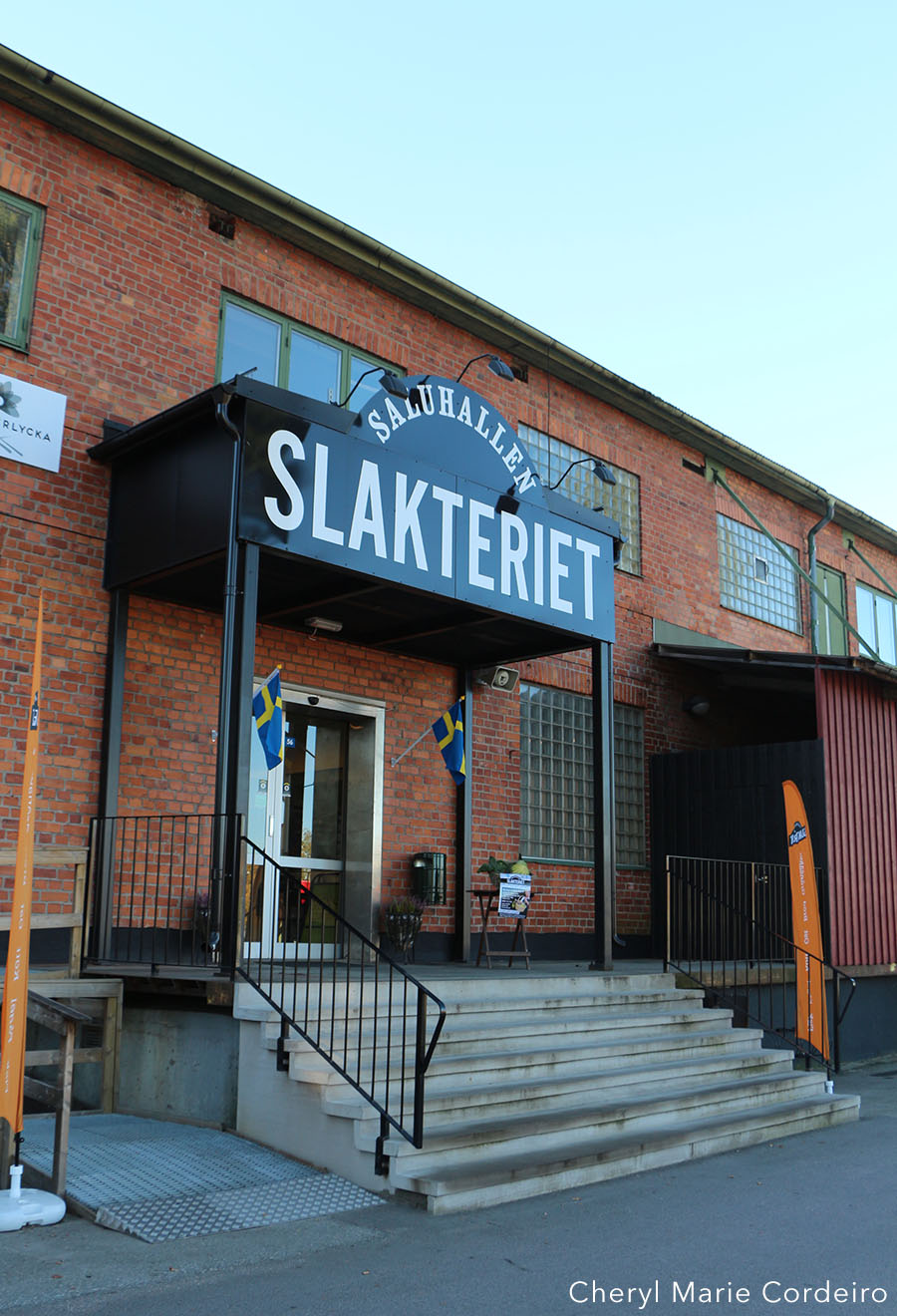
Saluhallen Slakteriet, Västerås, Sweden.
Text & Photo © JE Nilsson, CM Cordeiro, Sweden 2015

Whilst the field of transdisciplinary research contemplates the effectiveness of the use of metaphors as a means to transcend boundaries between different fields of academic research, walk the streets of Västerås on a sightsee tour and you’ll find anything but the use of metaphors in street names or buildings, the sign designating the name of the road being metaphor enough. There is one skyscraper in the entire city, and that is aptly called, ‘The Skyscraper’. This weekend, I had the opportunity to go a little farther out of the city centre to the former abattoir, to a farmer’s market called ‘The Market Slaughterhouse’. You’ll find this market right next to the city’s landmark energy plant in the midst of a romantic industrial setting. Most street and building names are so straightly connected to the city’s power and energy industrial roots that one might come to think that the effort of keeping things in two dimensional vectors was considered effort enough in deployment of metaphor in itself.

Having observed two vector namings in three dimensional space, entering Saluhallen Slakteriet came as a surprise visual Continue reading “Marketplaces: converging inspirations”

Around the river Limmat, Zürich, Switzerland

Cheryl Marie Cordeiro, Zürich Switzerland

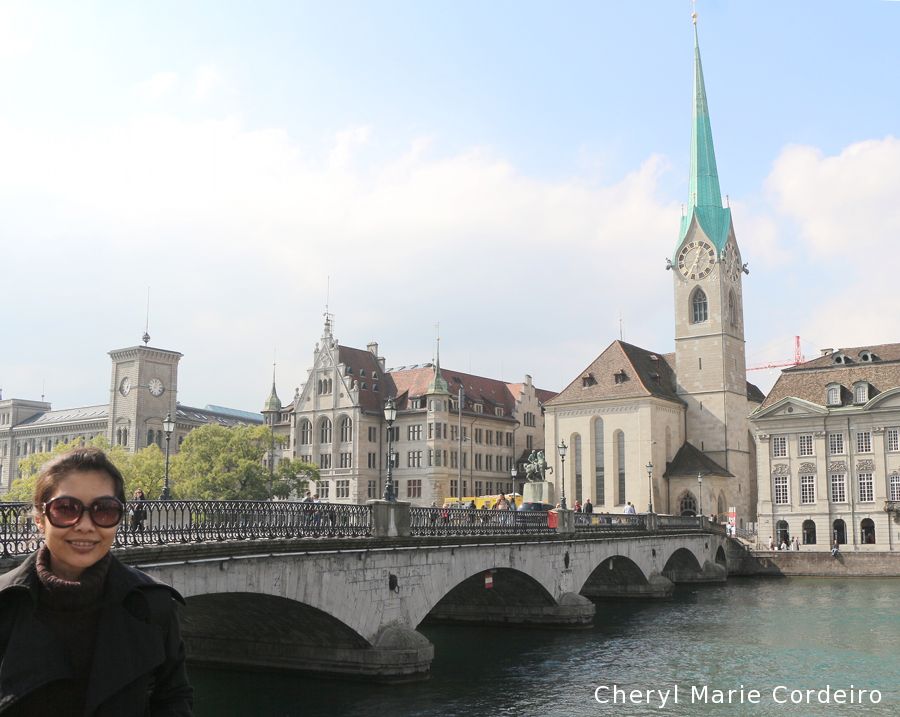
Standing at the bank of the river Limmat with Fraumünster Church in the background.
Text & Photo © JE Nilsson, CM Cordeiro, Sweden 2015

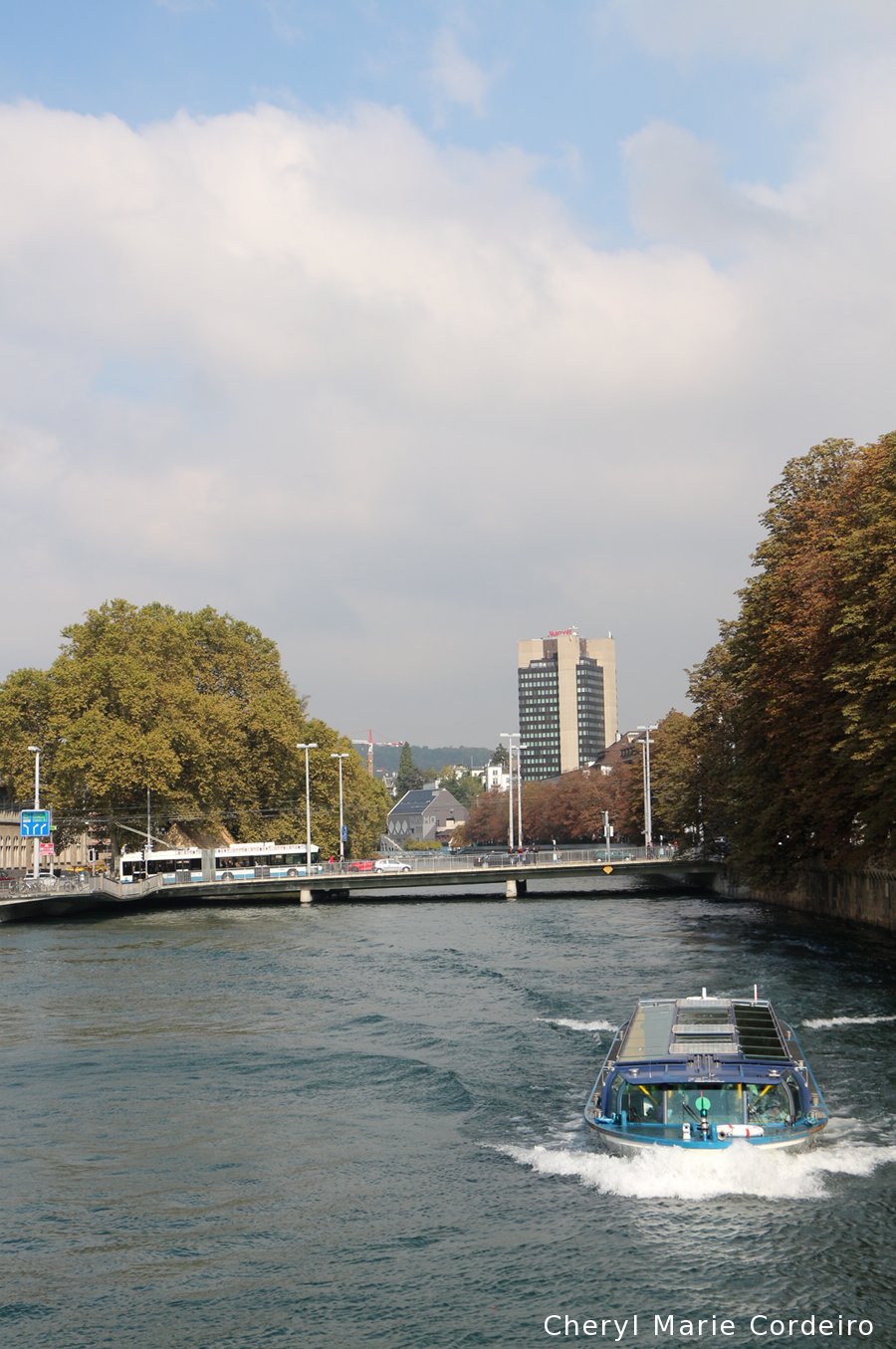
The oldest parts of the city of Zürich is just a couple of minutes walk from the central station. With just about a few hours to spend in Zürich, I think my favourite thing to do would be to plan some points of interest to visit and then make time for some coffee, sitting in a café by the river Limmat. On a brilliant day, the crowds gather to sit outdoors for late breakfast all through high tea. There is no lacking of culinary genius from Swiss bakeries and cafés, that makes for interesting points of conversation in terms of the influence of foods and peoples in the city’s long history.

Cheryl Marie Cordeiro, Zürich Switzerland

A familiar view on most city rivers, ferries on rivers.

Continue reading “Around the river Limmat, Zürich, Switzerland”

Time in circles, Baden, Switzerland

Cheryl Marie Cordeiro, Baden, Switzerland

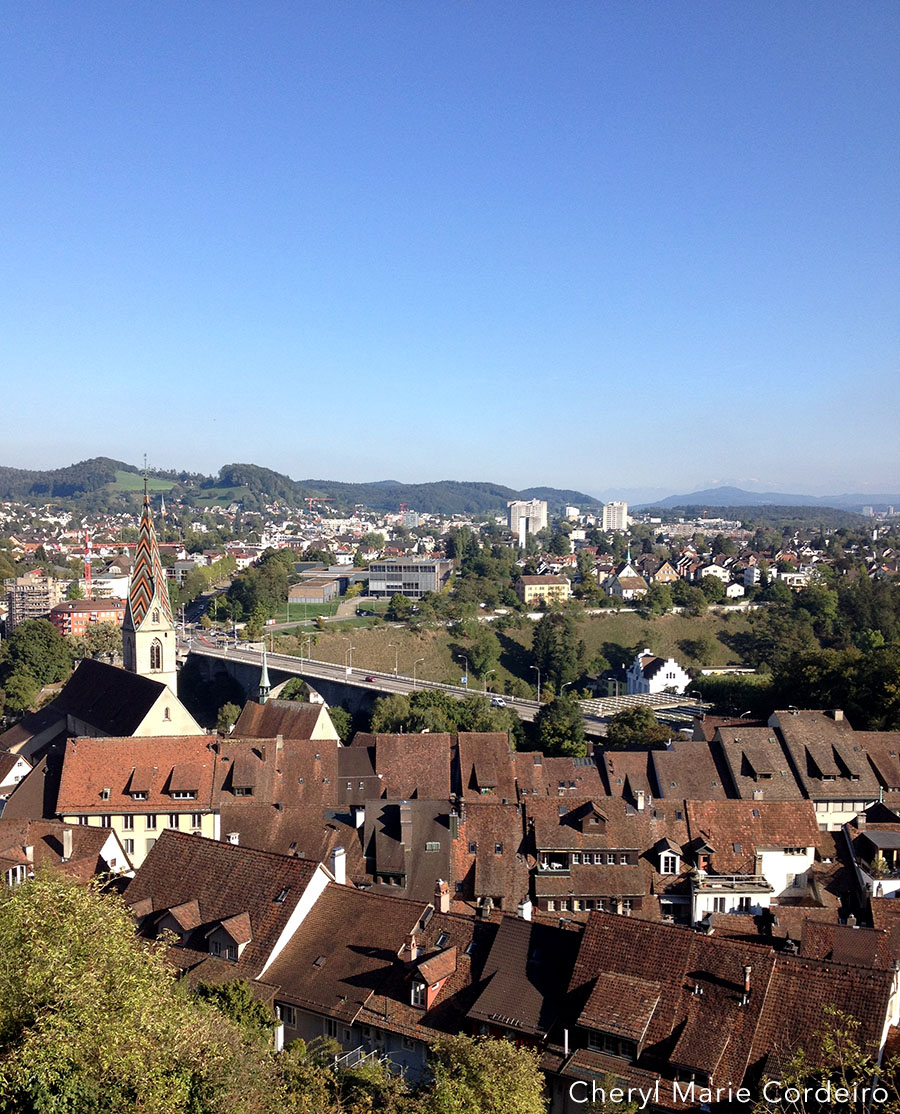
View from the top of the Stein Castle ruin, whose foundations were laid some time before the 1100s.
Text & Photo © JE Nilsson, CM Cordeiro, Sweden 2015

It was about a decade ago that I sat in the Singapore regional headquarters office of a Swedish owned multinational enterprise, speaking with its Managing Director. The topic was about the general managing of conflicts within the organisation, when we touched upon the concept of Time, and whether that was viewed in linearity:

$1: what happens if you disagree
$2: well you tell / you tell and eventually you do agree / because all disagreements end with an agreement if you’re lucky / or you become / enemies /
$1: do swedes generally see time as a straight line
$2: well no / i would see it as a circle / my time is a circle / i have no idea what others do / and strangely enough that the year and the day / goes in different directions /
$1: is that [understanding of time] a result of [an understanding of a certain philosophy] or
$2: i have no idea / if christmas is six oclock then april is three oclock / and summer is noon / october is nine oclock / but if you’re asking if we are on time or not / yes we are

Baden is a town with a long history. A history that you are made aware of as you walk its small, winding cobbled streets from the banks of the the river Limmat Continue reading “Time in circles, Baden, Switzerland”

Cadenhead’s in Baden, Switzerland

Cheryl Marie Cordeiro, Baden, Switzerland

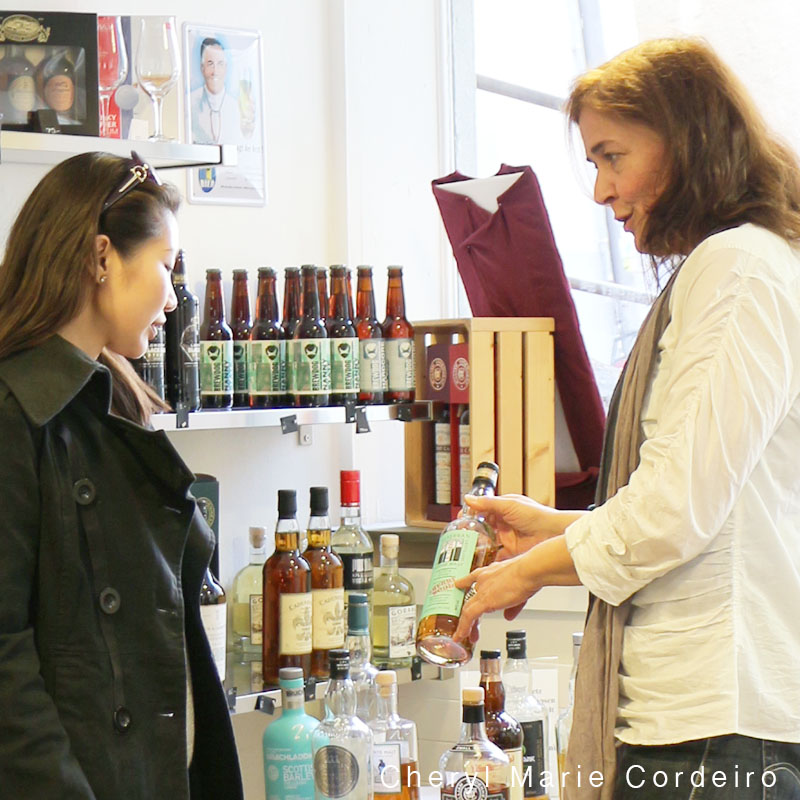
Astrid Bach, explaining the different whiskies in specialist whiskey importer Peter Siegenthaler’s shop, Cadenhead’s in Baden, Switzerland. William Cadenhead Ltd, established in 1842 is Scotland’s oldest independent bottler, the joy of which is that one can bring home a Cadenhead’s right here from the heart of the historic town of Baden.
Text & Photo © JE Nilsson, CM Cordeiro, Sweden 2015

In the heart of the old town of Baden, Switzerland, in a corner of Mittleren Gasse, the rich variations of bottled liquid amber reflecting in the sunlight through the glass window display caught my eye. I had in the past few days, tried to visit this shop that seemed to close minutes before I stepped by in the evenings. So I was more than delighted that on this day, I could swing open the door and step into Cadenhead’s.

It was Astrid Bach who greeted me as I stepped in through the door. I took a long sweeping look around the shop. Delighted at what I saw, I turned to her and asked, “Do you have Eiswein?”

My question was greeted with a polite perplexed look on her face. The reason for her perplexity as I found out later was that the shop that belonged to Peter Siegenthaler, the sole importer for Cadenhead Scottish distilled whiskies into Switzerland, sold “alles ausser Wein”. I looked at Astrid in brief pause, smiled and said, “I guess I’m here to buy a whiskey.” And so began an early evening adventure on the different types of Cadenhead whiskies. Continue reading “Cadenhead’s in Baden, Switzerland”

Weekend farmers market, Västerås

Farmers market, Västerås

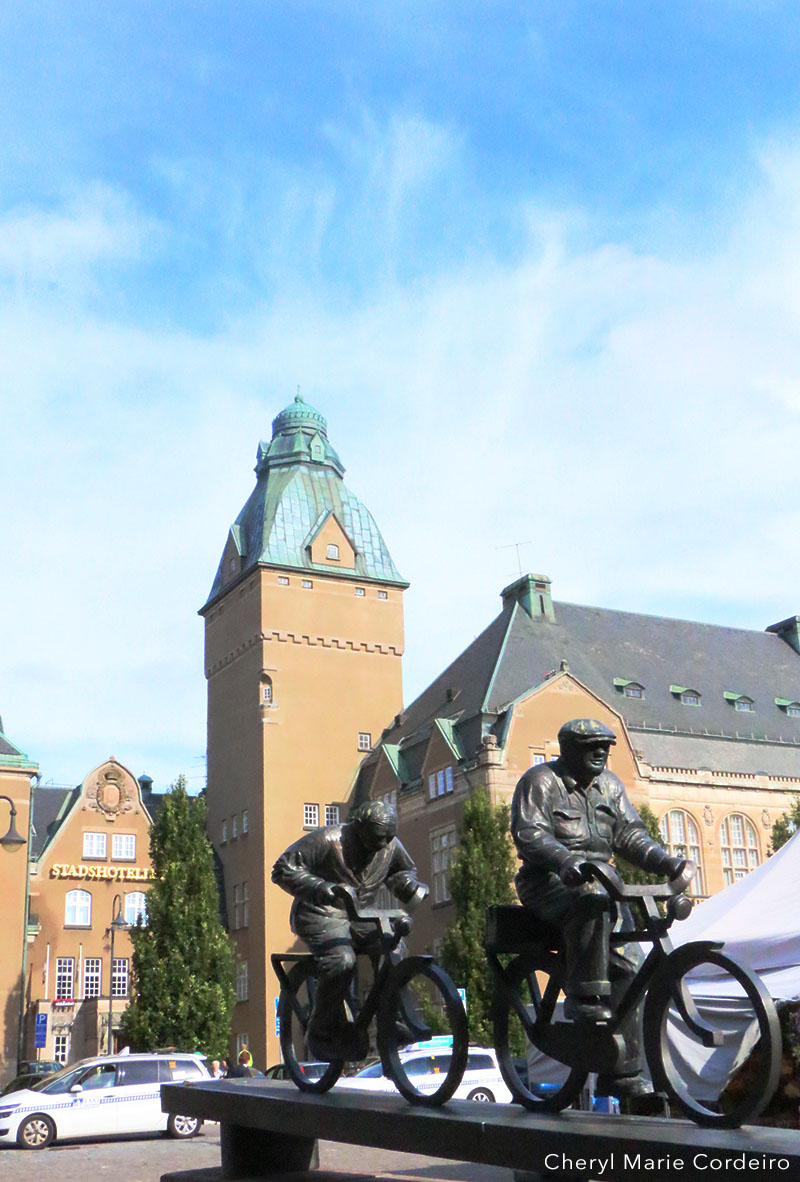
This piece of public art, the ASEA stream, depicts people cycling to work. It sits by Stora Torget and is the creation of Västerås artist B G Broström. Cycling remains one of the preferred means of transport in this city.
Text & Photo © JE Nilsson, CM Cordeiro, Sweden 2015

The move from Gothenburg to Västerås in Sweden with a brief visit to Maastricht in Netherlands prior to Västerås is surreal. It is not only that these two cities are one of the oldest in Europe dating back to 1000 AD or earlier, but their size and layout are fairly comparable. Both cities are best reached by train, and both have its city centre close to the train station that is navigable on foot, with having a bicycle making navigation a notch more efficient on their cobble paved streets. In the case of Västerås, one can literally see the undulations of the cobbled streets from the inner-city radiating outwards from the river. Reminiscent of the structures of Rome (although less fantastic), newer constructions in Västerås have been built upon older constructions, making the newer parts of the city sit on higher ground.

As weekend unfurls, the city comes to life most prominently with a weekend farmers market located at Stora Torget. The large square that hosts the market place sits in the oldest quarters at the heart of town, just alongside Svartån and a block away from the three Michelin Guide starred Västerås Domkyrka that is also one of Sweden’s episcopal see. Continue reading “Weekend farmers market, Västerås”

Philosophies of summer drives

Laxå

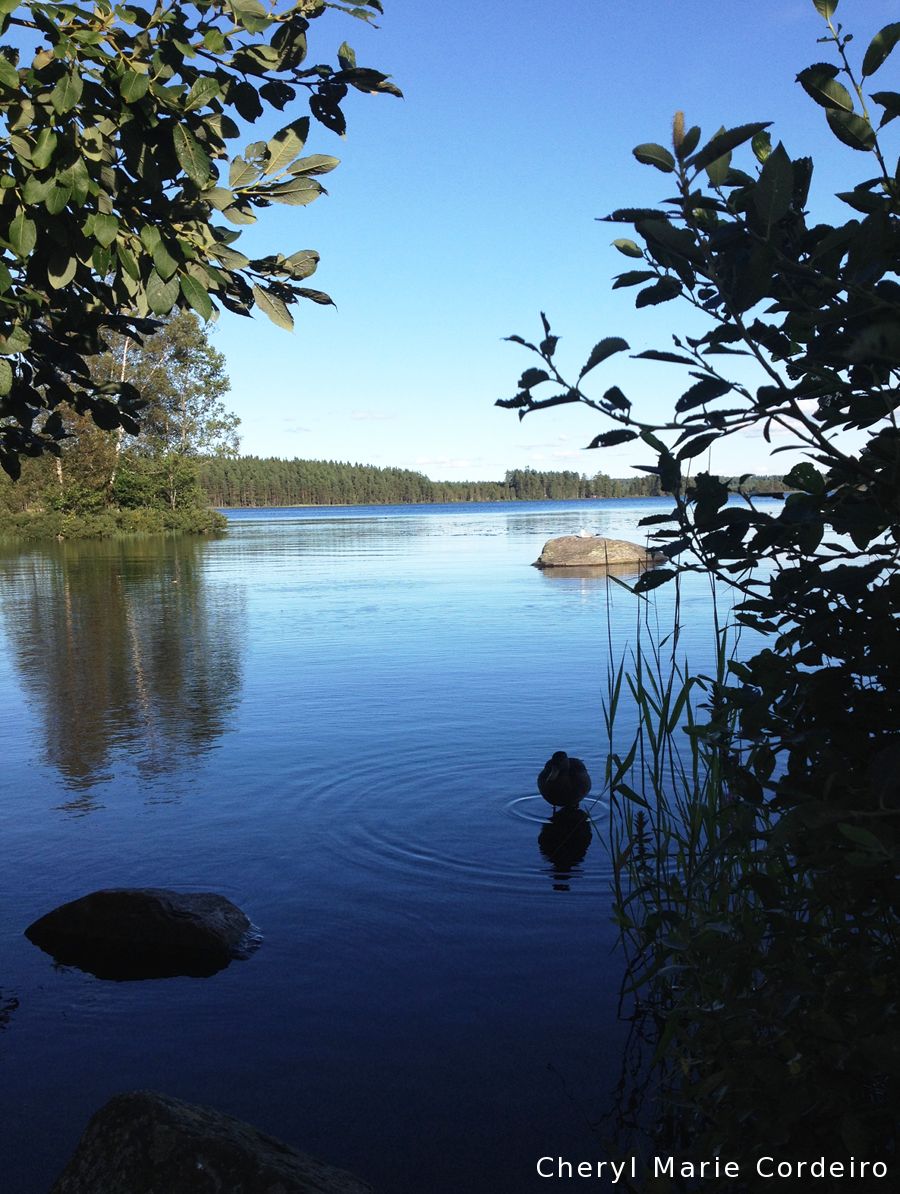
View from sitting at the edge of one of Sweden’s many waterways.
Text & Photo © JE Nilsson, CM Cordeiro, Sweden 2015

It seems like summer decided to begin just as the tail-end of its official months with many regions of Sweden feeling warm as toast. If not too warm, a favourite thing to do is to get in the car and do small road trips, anywhere from between two hour to three hour drives from Gothenburg that leaves quite a radius of interesting exploration.

While there’s been a culture of second-hand findings where Swedes readily barter or trade at low cost things tired of or unwanted to what they want, it has only been in the past couple of years that antique shop hopping and second-hand goods browsing has really taken off, much due to the hipster culture and greater awareness of the sourcing of ecological produce. It is just about these past years that see the those born from the 1990s and forwards step out of school and into the labour force, bringing with them their own awareness and motivations into their living interests and entrepreneurial ambitions.

It was on one of these summer drives where we decided to absolutely ignore the voice of the GPS nicely suckered onto the windshield insisting that we go where we should go that we found an interesting farmhouse set up with several barnyards for different needs. There was the family house of medium size, then there were two barns that housed a vintage shop and a café. Continue reading “Philosophies of summer drives”