Text and Photo © 2026 JE Nilsson, CM Cordeiro
February is not the obvious month to visit southern Norway. The days are short, the harbour wind has teeth, and the summer crowds that fill Kristiansand’s famous Fiskebrygga are long gone. But come in February for one very specific reason: skrei.
The Wharf in Winter
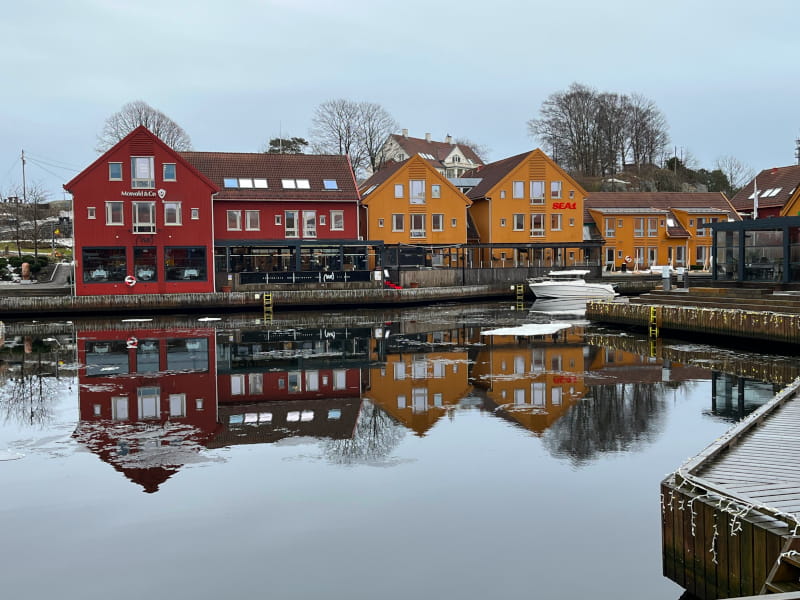
Fiskebrygga, the Fish Wharf, is a former fish landing that extends along both sides of the Gravane Canal, the waterway that separates the town centre of Kvadraturen from the island of Odderøya. It was reconstructed in the 1990s into the warm-toned, wood-fronted destination it is today, with buildings painted in deep ochre and red that seem to glow against a grey February sky.
In summer, this place is a carnival. Boats with locals tie up in the basin, restaurants set out beer taps by the waterside, and people of all ages hang out enjoying the long Nordic evenings. In February, it is something else entirely: quieter, more contemplative, and somehow more Norwegian. The canal is still. Frost sits on the wooden piers. And the fish market, when it opens, smells of salt and cold sea air and something deeply, anciently alive.
During the winter months it is a lot quieter, but still worth a look. For the food-focused traveller, the quietness is actually the point. You get the counter to yourself. The fishmonger has time to talk.
What to Expect at the Market
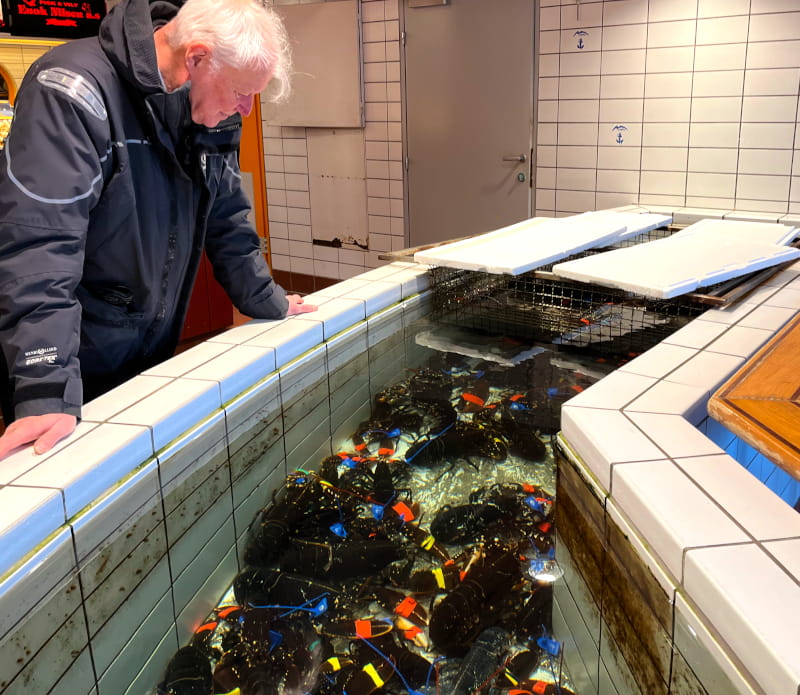
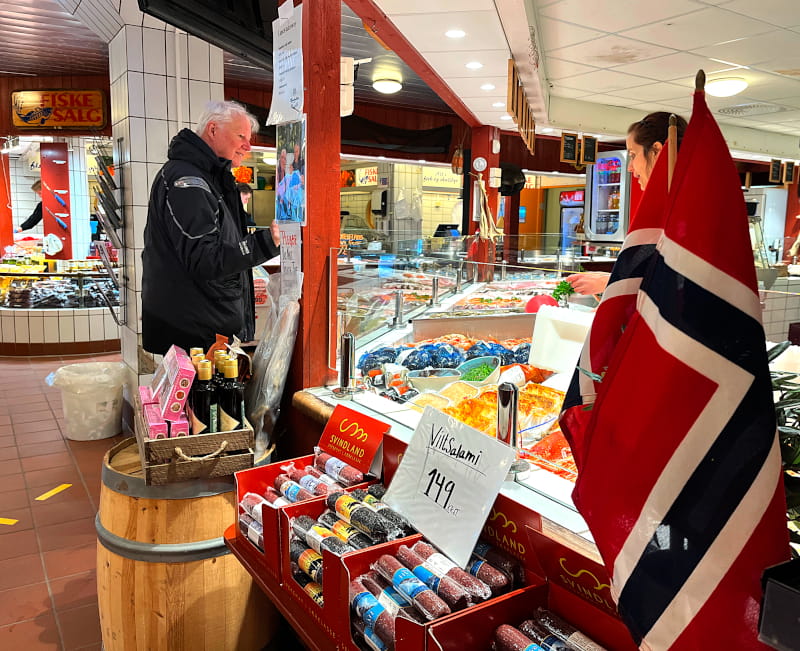
The Fish Market at Fiskebrygga sells all kinds of Norwegian fish and shellfish, including some live. Since Kristiansand is a Norwegian port, the market is loaded with variety. Beyond fish, you may find whale, moose, and reindeer sausage on sale too.
At Reinhartsen, a stall with roots going back to Grandpa Selmar Reinhartsen who established the business on Flekkerøya in 1931, you can pick up homemade fishcakes or hot-smoked salmon, both of which have received the Norwegian Matmerk specialty mark for unique taste.
Bring some cash. Pick up whatever looks freshest. Then find the nearest bench on the pier, unwrap your parcel, and eat it looking out at the canal. That is the correct way to do this.
The Star of the Season: Skrei
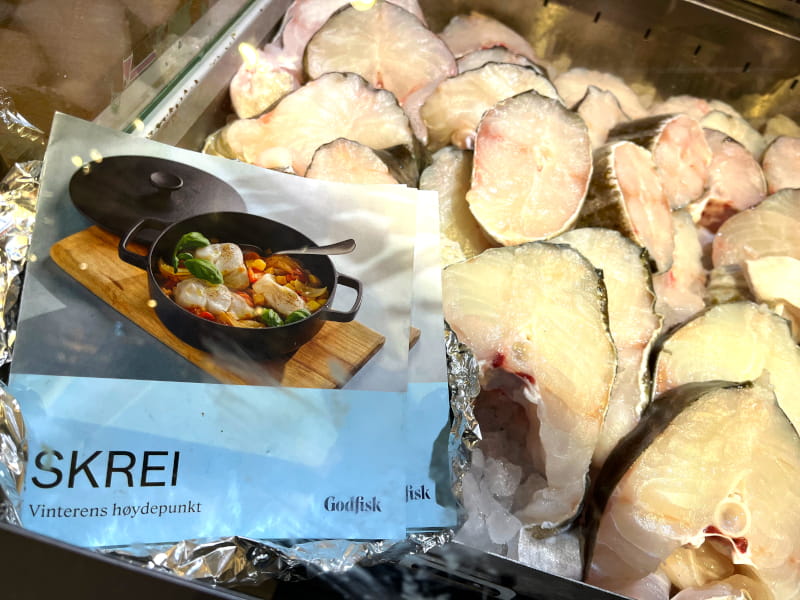
February is peak skrei season, and if you care about eating well, this matters enormously.
Skrei is a premium, seasonal Norwegian cod, only found in the northern part of Norwegian waters. Every winter, around January, it swims roughly 1,000 kilometres down to the coast of northern Norway to spawn. This epic migration is what gives the fish its name. Skrei means, roughly, “the one that wanders.”
Every year between January and April, millions of large, mature fish undertake their annual journey from the Barents Sea back to their spawning grounds around Norway’s Lofoten islands. The peak is between February and March, which means a February visit to Kristiansand puts you right at the heart of it.
What makes skrei different from ordinary cod? Its relative youth gives skrei its lean, firm texture. The fish are typically five to six years old when caught. Being in its spawning period, skrei also has more intramuscular fat than standard cod, which makes it juicier. And the quality controls are strict: skrei must be bled out at sea, rinsed with seawater, and packaged within strict deadlines before it can carry the name.
How to Eat It
In Norway, nothing is wasted. In the north you’ll find every part of the cod on offer, from a traditional fillet to butter-fried tongue. Skreimølje is the classic preparation: roe, fillet, and creamy liver of the cod, cooked in its own oil. It is a dish that has sustained fishing communities for a thousand years, and it tastes like it.
At Fiskebrygga’s attached restaurants, look for skrei on the winter menu: simply pan-fried, with butter, potatoes, and perhaps a squeeze of lemon. This is not the season for elaborate plating. This is the season for white flesh that falls in clean, brilliant flakes, that tastes of cold Atlantic water and nothing else.
Pair it with a cold Norwegian lager or, if the evening calls for it, an aquavit. You are, after all, in the right country.
The Broader Meaning
The Northeastern Arctic cod population in Norway is one of the most well-managed fish stocks in the world, and eating skrei in season is one of the most conscientious seafood choices you can make in Europe. As one cod specialist from the Norwegian Seafood Council put it: “We have oil, which will run out, and then we have fish. It’s important for us to fish sustainably because this is what we will live off for years to come.”
There is something clarifying about standing at a winter fish counter in southern Norway, watching a fishmonger wrap a piece of skrei in paper, knowing that the fish you are about to eat has been on a thousand-kilometre journey, that it has been caught and handled with care, that people have been doing this same thing on this same coast for the better part of a millennium.
February in Kristiansand is cold, quiet, and worth every grey-skied minute.
Fiskebrygga is located at Gravane 6, Kristiansand. From the city centre, follow the waterfront south, about a 15-minute walk from the main shopping street, Markens Gate. Dress warmly. Arrive hungry.