Text and Photo © 2026 JE Nilsson, CM Cordeiro
Through Old and New Shanghai: Museum Treasures to Bund Lights
Shanghai, October 2025
Some days are perfectly choreographed without having the need to plan much. An October 2025 morning in Shanghai began with ancient porcelain and ended with the glittering skyline reflected in the Huangpu River, a journey from 8,000 years of ceramic history to the electric pulse of modern China.
Morning: Porcelain Pilgrimage at Shanghai Museum East
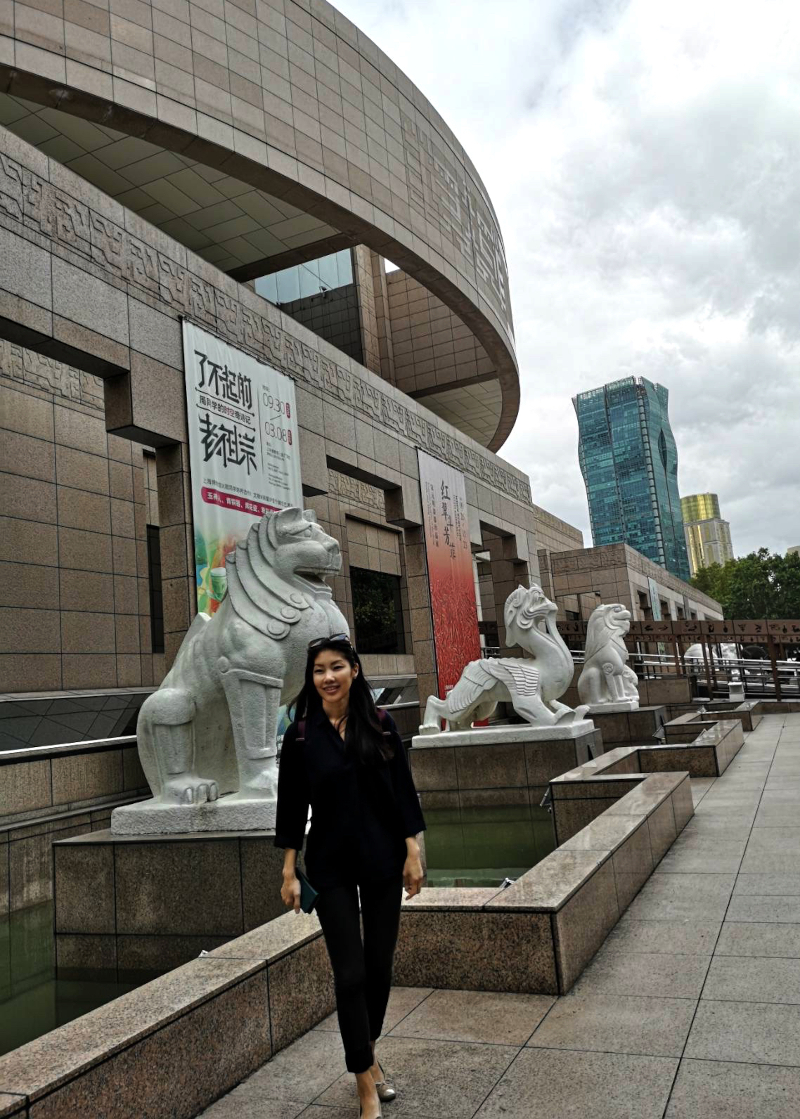
We arrived at the Shanghai Museum East Campus in Pudong just after opening, beating the mid-morning crowds. The sprawling 113,200-square-meter building on Century Avenue is a world away from the iconic bronze ding-shaped museum at People’s Square. Where the original building evokes ancient ritual vessels, the East Campus, opened in late 2023, is all soaring ceilings, natural light, and the kind of spaciousness that lets you actually breathe around priceless artifacts.
Our target was the Ancient Chinese Ceramics Gallery on the third floor, and we were not disappointed. Spanning 1,800 square meters, this collection of 558 carefully curated pieces traces 8,000 years of ceramic evolution from the Neolithic Age through the late Qing Dynasty. What’s remarkable is that nearly half these pieces are being displayed publicly for the first time, treasures that have been in storage for decades, finally given the space they deserve.
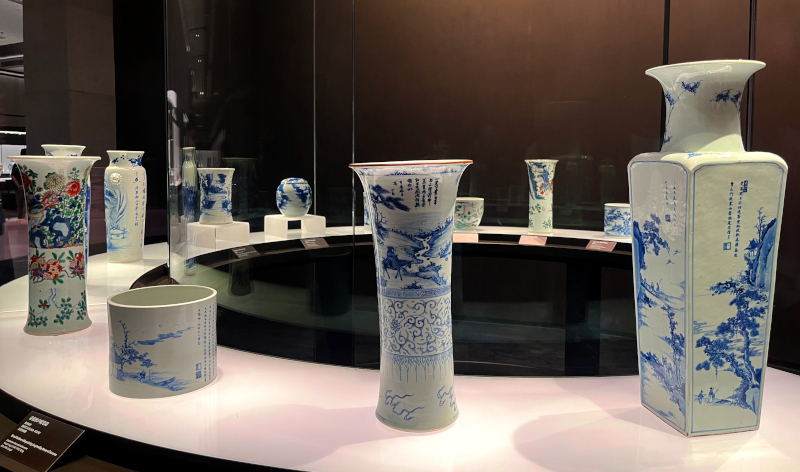
The gallery unfolds in seven sections, each marking a watershed moment in Chinese ceramic history. I found myself mesmerized by the progression from primitive earthenware to the ethereal celadons of the Song Dynasty, those legendary green-glazed pieces that seem to glow from within. The Ming blue-and-white porcelains practically vibrate with cobalt intensity, while the Qing Dynasty enameled pieces showcase technical virtuosity that borders on showmanship.
But here’s where the Shanghai Museum East truly distinguishes itself, they let you touch select pieces. A blue-and-white porcelain vase from the Kangxi period (1654-1722) sits mounted securely on a pedestal, available for visitors to feel the smoothness of the glaze, the subtle ridges of the painted patterns. Museum officials explained they’ve arranged special insurance and constant CCTV monitoring to make this radical act possible. Director Chu Xiaobo believes physical connection deepens appreciation, and he’s right. Running my fingers over 300-year-old craftsmanship created an intimacy no glass case could provide.
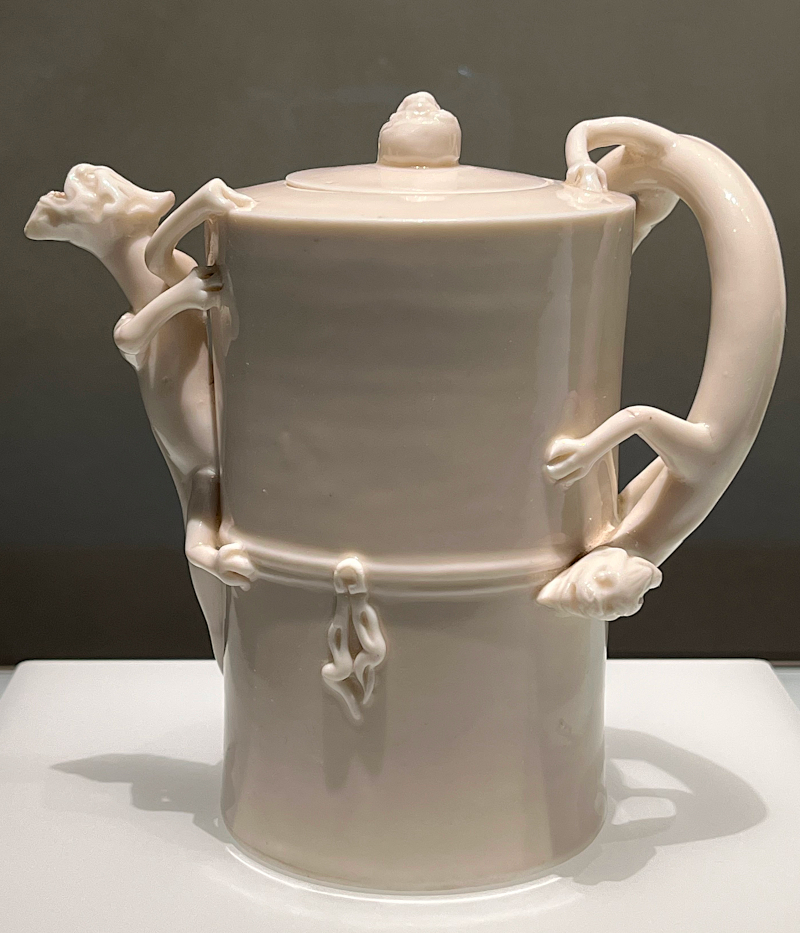
We spent nearly an hour studying the rare pieces from imperial kilns, Jun ware with its opalescent purples and blues, Ge ware with its distinctive crackled glaze, Ru ware in those impossibly subtle shades of blue-green. These weren’t just ceramics, they were the pinnacle of artistic and technical achievement, created for emperors who demanded perfection.
The export porcelain section fascinates equally. Here were pieces made specifically for European markets, showing how Chinese potters adapted their designs to foreign tastes. Alongside them, European attempts at imitation, the birth of Delftware, Meissen, and countless other traditions sparked by European obsession with cracking the secrets of Chinese porcelain. The gallery illustrates not just Chinese ceramic history, but how these pieces shaped global aesthetics and trade for centuries.
Passionate about antique Chinese porcelain? Visit and subscribe to the discussion forum at Gotheborg.com
Afternoon: Nanjing Road, and a Little 1920s Film-Noir Time Travel
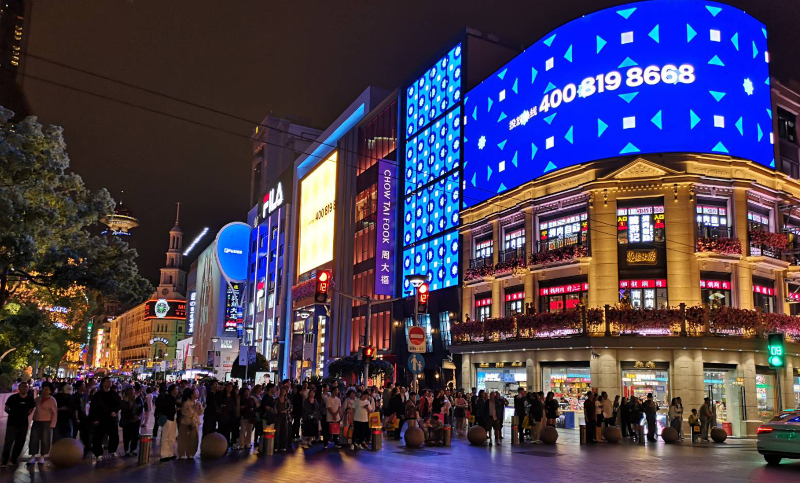
By early afternoon, with our minds saturated with Song Dynasty celadons and Ming blue-and-white, we headed back across the river to Nanjing Road for something completely different, the chaotic, commercial, utterly human experience of “China’s No. 1 Commercial Street.”
We emerged somewhere mid-street on the pedestrian section, that 1.2-kilometer stretch where over a million daily visitors flow past shops, food vendors, and the occasional Dangdang tram clanging its nostalgic way through the crowds. The street is a glorious collision of eras, century-old department stores in European classical glory standing beside neon-blazing modern boutiques, luxury brands sharing space with century-old food emporiums.
And then we spotted it, an outdoor photography studio with a storefront practically begging you to step into 1920s Shanghai. Film noir vibes, period costumes visible through the windows, that whole sepia-toned gangster-and-flapper aesthetic that’s become synonymous with Shanghai’s “golden age.” How could we resist?
The 1920s and 30s represent Shanghai’s most romanticized era, the “Paris of the East,” when the city was a haven for artists, revolutionaries, gangsters, and adventurers. Walking down Nanjing Road, you’re literally on the same pavement where that world unfolded. The Art Deco department stores, the European architecture, the whole mise-en-scène is still here, just updated with LED signs and bubble tea shops.
Inside the studio, we got the full treatment, period costumes. Running my fingers through the array of qipaos, I settled for a light peach toned coloured qipao. A feathered fan for prop, and a photographer who clearly knew every angle helped capture that moody, cigarette-smoke-and-intrigue atmosphere. It’s touristy, yes, but it’s also a kind of time travel. For twenty minutes, you’re not a modern visitor, you’re a character in Shanghai’s most legendary chapter. The photos came out gorgeously atmospheric, all shadow and suggestion, exactly the film noir aesthetic we’d hoped for.
Stepping back onto Nanjing Road in contemporary clothing felt like waking from a dream, but the street itself kept the spell going. We ducked into Bao Da Xiang (宝大祥), a food emporium founded in 1870 that appears in my photos looking gloriously old-school with its bold red signage and traditional touches. Inside was sensory overload in the best way, dried seafood, traditional pastries, moon cakes, tea leaves, regional delicacies piled high. The elderly woman next to me was engaged in serious negotiation over preserved plums with a vendor who clearly knew her by name.
The “Four Great Department Stores”, Sincere, XinXin, DaXin, and Yong’an, still anchor this stretch. Yong’an, established in 1918, particularly catches the eye with its 22-story tower and European classical architecture. These were the pioneers of retail innovation in Asia, installing China’s first escalators and air-conditioning. Now they blend heritage preservation with contemporary shopping in that quintessentially Shanghai way of refusing to choose between past and future.
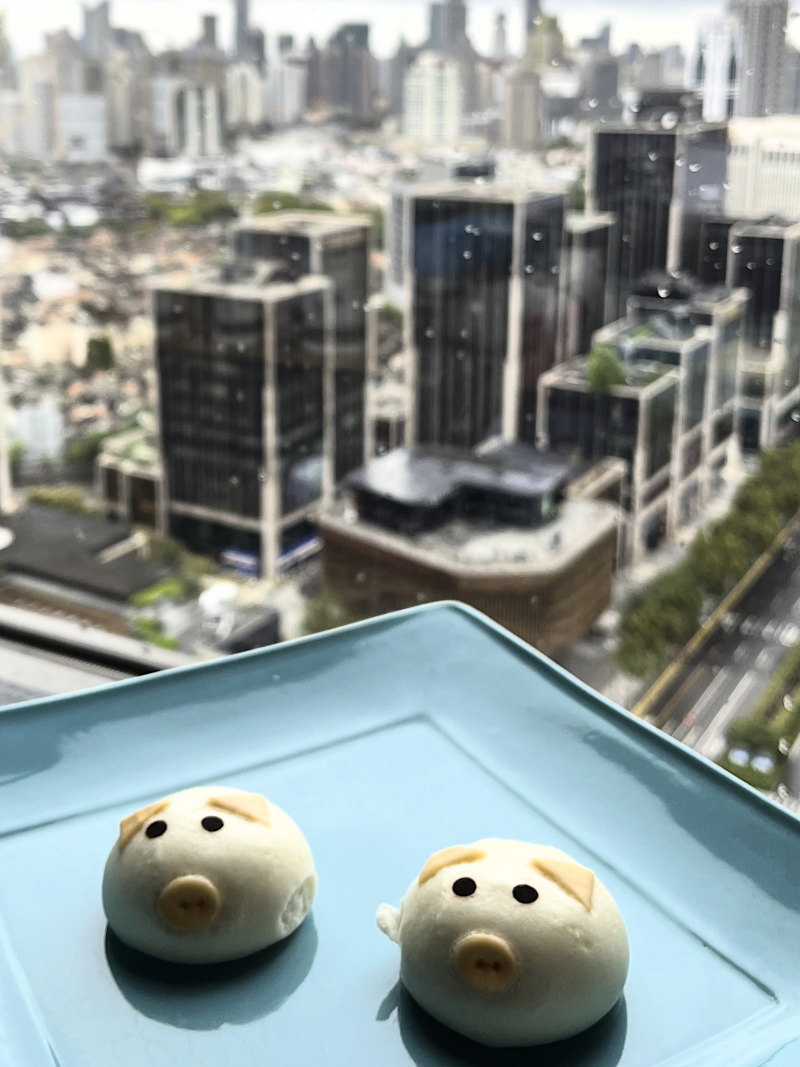
After the museum’s quiet contemplation, Nanjing Road was exactly the right kind of chaos. Street food vendors calling out, shoppers debating purchases in Shanghainese, tourists photographing everything, the smell of grilled meat mixing with perfume samples from cosmetics shops. We grabbed some bean filled baos from a vendor and just… wandered. Sometimes after filling your head with imperial ceramics, you need to fill your stomach with street food and people-watch.
Evening: The Bund by Night
As darkness fell, we made our way toward the Bund, where Nanjing East Road terminates at the Huangpu River. If the museum represented Shanghai’s ancient cultural sophistication and Nanjing Road its commercial energy, the Bund at night embodies its unabashed ambition.
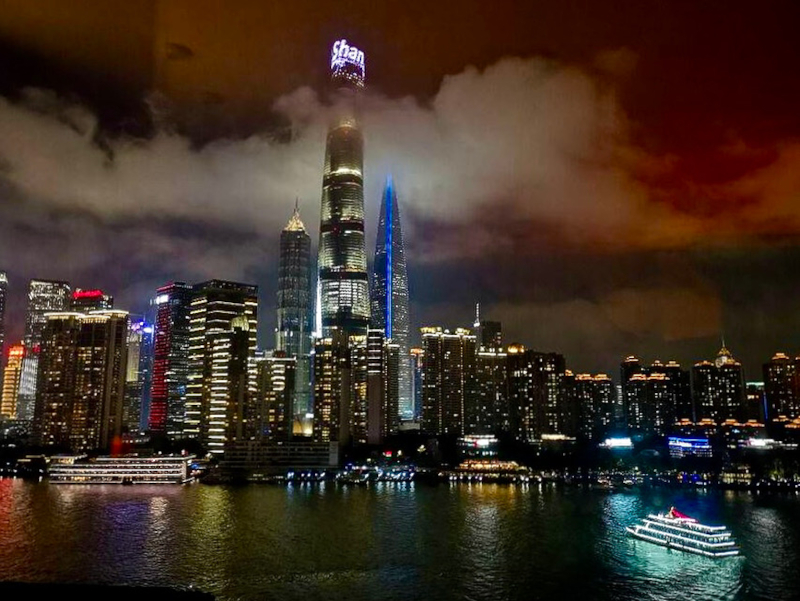
The waterfront promenade was packed with evening strollers, all of us drawn to that classic Shanghai vista, the historic European-style buildings of the Bund illuminated on one side, Pudong’s futuristic skyline glittering across the river on the other. Past and future facing each other across water, neither willing to blink first.
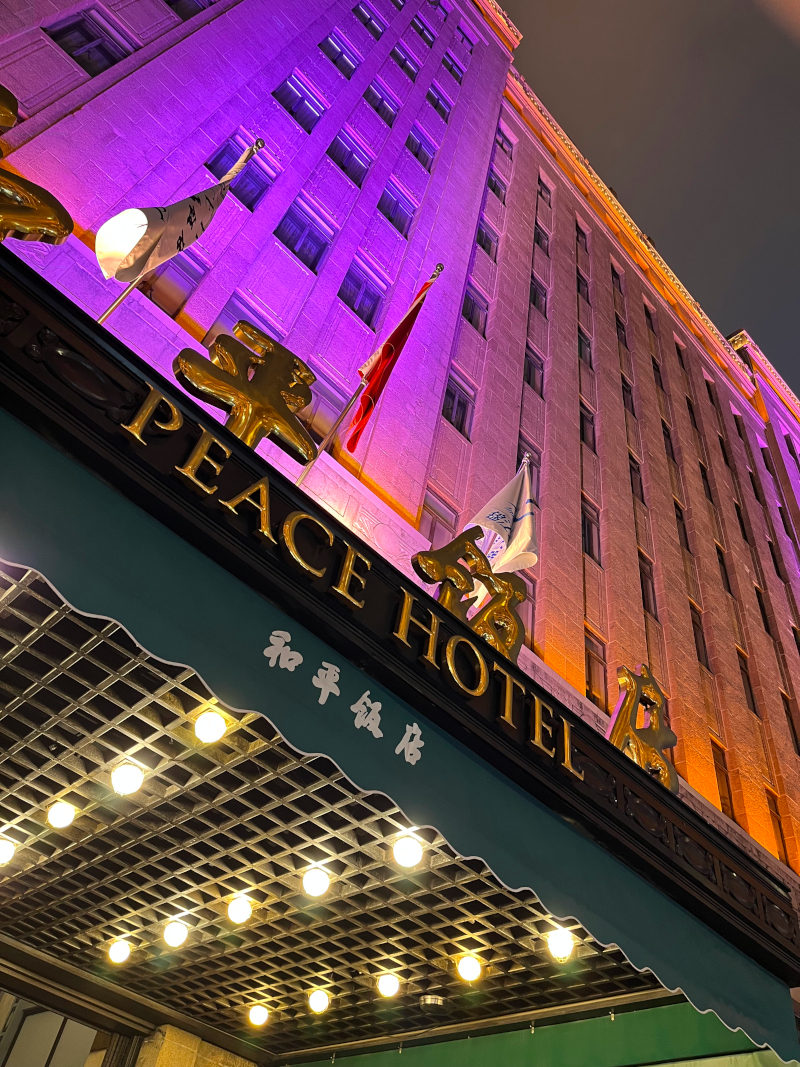
The Peace Hotel dominates this stretch, an Art Deco masterpiece built in 1929 that’s witnessed nearly a century of Shanghai’s tumultuous history. Its distinctive pyramidal copper roof glows at night, and standing before it after our 1920s photo shoot felt like closing a circle. This hotel was ground zero for that romantic Shanghai era we’d just play-acted. Noël Coward supposedly wrote Private Lives here while recovering from influenza. Diplomats, writers, spies, gangsters, revolutionaries, they all passed through these doors during Shanghai’s most legendary decades.
I found a spot along the railing and just watched the river traffic for a few minutes. Illuminated cruise boats, cargo vessels, the occasional speedboat cutting white lines through dark water. Across the river, the Oriental Pearl Tower’s colored lights cycled through their programmed sequence while the Shanghai Tower, China’s tallest building, pierced the night sky like an exclamation point on the city’s ambitions.
The Bund has been Shanghai’s front door to the world since the 1840s, when foreign trading houses first lined this waterfront. Those colonial-era buildings, banks, trading companies, hotels, now house luxury brands and rooftop bars, their neoclassical facades lit dramatically against the night. It’s appropriated imperial architecture repurposed for contemporary commerce, and somehow it works.
Reflections
Walking back along the Bund as the evening deepened, I thought about the through-line of my day. Morning began with ceramics that traveled the Silk Road and maritime trade routes, reshaping European aesthetics and sparking industrial espionage. Afternoon brought me to a shopping street where I literally dressed up as a character from Shanghai’s most mythologized era. Evening ended at the Bund, where Art Deco hotels from that same period face Pudong’s space-age skyline across water that’s witnessed centuries of exchange.
Shanghai sells you its own mythology, and gladly helps you dress up and play a part in it. But the remarkable thing is how that mythology sits comfortably alongside genuine historical depth. The ceramics I touched on this morning were created by artisans working under emperors whose names most Westerners have never heard. The food emporium selling moon cakes has been doing so since 1870. The Peace Hotel really did host all those legendary characters.
That’s October 2025 Shanghai, five millennia deep, obsessed with its own 1920s golden age, racing toward tomorrow, entirely comfortable being all of it at once.