“Una xocolata calenta si us plau”

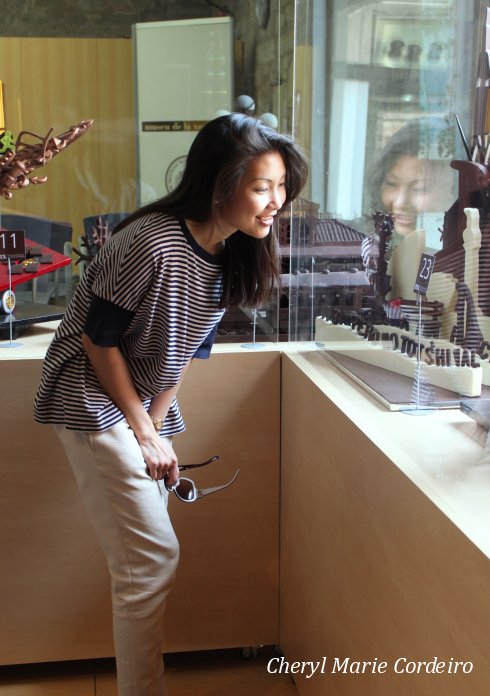
Cheryl Marie Cordeiro at the Museu de la Xocolata, Barcelona, Spain.

At the Chocolate Museum, just outside the kitchen where the museum holds classes on chocolate confection.
JE Nilsson and CM Cordeiro Nilsson © 2011

Although Spain’s connection with Mexico in the 1500s means that cacao beans and chocolate would be as native to Spain as coconuts and pineapples are to Singapore, I must say that it still took some doing exploring the numerous cafés in Barcelona, before I settled for a favourite place of mine that served my cup of hot chocolate with an added shot of espresso in it!

If you’re a chocolate lover like me, then perhaps nobody can stop you from immediately hitting any café in sight as soon as you get off the plane in Barcelona for a cup of Spanish hot chocolate. At least, that’s what happened to me.

But with that done I brusquely encountered a cultural difference of what a cup of hot chocolate laced with espresso is in Spain.
Continue reading ““Una xocolata calenta si us plau””

Miró, Miró on the wall …

canon_007

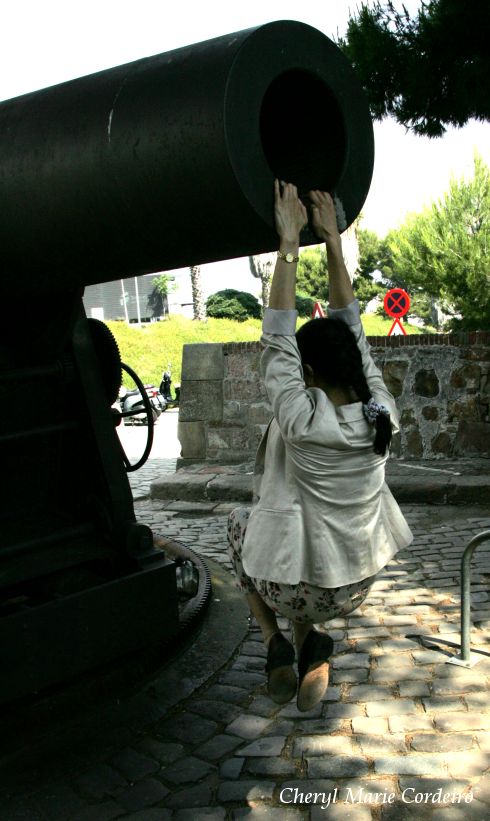
From Castell de Montjuic silent large-calibre guns overlooks the sea and port as well as the metropolis of Barcelona itself. On the west side, stands an ornate memorial to General Francisco Franco. An unintentional but vivid commentary on the history of Spain and Barcelona as good as any history book would offer.
JE Nilsson and CM Cordeiro Nilsson © 2011

The headline pun is, of course a play on the words from the English translation by D. L. Ashliman of the definitive edition of the Grimm’s Kinder- und Hausmärchen (Berlin 1857), tale ‘Snow White’, in which the Queen asks her magical mirror “Mirror, mirror on the wall / Who in the land is fairest of all?” The tale takes a dramatic turn when the mirror tells her an unwanted truth.

In a similar manner, the period around the early 1900’s was extraordinarily volatile when it came to artists and architects communication with the public. Many of the art movements that enriched the early 1900’s in Europe were protests against those in power that for their winnings sake drew the world into war. Various kinds of repression caused new ways of commenting on society to appear.
Continue reading “Miró, Miró on the wall …”

Marmalade from the Garden of Eden

quince_1

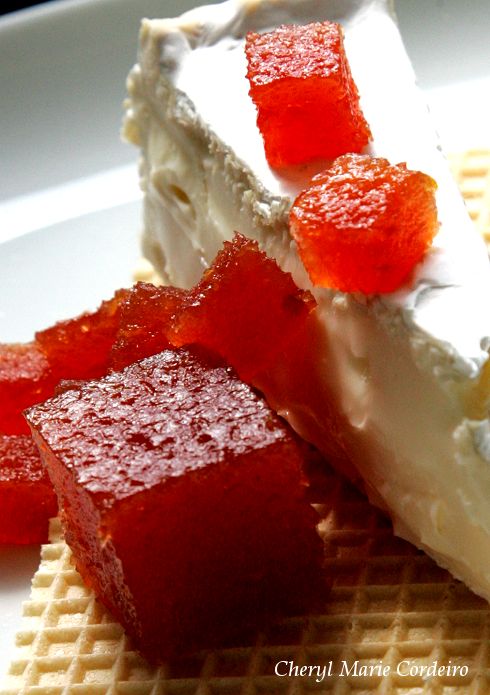
Dulce de Membrillo is a traditional Catalan marmalade made from quince, and a perfect addition to the cheese tray. The fruit has a long history. It is divinely fragrant and because of this, the ancient Greeks are said to have offered it to the Goddess Aphrodite, as well as used it themselves in wedding ceremonies amongst mere mortals, where the bride would perfume her kiss with a nibble of quince prior to entering the bridal chamber.
Photo: JE Nilsson and CM Cordeiro Nilsson © 2011

There are more ways to discover your heritage than reading about the country, its national dress, traditions and beliefs. In my case, Quince, an ancient fruit imagined by some to be the forbidden fruit of Eden, referenced in the Song of Songs and written about by the ancient Greeks, turned out to be one of the more interesting discoveries on my visit to Barcelona.

Of course I had met with dulce de membrillo before. However, it took some doing before I recognized this certain red marmalade, being a staple on the breakfast table here and constantly meeting with it in just about every wet market or food store I visited. I eventually got curious enough to enquire after it, and thus re-discovered this long lost acquaintance.
Continue reading “Marmalade from the Garden of Eden”

Dining with Picasso

Els Quatre Gats, street.

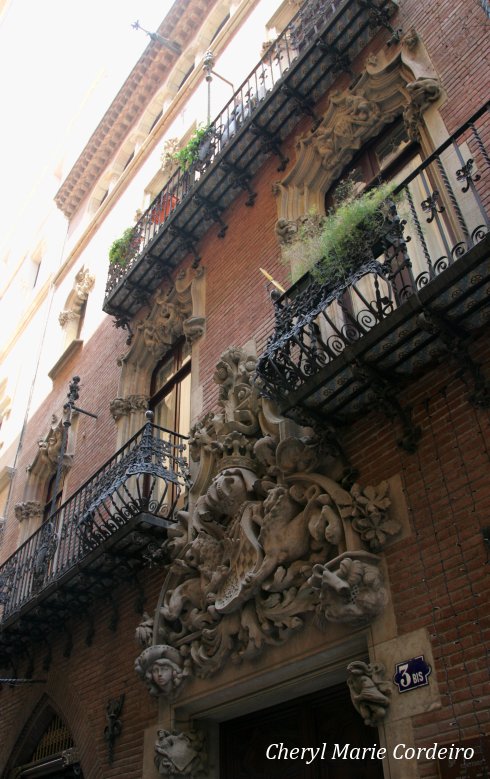
Els Quatre Gats or 4Gats bar, brewery and restaurant. The beautiful façade displays stained glass, ornate lamps, painted numbers on doors, intricately carved wooden door frames and then looking upwards, balconies draped in light swinging vines, filled with potted flowers in bloom.
Photo: JE Nilsson and C M Cordeiro-Nilsson © 2011

It was just about at the right time of the day that we found ourselves outside of Els Quatre Gats restaurant in the labyrinth of winding small roads in Barre Góthic, the late Roman part of Barcelona. From a balcony just above the ‘Four Cats’ restaurant entrance, a friendly dog looked down on us, just as if to confirm the many idiosyncrasies this city is so full of.

For anyone interested in Picasso, this restaurant is a must. Indeed, it is one of those living examples of what the industrialization period about the turn of the century one hundred years ago was all about.

The Modernisme had started earlier, in France as Art Noveau and in Germany and Austria as Jugend, but after the First World War, it was impossible to turn back time again to the dusty and suffocating drapes of romanticism. The time had changed and in all this, Barcelona played an important part.
Continue reading “Dining with Picasso”