Europe has many beautiful Christmas markets, with some of the most famous found in Austria and Germany. Cities like Vienna, Salzburg, and Innsbruck in Austria, and Nuremberg, Cologne, Dresden, and Munich in Germany are globally renowned for their historic and atmospheric Christmas markets. They are often seen as the heartland of the tradition. When I planned a week in Brussels, I realised I hadn’t heard much about its Christmas markets at all. Brussels is often associated with the European Union, conference rooms, institutions, and polished modern buildings, so I assumed the holiday season might feel more formal than festive. I couldn’t have been more pleasantly surprised.
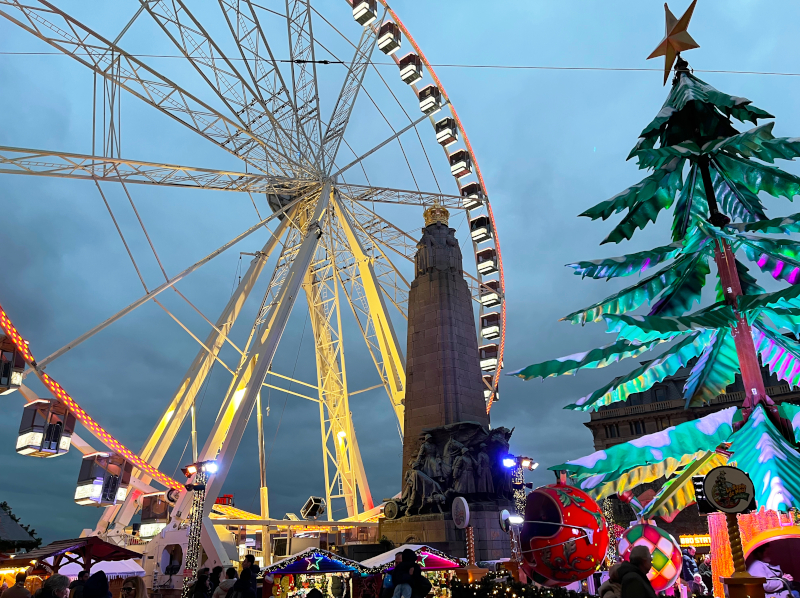
Instead of a single market concentrated in one square, Brussels invites you into a network of winter streetscapes, distributed chalets, lanes lined with lights, and pockets of warmth where hot chocolate and waffles scent the air. The city becomes wonderfully walkable in December, and the market experience feels like a gentle evening itinerary, one that naturally encourages wandering, pausing, and taking in the details.
Unexpected delights: second-hand shops and Christmas knitwear
One of my favourite discoveries wasn’t even a chalet, it was the way local second-hand shops lean into the season. Window displays featured cheerful, colourful Christmas sweaters, and it was genuinely fun to see visitors and locals alike browsing and laughing over the most playful designs. In that moment, “ugly Christmas sweaters” felt less like a joke and more like a celebration of winter cheer, unapologetically kitsch, delightfully charming, and perfect for photos.
I also learned something new, some second-hand stores sell items by weight, priced per kilogram. It’s a surprisingly practical way to shop, especially if you enjoy treasure-hunting for seasonal pieces. There’s something fitting about it in December, small, affordable finds that make the city feel lived-in and welcoming.
What Winter Wonders feels like in Brussels
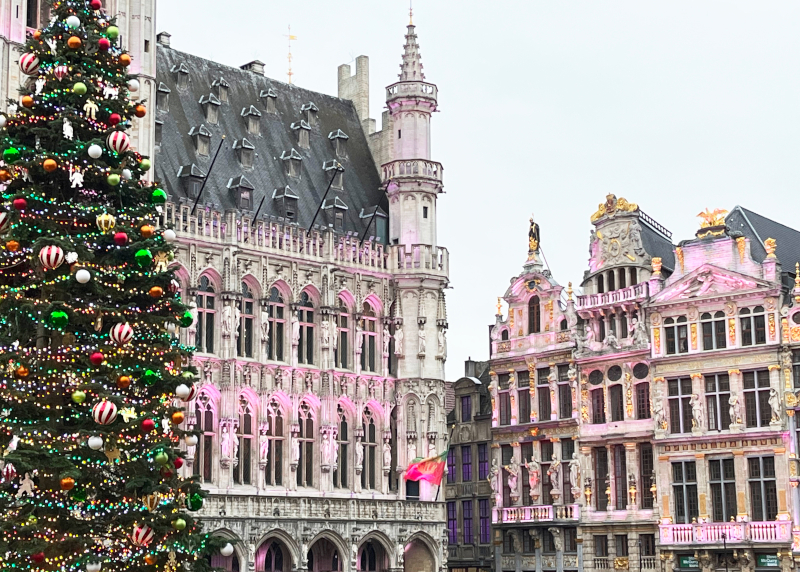
Brussels balances “Christmas-card charm” with big-city energy. It’s festive without being overly precious, international without losing its local character, and easy to navigate on foot. Treat the centre like a winter stage set, golden lights reflecting on wet cobblestones, the soft glow of stalls on nearby squares, and a steady rhythm of street-to-street discoveries, and the city rewards you with atmosphere at every turn.
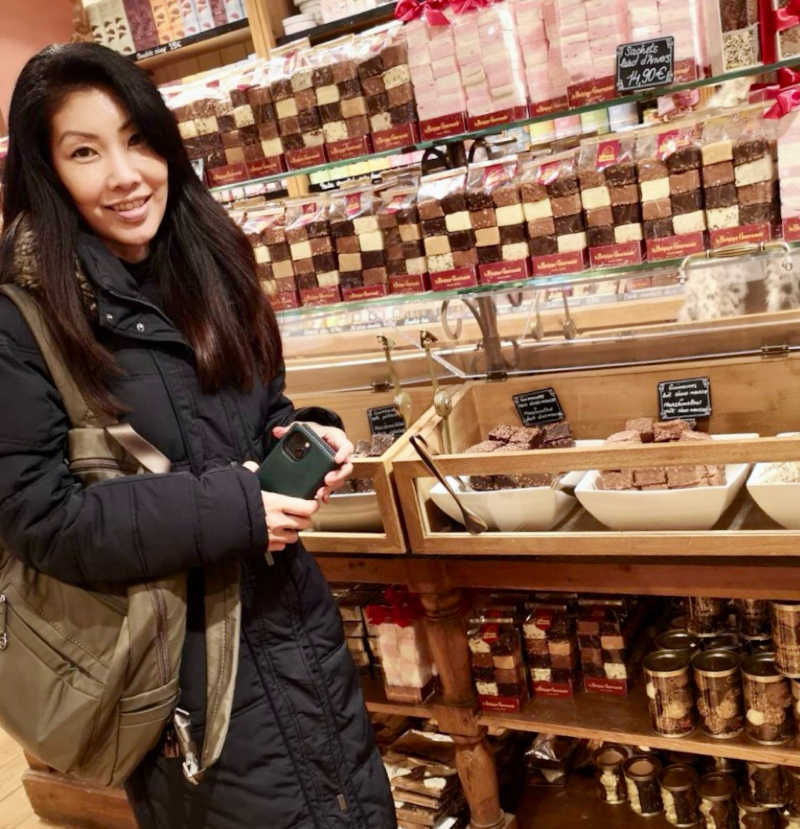
And then there’s chocolate, because in Brussels, winter wandering comes with a very sweet soundtrack. Belgium’s chocolate industry is part heritage, part everyday pleasure, and December is when it feels most visible. Shop windows turn into tiny galleries, gift boxes are stacked like holiday ornaments, and chocolatiers lean into seasonal creativity with spiced ganaches, pralines with shimmering finishes, and elegant bonbons that look like miniature jewels.
Brussels makes it easy to turn “chocolate galore” into an itinerary. Around the city centre you can step from market stalls to chocolate boutiques in minutes, especially near landmark streets and arcades where chocolatier windows glow warmly in the early dark. Some pieces are genuinely like edible works of art, sculpted textures, hand-painted cocoa butter, delicate moulds, and architectural display sets that feel closer to a design exhibition than a shop counter. Even if you buy only a few, it becomes part of the winter experience, choose a small box, share as you walk, and let the flavours mark the evening as much as the lights do.
If you love a cosy ritual, keep an eye out for hot chocolate options that go beyond “quick and sweet.” Brussels cafés and chocolate houses often treat hot chocolate as a craft drink, rich, velvety, and made to be savoured slowly. It’s the perfect companion to a late-afternoon stroll, and a welcome pause between squares.
2025 theme: “Weaving connections” (Tisser du lien)
The 2025 edition highlights community, togetherness, and solidarity through the theme “Weaving connections” (Tisser du lien). The concept celebrates shared creativity and the social fabric of the city, drawing inspiration from textiles, threads, patterns, and the idea of making something stronger by bringing strands together.
In Brussels, that theme becomes tangible through small moments and dedicated spaces, pop-ups that highlight craft, initiatives that support local associations, and seasonal programming that encourages visitors to participate rather than just observe. It’s warmth in the broadest sense, social as well as seasonal.
Food and drink: the best way to experience the market
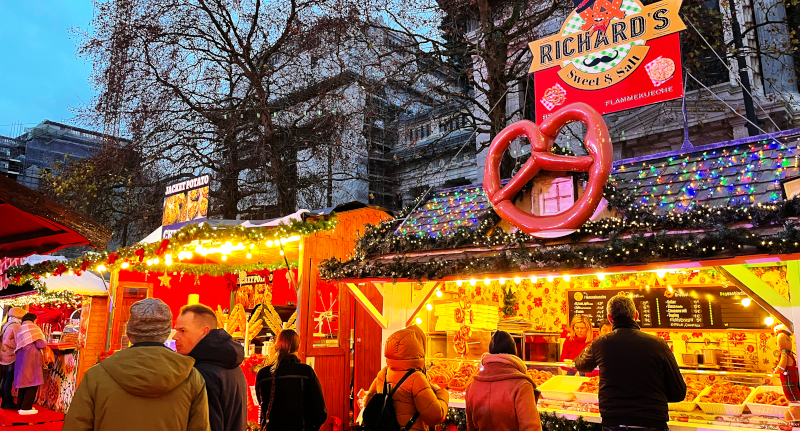
Brussels markets are at their best when you “graze”, something sweet, something savoury, and something warm to sip while you walk. It’s the ideal way to experience a distributed market route, one snack becomes a reason to keep exploring, and each square offers a slightly different mood.
Look out for Belgian classics such as waffles, fries, and winter snacks, along with artisan chocolates that make excellent edible souvenirs. Warm drinks are a natural companion to an evening stroll, especially when you want to slow down and enjoy the lights.
A practical tip, enjoy the market for tasting and snacking, and save your “proper meal” for a brasserie or bistro. Brussels does cosy dining exceptionally well, and a warm sit-down meal pairs perfectly with a market walk before or after.