The Almond Sugee cake: a Singapore Eurasian heritage

Eurasian almond sugee cake recipe, Cheryl Marie Cordeiro

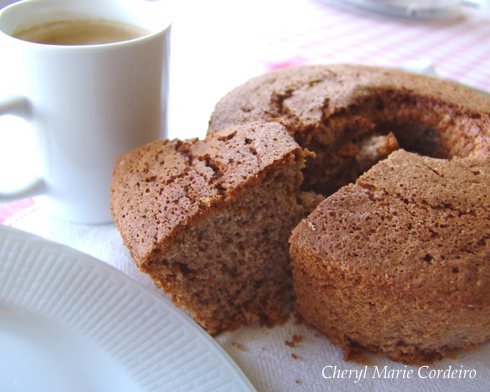
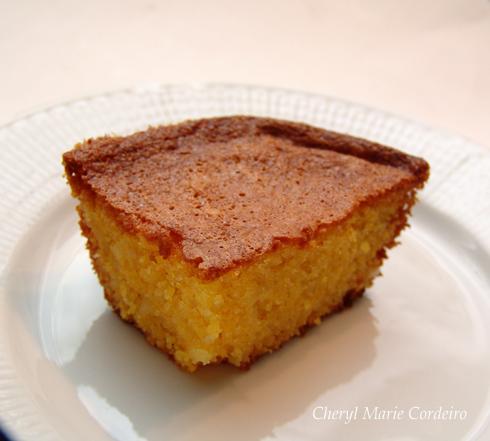
The almond sugee cake, a Singapore Eurasian favourite.
Photos © Jan-Erik Nilsson and Cheryl Marie Cordeiro for CMC, 2009

Apart from the rich fruit cake, which is characteristically heavy handedly laced in brandy, that marks Christmas and all its cool weather, sometimes even rainy festivities for the Eruasians in Singapore, the Almond Sugee or Semolina Cake, would be an all-rounder cake for festive events. This cake, in all its variations of with or without icing, nutmeg, cardamon, brandy or cognac soaked etc., is served at Eurasian Christenings, weddings, house-warming parties, New Year’s Eve parties, birthdays and anniversaries.

Admittedly, I grew up not really liking this cake, because it seemed like we had it all the time. In fact, there was no event at home that didn’t omit this cake from the menu. But nostalgia kicks in, even for tastebuds when you’re away from home and just the smell of this cake baking in the oven in my Swedish home, brings me right back to happy Christmases and everything I would associate as a Singapore Eurasian heritage.

The recipe given here comes from Wendy Hutton’s (2007), book entitled, Singapore Food: a treasury of more than 200 time-tested recipes.

Ingredients:
250g butter, softened
250g fine semolina / sugee
7 eggs, yolks and whites separated
250g castor sugar + 1 tbsp castor sugar for beating egg whites
1/2 tsp freshly grated nutmeg
1/2 tsp cinnamon powder
1 tsp vanilla essence
1/2 tsp rose essence
2 tbsp cognac or brandy
250g ground almonds
125g plain flour, sifted
Set oven at 150 deg C

*There was no mention of the use of baking powder in Hutton’s (2007) recipe, though in my version of the cake, I do use some baking powder, as my grandmother, Dorothy Cordeiro did in her recipe.
Continue reading “The Almond Sugee cake: a Singapore Eurasian heritage”
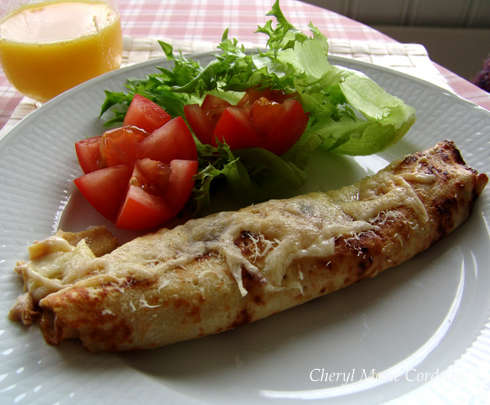
Mushroom crepes, it all begins with a béchamel

Mushroom béchamel, white sauce, French crepes

Mushroom in béchamel sauce, wrapped in Swedish crepes.
Photos © JE Nilsson, CM Cordeiro-Nilsson, 2009

The kitchen wafted with the smell of crepes frying in butter, and I couldn’t help but linger to watch, as the ladel, filled with a generous helping of light yellow batter was distributed evenly over the black enamelled surface of the cast iron pan; the batter, to cook but a few minutes on each side.

The Chef was making, Swedish crepes.

Swedish crepes? I enquired, as they looked rather French to me. And there I was told that, well, perhaps there was not much difference in recipe, except that this specific recipe was handed down from a line of great Swedish Chefs – great grandfather to grandfather, grandfather to father and then father to son. The key to making these crepes, was to make the batter so thin, that you wouldn’t think it could hold together.

There was a round of bemused expressions in the kitchen, but the efforts proved original enough. And they tasted good, whether eaten with homemade strawberry jam or with ice-cream wrapped inside.
Continue reading “Mushroom crepes, it all begins with a béchamel”

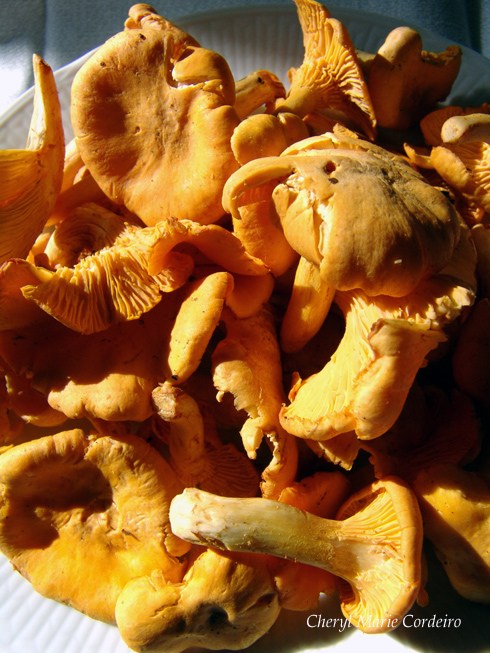
Chantarelle, symbol mushrooms of autumn in Sweden

Golden chantarelles, kantareller, autumn 2009

Chantarelle are prized mushrooms of autumn, where the adventures of plucking a handful of these would make for any dinner conversation, except the revelation of their location.
Photos © Jan-Erik Nilsson and Cheryl Marie Cordeiro for CMC, 2009

Elegantly formed with a smooth capped top and a ridged funnel shaped body, the long stems of the golden Chantarelle proves pleasantly distracting to the eye when seated next to the plumper and more rotund white button mushrooms at the store.

More familiar with Shitake mushrooms when growing up in Singapore, and having grown to dislike its pungent taste in stir-fried noodles, thereby associating all mushrooms with pungent tastes, I grew up never really caring for mushrooms, until I was introduced to kantareller in Sweden.
Continue reading “Chantarelle, symbol mushrooms of autumn in Sweden”

Autumn visit

In Sweden, autumn is here and with that comes a new set of sounds and smells in nature. Autumn seems to carry an aura of thoughtfulness for the animals in the relatively safe haven along the Swedish West Coast, where it seems like their fear for humans is not at the top of their mind. Perhaps they feel that there is a new season coming on that might bring other hardships, maybe worse to overcome then casual brushes with humans. And distracted, rather thoughtful creatures are what I encountered just yesterday morning when I looked up from my breakfast table and noticed two deer prancing through our garden.

Deer in autumn, Swedish West Coast

Deer in the garden, at dawn.
Photos © Jan-Erik Nilsson for CMC, 2009

One of them looked at me point blank when I opened the door, curious. And I looked right back at it, just as curious, wondering what it was doing in our garden.

We looked at each other for a while and it occurred to me that maybe it too was hungry for breakfast. The summer’s harvest of salad leaves and apples have just been taken in for the winter, and there can’t be much to eat out there now for these delicate creatures who have been marauding people’s garden patches all summer.

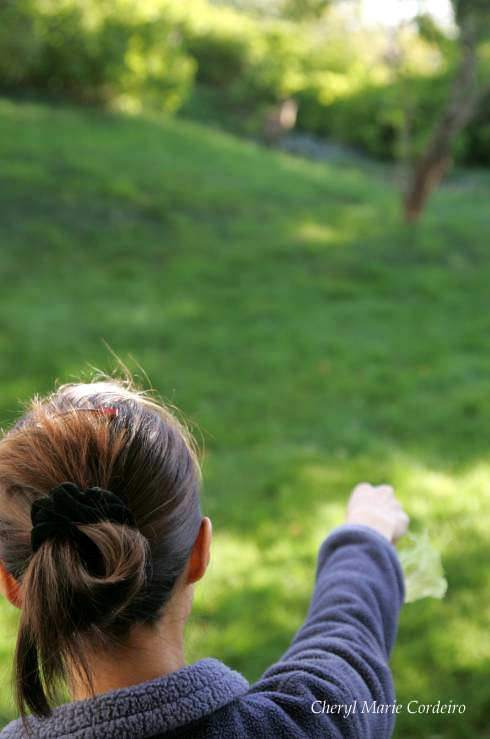
Luring deer with salad leaf, Cheryl Marie Cordeiro

Enticing Bambi with a leaf of salad.

It felt like a natural thing to do, to offer them a leaf of crisp salad for breakfast. My guinea pigs used to love crispy greens, so why not these doe-eyed creatures? The fairytale animal just looked back at me. Thinking. Considering the offer but, no.

And just like in a fairytale, the animal took off, without touching the ground, as mist flowing over a meadow. It took off as quietly as autumn settles, not as much as a whisper, preferring to forage our neighbour’s garden instead.

Freshwater crayfish to a kräftskiva, 2009

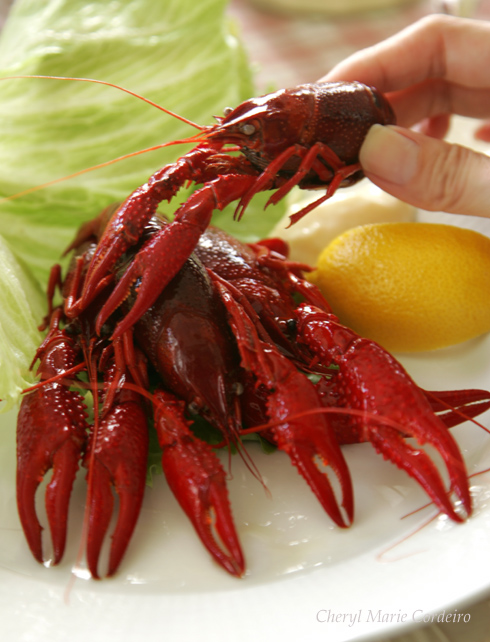
freshwater crayfish 1, kräftskiva

Freshwater crayfish from Turkey, voted best in taste by the newspapers, Göteborgs Posten and DN, Sweden. Despite an ever present crayfish plague that began around 1985, the end of the 1990s saw a gradual increase in the production of Turkish crayfish from 320 to 1500 tonnes annually (Harlioglu, 2004).
Photo © Jan-Erik Nilsson for CMC, 2009

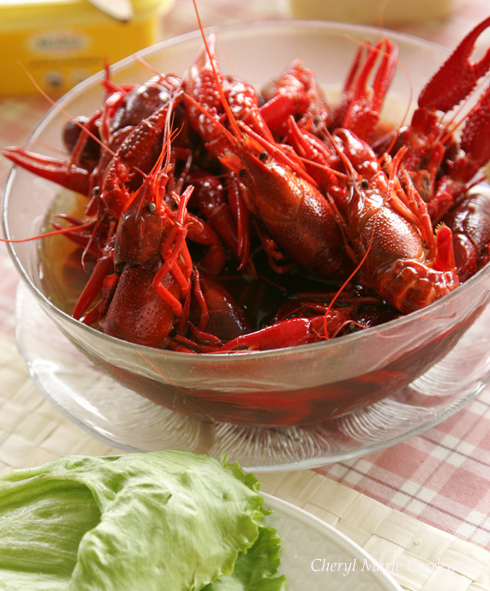
The month of August in Sweden is mostly dedicated to the Crayfish Party or kräftskiva, where tons of crayfish are consumed. We’ve already had our first batch of crayfish earlier this year around Midsummer, the difference being that the ones consumed around Midsummer, came from the sea and these pictured here, with a lovely deep orange-red, are of freshwater origins.

I can’t help but compare crayfish eating in Sweden with crab eating in Singapore. Eating either of them would be considered a social event of sorts in both countries, because the meat of the crustaceans are rather inaccessible and getting to the meaty bits is a complicated, time consuming, if not frustrating affair that is preferably done after you’ve eaten something else.

freshwater crayfish in bowl, kräftskiva

Crayfish eating, much like eating crabs in Singapore, is a social activity that definitely calls for good company, as the event can stretch over several hours.

Crayfish eating is a lot kinder in many ways. In Singapore, you have a mortar pestle to help break open stubborn crab claws; in Sweden, no such tool is needed for the crayfish, fingers will do. In crayfish eating, you needn’t have to spend half an hour peeling the shell to get to the meat. In Singapore, a half hour’s effort into the compartmentalized body of the crab renders less than enough for a crab meatball, like the ones you find in the Straits Chinese soup, bakwan kepeting.

Of all crab varieties found at the wet markets in Singapore, I find Flower crabs (portunus pelagicus) considerably hopeless to gather meat from and would be tempted enough to opt out of the crab eating session if they were served. The body of the crayfish, meatier than the average crab claw, is accessible in just about a single snap of the shell over the main section.

In Sweden, freshwater crayfish are relatively less expensive compared to those harvested from the sea. And in a test that proved that cheaper was better, these freshwater ones were voted best in taste in Swedish newspapers, GP and DN. GP had a panel of eleven persons ranging in age from 24 to 83 years old. The group tasted about ten different versions of cooked crayfish, ranking their favourites according to colour, taste and freshness.

After having tasted crayfish from both sea and lakes, these freshwater crayfish though smaller in size than the sea faring ones, tasted wonderfully full in flavour, excellent with some mayonnaise or aïoli, atop a piece of good bread.

Cut of lamb with rösti

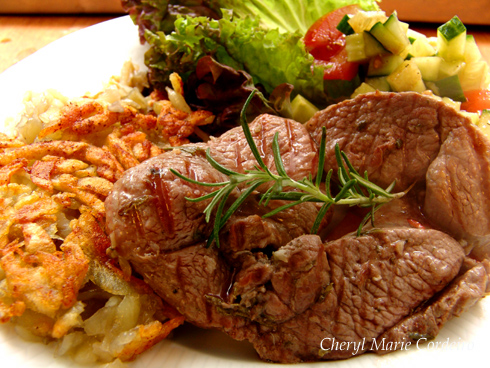
Pan fried lamb with rösti

Lamb with a sprig of rosemary, served with rösti on the side.
Photo © Jan-Erik Nilsson for CMC, 2009

On our meny today is a cut of lamb, not too overdone, which is the way I love it and rösti on the side. Rösti is fairly fast and easy to do, giving an interesting variation on how potatoes are served with a meal.

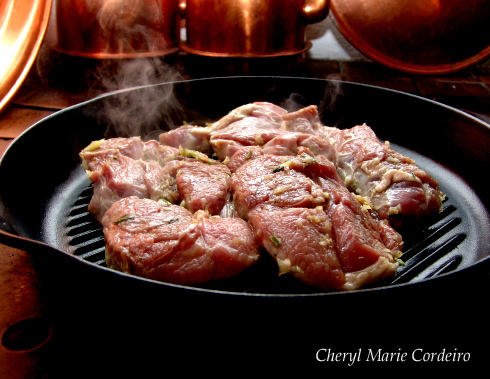
Cuts of lamb in the grill pan

Cuts of lamb in the grill pan.

The cuts of lamb for this meal were marinated uncomplicatedly in some garlic, salt and rosemary. I think these three ingredients complement the flavour of the meat well and allows you to enjoy lamb as is.

If however, you’re looking to something more adventurous, then perhaps you could try this recipe for marinade:

Ingredients
1/3 cup white wine
1/4 cup ketchup
2 tablespoons cooking oil
2 tablespoons soy sauce
1/2 teaspoon sea salt
1/4 teaspoon pepper
1/3 teaspoon crushed garlic
1/2 teaspoon mustard

Enjoy!

Chocolate orange chiffon cake

Chocolate orange chiffon cake 1

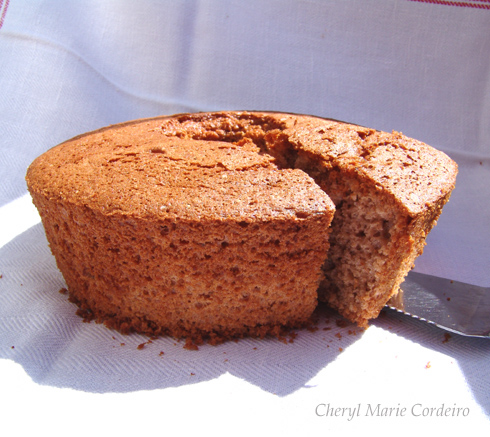
Chocolate orange chiffon cake

Photo © Jan-Erik Nilsson for CMC, 2009

The perfect cake to pack along in a picnic basket? Why, a chiffon cake, of course!

This chocolate orange chiffon cake is the latest addition to our baking spree. Light as a feather in texture, the chiffon cake’s no fuss, non-greasey, cream-free nature makes it just about the most convenient cake to pack for that picnic by the beach.

Chocolate orange chiffon cake with recipe

Chiffons make a perfect cake for picnics.

The recipe I used for this cake came originally from The Joy of Baking website, the orange chiffon cake recipe. I wanted a hint of chocolate in my cake, so here’s what I used:

8 eggs, separated
2 1/4 cups (225 grams) sifted flour
1 1/2 cups (240 grams) superfine white (castor) sugar
1 tablespoon baking powder
1/2 teaspoon salt
1/2 cup (120 ml) vegetable oil
3/4 cup (180 ml) orange juice
2 tablespoons (10 grams) orange zest
1 teaspoon pure vanilla extract
1 tablespoon unsweetened cocoa powder

Apart from mixing the ingredients right, folding the egg whites into the egg yolk batter and adding the flour a third at a time till you can get a smooth batter from it, what keeps the chiffon cake from collapsing after coming out of the oven is turning the cake upside down, or suspending it upside down, to cool. I’ve found an ungreased baking pan to be essential for the cake to reach its desired height because it allows for the batter to cling to the sides of the pan as it leavens during the baking process.

This cake baked at 170 deg C for about an hour in a normal convenction oven and then cooled for about an hour or two before being removed from its pan.

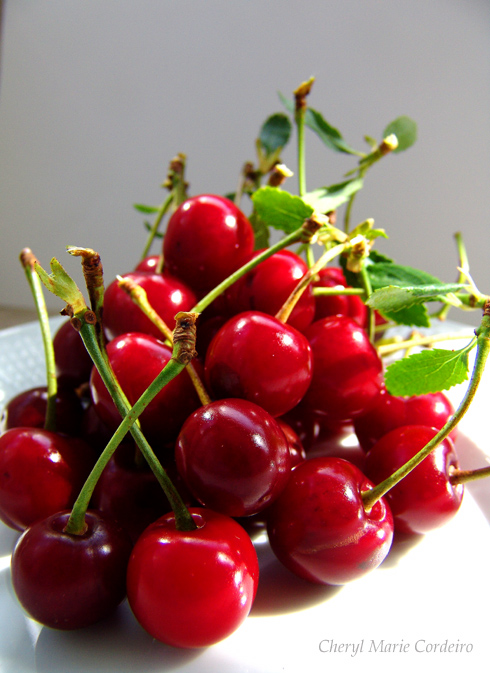
Cherries from the garden, Sweden

Cherries from our garden.

Chiffon cakes also make for perfect sandwiching, that brings you something akin to the Classic Victoria Sandwich, a traditional and fairly sweet English tea / party cake that goes well with both tea and coffee.

It’s just about time to harvest the cherries from our garden and this lot (shown in the picture above) went into the making of the chocolate orange chiffon sandwich.

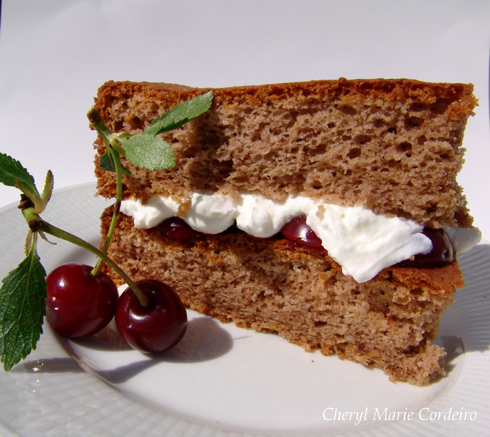
Orange chocolate chiffon cake, sandwiched with buttercream and cherries

Sandwiched

Butter cream or in this case, plain whipped cream, was put atop fresh sliced cherries on one layer of cake and another layer of cake was placed on top of that.

For this particular chocolate orange chiffon, which I found to be somewhat sweet, even though I’ve cut some sugar from the main recipe, a mild vanilla cream sandwiched with a fresh fruit of your choice, such as strawberries would also be a wonderful tea-time delight!

Enjoy!

Pandan chiffon cake, au naturel

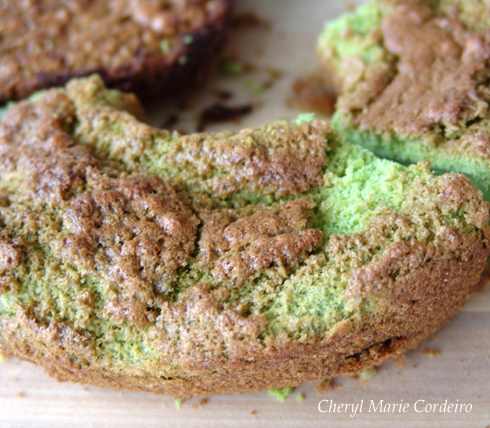
Pandan Cakes are usually presented and served bottom up, coming out of its cake form. Here in this picture, a heavy crusted top of the Pandan Cake: its golden brown crust broken with a vibrant green peeking through.
This is the cake, au naturel. Neither Pandan paste nor green colouring were used in the making of this cake.

Photo © Jan-Erik Nilsson for CMC, 2009

The Pandan Cake was one of my first cake loves when growing up in Singapore. A lot of Southeast-Asian cooking calls for the use of pandan leaves, from a few blades cooking with coconut rice to its larger varieties wrapping glutinous rice, sweet meat dumplings, all because of the sheer irresistable fragrance of the long slender blades.

The uses of the leaves of the Pandan plant are so rapacious in Southeast-Asian recipes, that it hardly proved handy growing a plant at home because it would be consumed much faster than it grew and more leaves had to be bought from the wet market anyway.

The blades of the pandan plant are so fragrant that people in Southeast-Asia often use them as natural air fresheners, a bunch of knotted Pandan leaves casually tossed behind the back seats of cars.

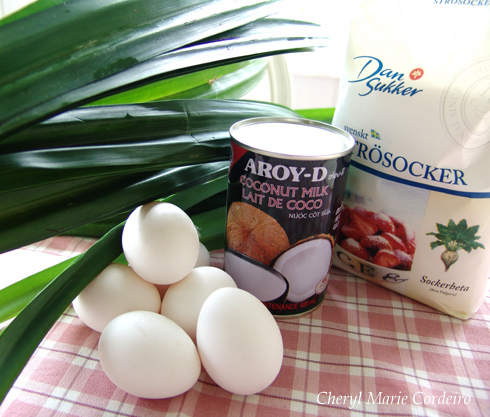
Pandan cake ingredients

Some ingredients needed for the Pandan cake.

I remember the slices of the Pandan Cake as vibrantly green when growing up, where a liberal slice for breakfast on Sundays would generally make my day. But with modern bakeries, the homemade Pandan Cakes disappeared from the wet market stalls and in their place, pre-fab versions were sold in a variety of greens – some dark green, some very light green, almost yellow in colour and some others, a spine chilling synthetic green.

It is the wide ranging greens of the cake, sold in bakeries, wet markets and grocery stores in Singapore today, that made me curious and really want to go back to making this cake using fresh blades of Pandan, without the use of food colouring or bottled Pandan paste.

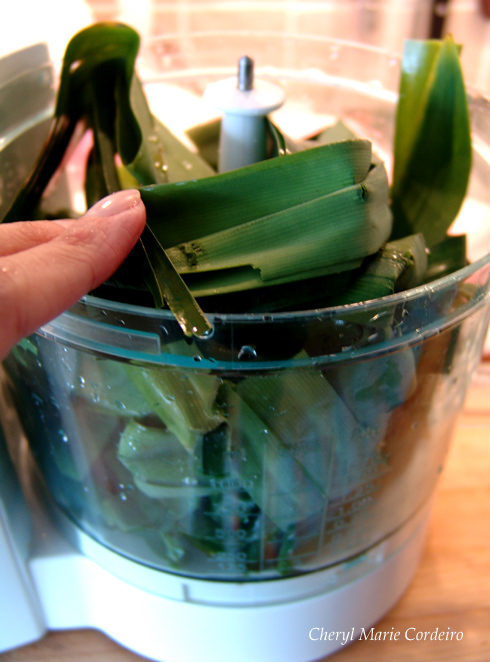
Pandan leaves in the blender, for the Pandan chiffon cake

Pandan leaves in the blender.

In Sweden, Pandan leaves can be bought from most Asian grocery stores. Pandan leaves themselves have a delicate taste, nothing too strong, so depending on the depth of green you want in your cake, you can use as many as 15 pandan leaves for a rich vibrant green or as few as 2 pandan leaves for a touch of green. I wanted a rich vibrant green in the cake, without the use of food colouring, so I went for about 15 thick blades of Pandan.

Chocolate brownie

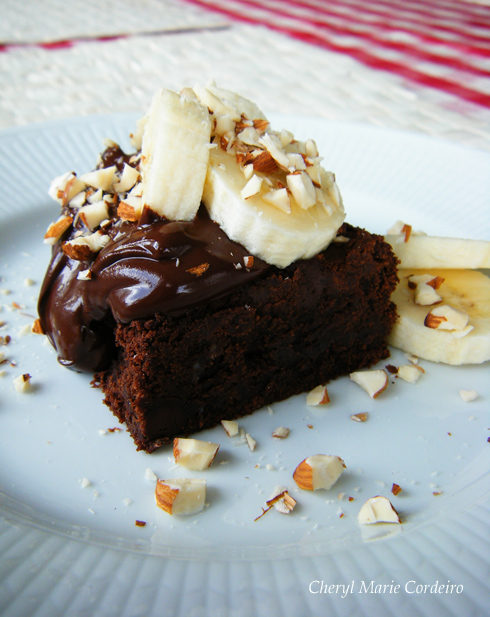
Chocolate brownie with fudge and bananas

Chocolate brownie served with warm chocolate fudge, bananas and crushed almonds.
Photo © Jan-Erik Nilsson and Cheryl Marie Cordeiro-Nilsson for CMC, 2009

The first time I baked a batch of brownies, I was in my teens, and a mishap in the kitchen caused the entire tin of already baked fudgy mixture to flip topside, face first onto the ground. My brother keeled over in laughter when he saw what happened, and we considered if we could save the batch by spooning up the parts that were not touching the ground and eat it there and then, off the floor.

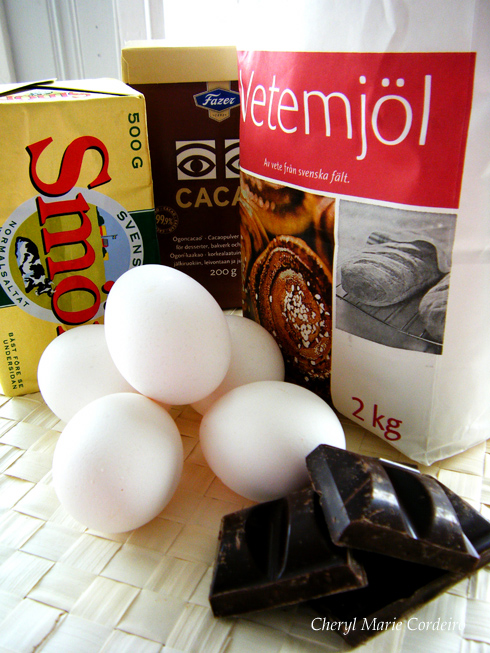
Ingredients for chocolate brownie

Continue reading “Chocolate brownie”

A rich chocolate cake, to complement any event

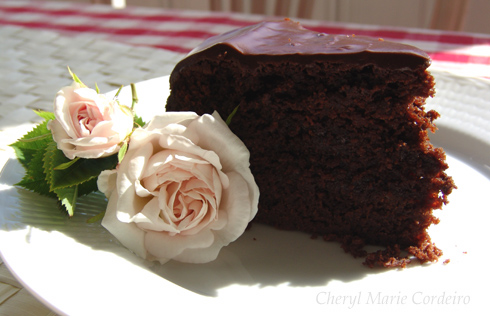
Chocolate cake recipe

Chocolate cakes – heaven on earth.
Photo © JE Nilsson and CM Cordeiro-Nilsson 2009

I love chocolate and with that, anything chocolate. In Singapore, it was a favourite past-time of mine to explore cafés, eateries and bakeries in search of very good chocolate cakes, chocolate desserts and that exceptionally rich, warm cup of hot chocolate to complement the events of the day.

I have specific chocolate cakes to fit specific moods and chocolate cakes to suit the weather or the time of day. And I went absolutely berserk when Marcel Desaulniers’ (2000) Death by Chocolate: an astonishing array of chocolate enchantments hit the bookstores in Singapore almost a decade ago.

In Sweden, I was crushed when I my first chocolate cake craving hit (which wasn’t too long into my stay in Sweden) and found that I had nowhere to go to, to buy that perfect chocolate cake.

I needed to bake one if I wanted one.
Continue reading “A rich chocolate cake, to complement any event”