Where Shanghai Slows Down: Zhujiajiao in Autumn

Text and Photo © 2026 JE Nilsson, CM Cordeiro

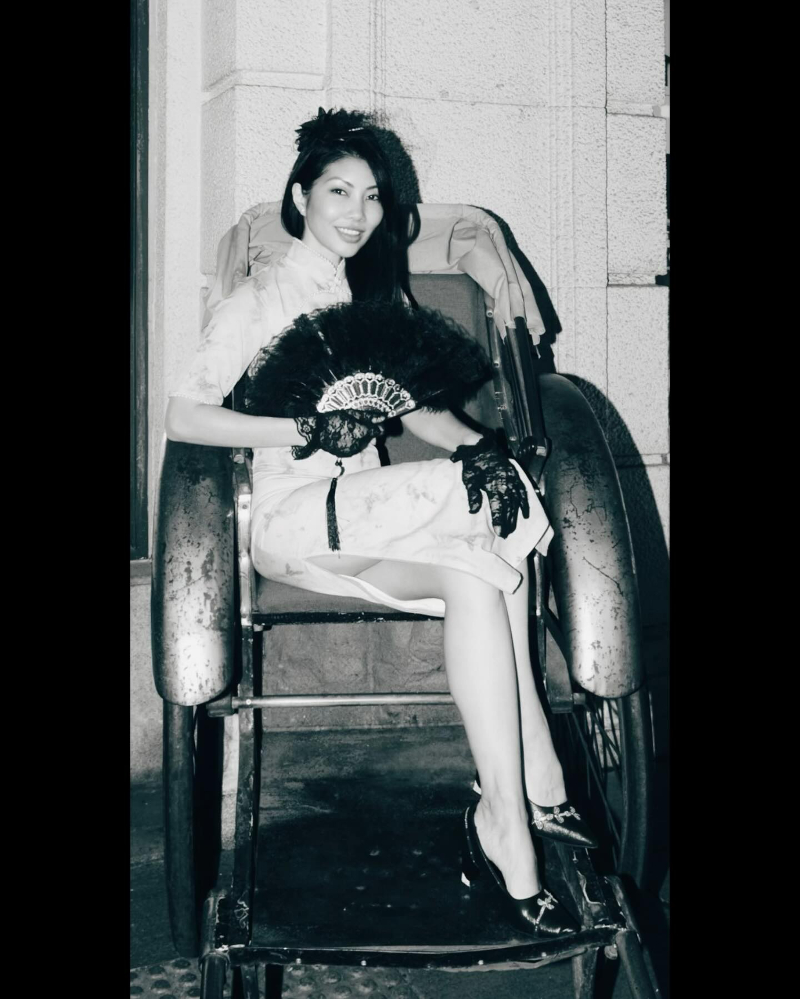
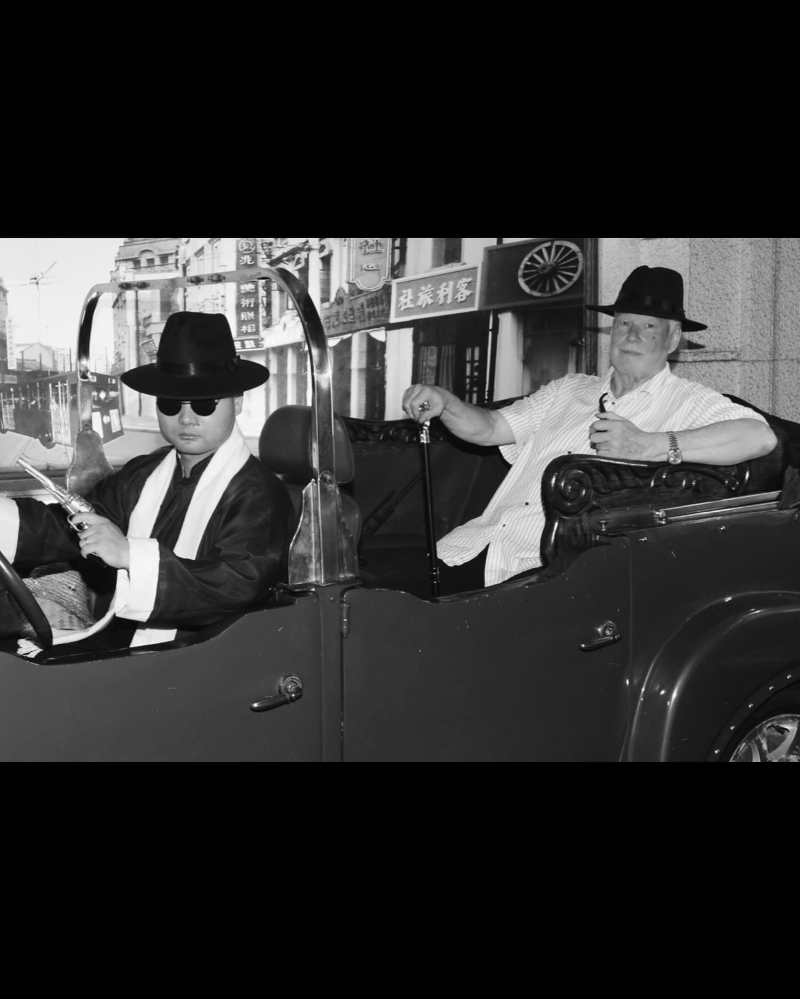
They say the best way to see Shanghai is to leave it, if only for an afternoon. Not for another skyline, but for a place where time is measured by the quiet push of a boat pole and the patient repetition of hands at work. In October 2025, I took the easy one-hour trip out to Zhujiajiao and found it wasn’t a postcard version of the past. It was a living town, layered, textured, and gently awake beneath willows that moved with the breeze.

A watercolour sky

Zhujiajiao in autumn doesn’t need dramatic sunshine to feel beautiful. That day, the sky was more like a thin wash of watercolour, soft and overcast, with swirls of cloud-white. The humidity of summer had lifted, replaced by air that felt clean and light on the skin. The canals held a calm green, the willows stayed green too, and the whole town seemed to lean into a quieter palette.

Continue reading “Where Shanghai Slows Down: Zhujiajiao in Autumn”

Julbord on the West Coast: Herring, Ham, and Holiday Rhythm

Text and Photo copyright 2025 JE Nilsson, CM Cordeiro

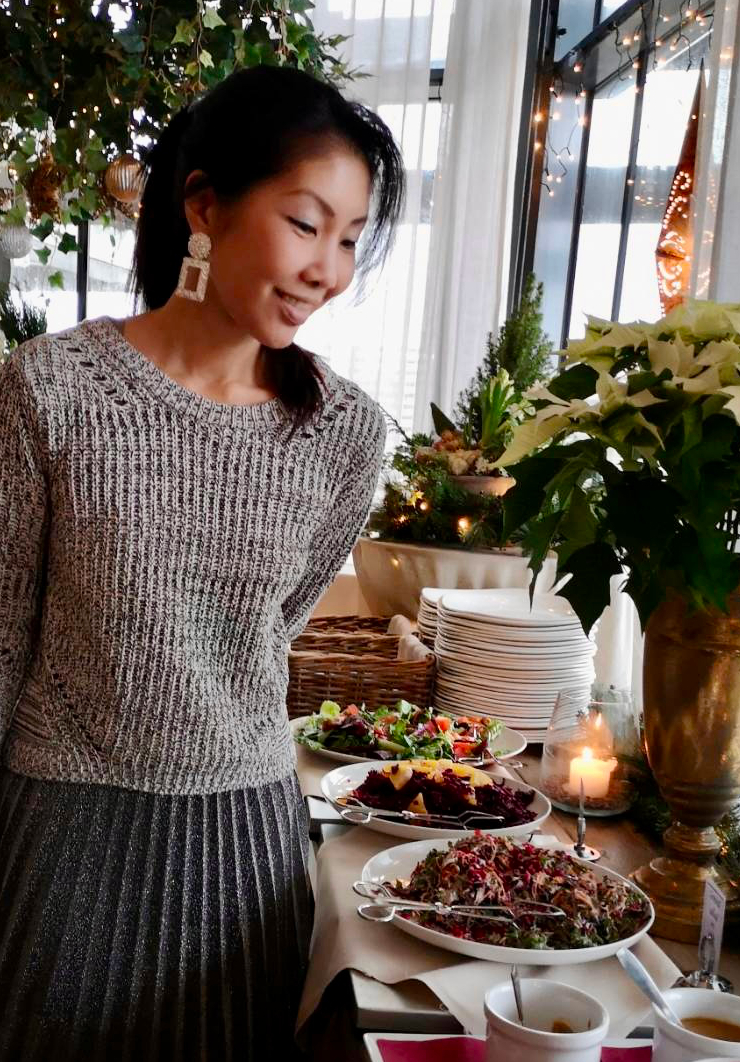
A Swedish julbord is often described as “a lot of food,” but it is also a meal with a recognisable structure and a set of shared habits. Many guests begin with something warm to drink, then move through the buffet in a familiar sequence, cold dishes first, warm dishes second, dessert and coffee last. Julbord is commonly eaten in “rounds,” with several smaller visits rather than one large plate.

A west coast setting, classic julbord by the sea

On the Swedish west coast, the julbord is often framed by the sea, both literally and in the menu. In Gothenburg and the archipelago, Christmas dining is frequently described in terms of herring and salmon variations, and, in some settings, more pronounced seafood and shellfish elements.

At Långedrag Värdshus, the julbord is presented as a classic “julbord by the sea,” with views over Göteborg’s archipelago. Their description highlights several kinds of herring, salmon prepared in different ways, cold cuts, and warm staples such as Jansson’s frestelse, boiled Christmas ham, prinskorv, and homemade meatballs, followed by a large dessert table.

Continue reading “Julbord on the West Coast: Herring, Ham, and Holiday Rhythm”

Christmas Markets in Brussels, Belgium

Brussels in December, Winter lights and market atmosphere

Text and Photo, © 2025, CM Cordeiro and JE Nilsson

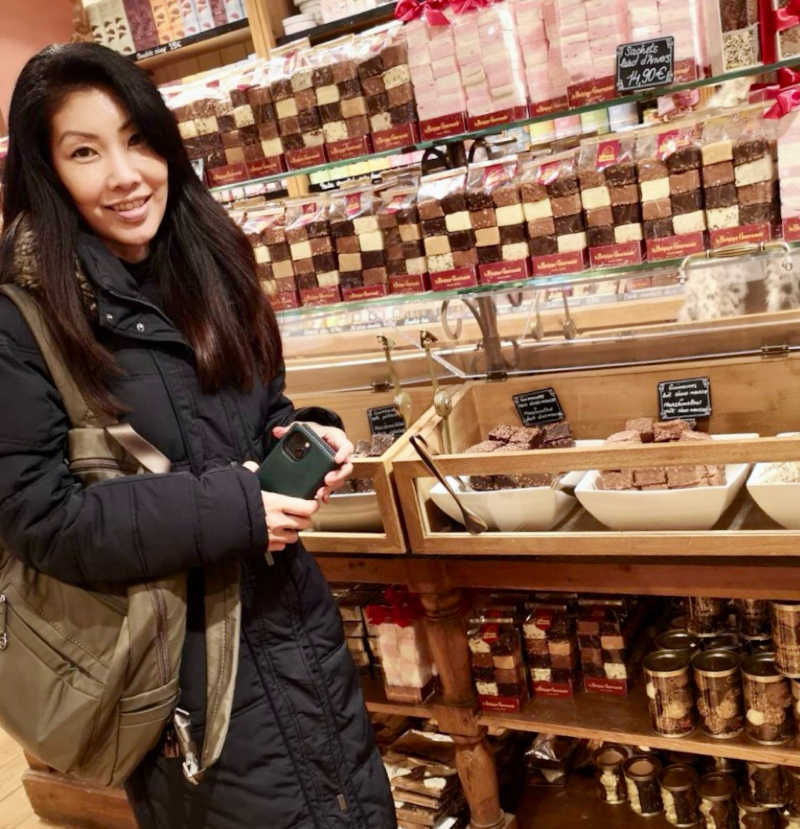
Europe has many beautiful Christmas markets, with some of the most famous found in Austria and Germany. Cities like Vienna, Salzburg, and Innsbruck in Austria, and Nuremberg, Cologne, Dresden, and Munich in Germany are globally renowned for their historic and atmospheric Christmas markets. They are often seen as the heartland of the tradition. When I planned a week in Brussels, I realised I hadn’t heard much about its Christmas markets at all. Brussels is often associated with the European Union, conference rooms, institutions, and polished modern buildings, so I assumed the holiday season might feel more formal than festive. I couldn’t have been more pleasantly surprised.

Continue reading “Christmas Markets in Brussels, Belgium”

Sweden’s Coastal Frontier: Where Seafood, Science, and Sustainability Meet

Photo & Text © 2025 JE Nilsson, CM Cordeiro

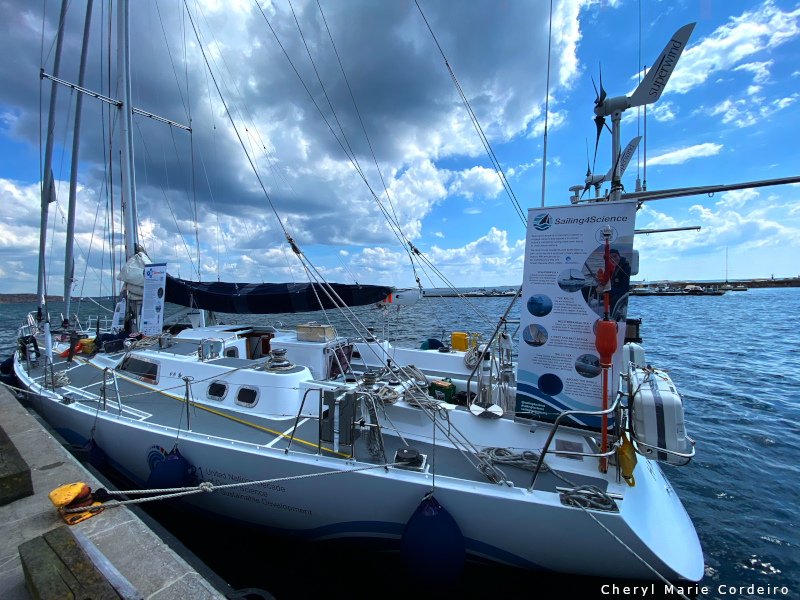
It’s a warm July afternoon. Low clouds drift lazily over the archipelago. Beneath them, the granite cliffs of Smögen rise from the sea, a sculpted memory in pink-grey that is sea-worn, and timeless. The town’s wooden boathouses, painted in reds and mellow yellows, lean against each other in an uneven row, anchored by the bustling boardwalk, parts of which snake along the harbor.

It’s here, outside a popular seafood restaurant called Göstas Fiskekrog, that a steel-hulled yacht appears to have sailed out of another chapter entirely.

Continue reading “Sweden’s Coastal Frontier: Where Seafood, Science, and Sustainability Meet”

Cradle-to-Cradle Skylines: How Circular Economy Thinking Is Shaping Modern Amsterdam

Photo & Text © 2025 JE Nilsson, CM Cordeiro

1 | Circular Economy as a New Design Brief – and How Europe Measures Up

Across Europe, the concept of a circular economy (CE) is gaining momentum as cities strive to reduce environmental impact and build more resilient systems. Unlike the traditional “take-make-dispose” model, the CE framework reimagines artifacts, products, buildings, and processes as part of a continuous loop, where resources are reused, repurposed, or regenerated.

A 2022 Europe-wide study introduced the ASCÉ framework to assess how robust these CE systems really are [1]. While many European countries score well on political commitment and citizen engagement, the study found a lack of structural embedding: fragmented governance, inconsistent data systems, and limited institutional coordination often hold back real progress.

In this context, architecture plays a pivotal role in accelerating the circular transition. The built environment is responsible for roughly 40% of global carbon emissions and over one-third of total waste generation, making it both a critical challenge and a powerful entry point for CE implementation [2,3].

Continue reading “Cradle-to-Cradle Skylines: How Circular Economy Thinking Is Shaping Modern Amsterdam”

Refractions of Modernity: A Visit to the Stedelijk Museum Amsterdam

Photo & Text © 2025 JE Nilsson, CM Cordeiro

This past week I visited the Stedelijk Museum in Amsterdam, a space where the 20th and 21st centuries collide in forms that are sometimes luminous, sometimes reverent, often dissonant, and occasionally maddeningly ambiguous. It’s not a museum that asks for your agreement. But it does demand your attention.

A Walk Through Time and Form

The Stedelijk is known for its impressive collection of modern and contemporary art and design. That reputation becomes immediately clear, not through spectacle, but through a thoughtful, often intimate curation. The collection moves fluidly between movements: De Stijl, Bauhaus, Abstract Expressionism, Minimalism, and into the chaotic openness of contemporary installation and conceptual art. Continue reading “Refractions of Modernity: A Visit to the Stedelijk Museum Amsterdam”

Hidden Café Gem in Zhujiajiao: Shuyue Tower 舒阅楼 – Best Café of 2024

Photo & Text by CM Cordeiro © 2025

I was last in Shanghai in 2014. Back then, Zhujiajiao, Shanghai’s historic water village, was already one of the city’s most visited destinations. It had the feeling of a lively maze, with cobbled alleys and canals animated by local life. I remember browsing street stalls that sold everything from skewered meats to handcrafted silver trinkets. Wooden boats glided slowly through narrow waterways, giving visitors a sense of the town’s centuries-old rhythm. Even then, Zhujiajiao felt like a place evolving, slowly navigating the space between heritage and modern tourism.

More than a decade later, Zhujiajiao has transformed. Its historical architecture remains beautifully intact: stone bridges arch gracefully over the canals, while Ming and Qing-style shophouses still feature the latticework windows I’ve always loved. But the atmosphere feels more curated now. There’s a calm elegance to the way the town carries itself. The rhythm reminded me, curiously, of modern-day Chinatown in Singapore that was orderly, connected, and rooted in tradition but polished by contemporary touch.

Continue reading “Hidden Café Gem in Zhujiajiao: Shuyue Tower 舒阅楼 – Best Café of 2024”

Aboard the Götheborg III: 75 Years of Sweden–China Friendship

Photo & Text by JE Nilsson, CM Cordeiro © 2025

Sweden and China at 75: A Legacy of Dialogue and Trade Aboard the Götheborg III

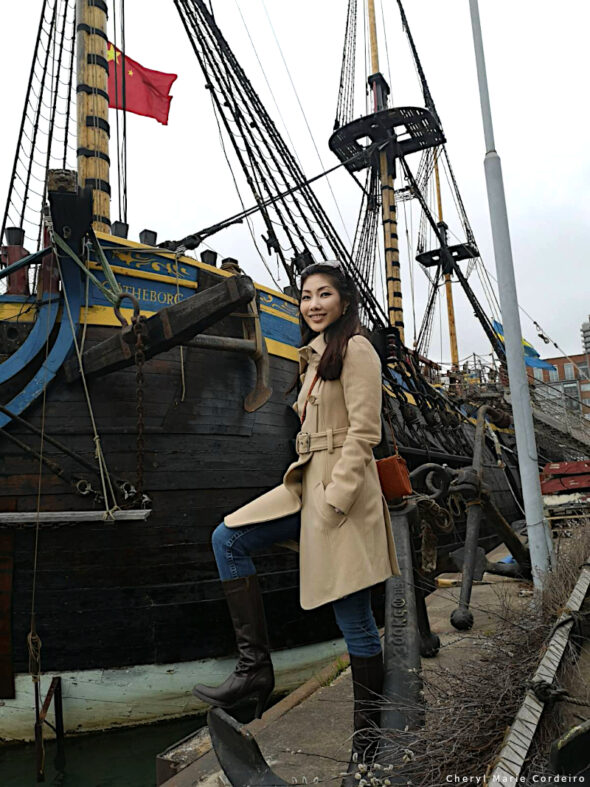
On May 9, 2025, history met the present aboard the Götheborg III, as dignitaries, guests, and officials gathered to commemorate the 75th anniversary of diplomatic relations between Sweden and China. Hosted by the Chinese Consulate General in Gothenburg, the celebration honored a milestone of peaceful engagement and forward-looking cooperation between two nations bound by both legacy and ambition.

The Significance of the Götheborg III

The Götheborg III is far more than a historic replica. It is a fully functioning reconstruction of the 18th-century Swedish East Indiaman that sailed to China as part of the country’s early trade network. The original ship returned from China in 1745 but tragically sank just outside the Gothenburg harbour. Her modern twin now sails as a floating tribute to centuries of cultural exchange and cooperation, linking Sweden and China across time. Continue reading “Aboard the Götheborg III: 75 Years of Sweden–China Friendship”

Fifty Shades of Beige at Easter

Roast leg of lamb

Roast leg of lamb, served in its liquor.

© JE Nilsson & C.M. Cordeiro 2025

He likes his roast lamb seasoned with purpose. His approach is what you’d call classic: garlic pressed into little incisions, rosemary tucked in like tucked-in shirts, lemon zest, and a generous hand with black pepper. He’s methodical about it—like a man entrusted with something ancestral. The kind of preparation that smells like a cookbook come to life.

My own preference is… simpler. Salt. Maybe more salt. Good meat. Oven. Done. Continue reading “Fifty Shades of Beige at Easter”

Reflections from the Forbidden City: The 2005 Swedish Exhibition of Chinese Porcelain

Standing with Jan-Erik Nilsson and Professor Geng Baoshang

Standing with Jan-Erik Nilsson and Professor Geng Baoshang. Meeting with Professor Geng Baoshang—well known for his profound writings and scholarship on Chinese Imperial porcelain—was one of the high points of the opening ceremony, though it took place outside of the official program.

Throwback to 2005: A Day at the Forbidden City

When I began writing this blog in 2007, I had no idea how much of it would become a space for archiving quiet moments from projects, events, and travels. One memory that surfaces often is from September 2005, when I had the opportunity to attend and contribute to the Swedish Exhibition of Chinese Porcelain at the Palace Museum in Beijing. It was my first time in Beijing, and my first time visiting The Forbidden City.

The exhibition was held in the Wumen Hall, directly above the Meridian Gate of the Forbidden City—a space once reserved for imperial edicts and ceremonial events. It remains one of the most remarkable venues I’ve ever stepped into – the vastness of its architecture was breathtaking.

Continue reading “Reflections from the Forbidden City: The 2005 Swedish Exhibition of Chinese Porcelain”